How Cats Know When You Need Comfort (And Why Their Support Feels So Real)
Cats don’t read minds, but they notice tiny changes in your voice, routine, and scent—and respond with calming presence and purrs.
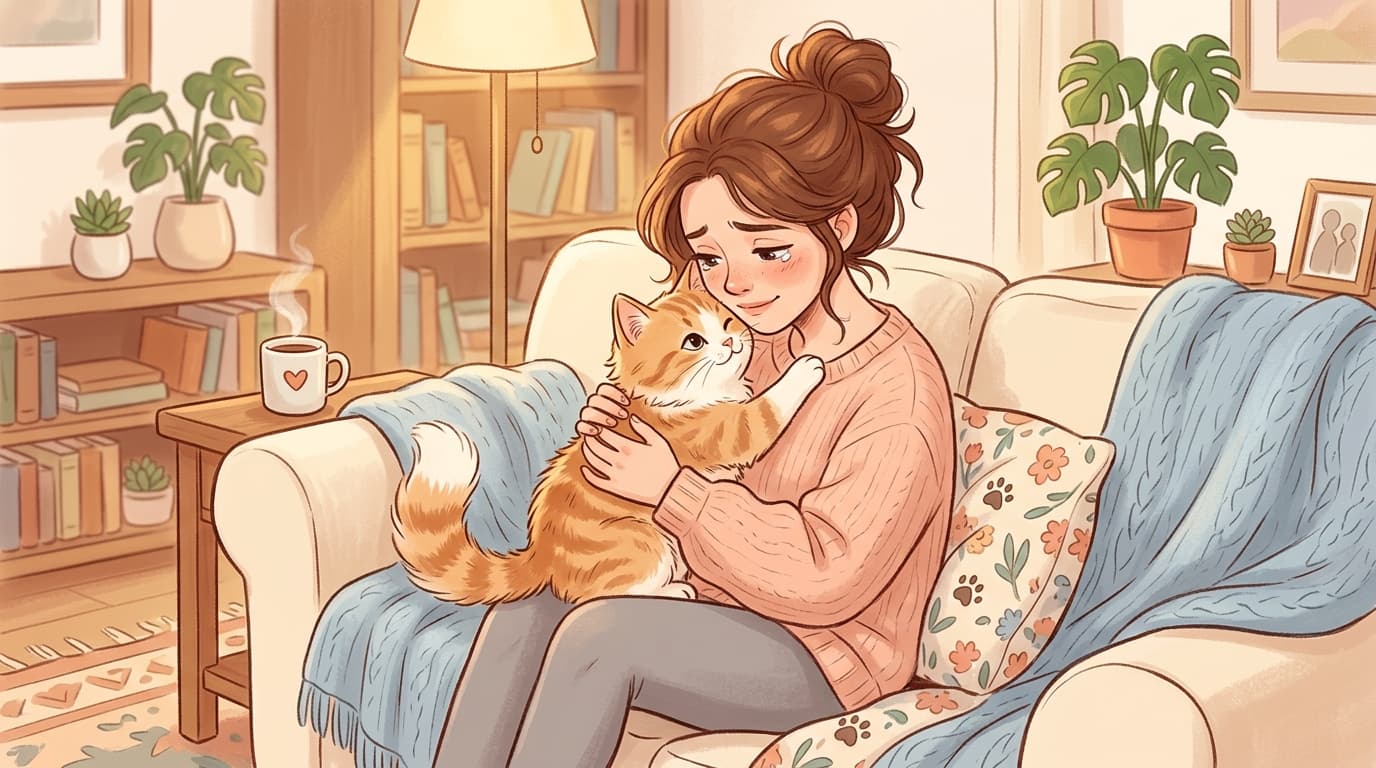
You can be holding it together on the outside, and still—somehow—your cat shows up right when you’re falling apart inside. One minute you’re quiet on the couch, the next there’s a warm body beside you, a head-butt to the hand, and that steady purr that makes your shoulders drop.
It’s not mind reading. But it’s also not random.
Cats don’t sense sadness like humans— they sense change
Most pet owners don’t realize how intensely cats track patterns. Your normal pace through the house, your usual tone of voice, the times you talk, the times you move, the moments you’re playful or busy—your cat learns all of it.
So when you’re stressed, heartbroken, or emotionally drained, you often break your own “routine” without noticing. You sit still longer. You speak less. Your voice gets flatter or quieter. Your movements get heavier. To you, it feels like nothing. To a cat, it’s a flashing sign that something is different.
And difference is interesting to cats. They’re wired to investigate changes in their environment—because in nature, tiny shifts can matter.
Your cat is reading your body language, voice, and breathing
Humans tend to think feelings are communicated with words. Cats don’t need words. They watch what’s harder to fake.
If you’ve ever noticed your cat staring at you during a rough moment, it may not be “judgment.” It’s data collection.
Cats pick up on:
- Posture and stillness (curling inward, slumping, freezing in place)
- Movement quality (tense gestures, restless pacing, slowed reactions)
- Tone and volume (a quieter voice, a sharper edge, less talking)
- Breathing patterns (short and tight vs. slow and steady)
Even if you think you’re acting normal, your cat is comparing “today you” to “usual you.” That contrast is what grabs their attention.
Yes, scent can change when you’re stressed—and cats notice
One of the biggest clues is the one you can’t see.
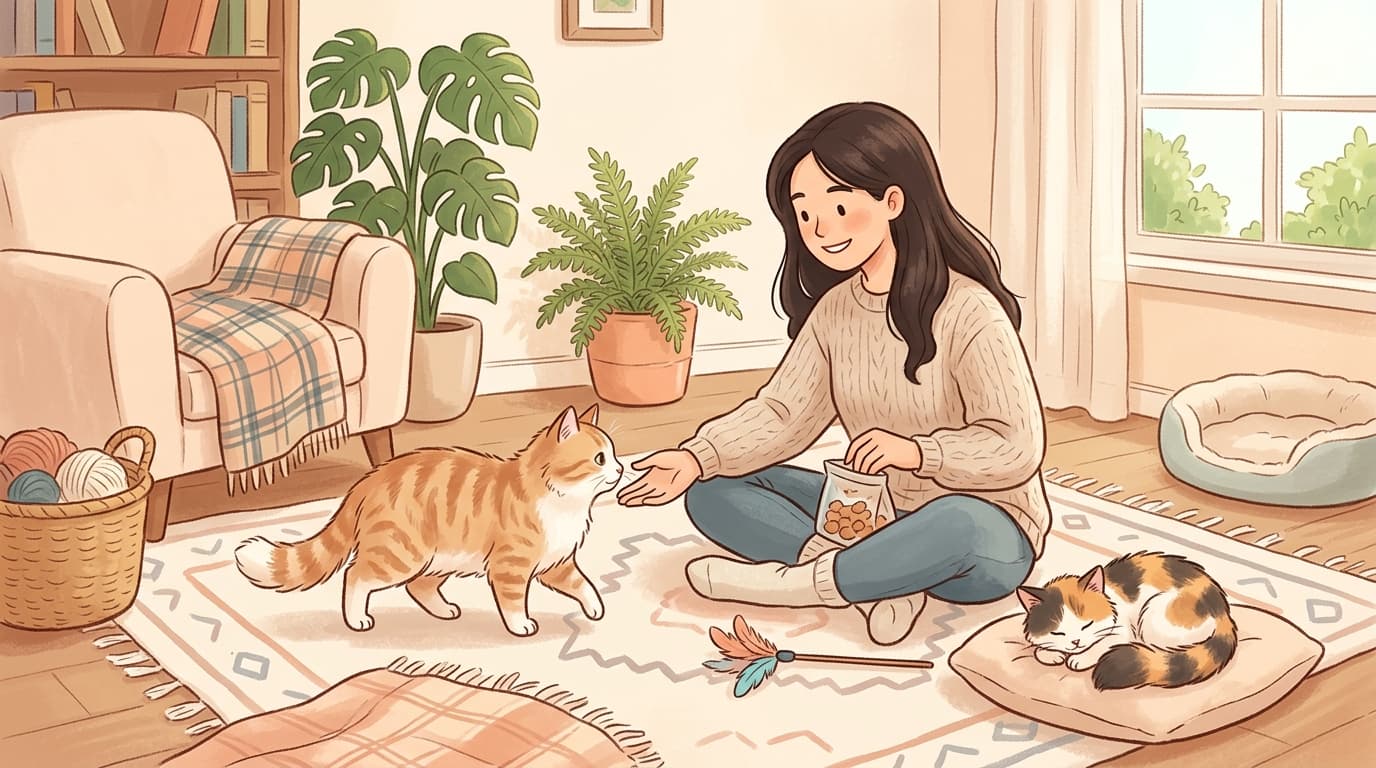
When you’re anxious, sad, or overwhelmed, your body chemistry shifts. That can slightly change how you smell—especially through sweat and skin oils. Humans barely register it. Cats, with their far more sensitive noses, can.
So while your cat isn’t thinking, “My human is having a bad day,” they may be reacting to a mix of signals that all say, “Something is off.”
Why some cats comfort you and others keep their distance
Not every cat responds to your emotional dip by climbing into your lap. That doesn’t mean they don’t care—it often means they cope differently.
A few factors shape the response:
- Personality: Some cats are bold and physical; others are cautious observers.
- Past experiences: A cat that learned closeness is safe may approach faster.
- How they self-regulate: Some cats calm themselves by seeking contact; others calm themselves by creating space.
In other words, two cats can notice the same change in you and choose totally different “solutions.”
For cats, closeness is regulation—and safety
In cat social life, being near someone trusted is a big deal. Cats that feel secure will nap near each other, rest in the same space, and sometimes groom one another. Proximity is a signal: you’re safe with me.
So when your cat settles on your chest or curls against your legs during a hard moment, it may be their version of stabilizing the situation. Not with words—just with presence.
And that’s why it can feel so pure. There’s no advice. No questions. No pressure to explain yourself.
The comfort of purring: why it calms you down so fast
That purr isn’t just “cute.” It’s rhythmic, steady, and predictable—exactly the kind of sound human nervous systems tend to relax to.
A consistent rhythm can signal calm the way rainfall, ocean waves, or a steady heartbeat can. Many people feel their body soften almost immediately when the purring starts.
There’s also a practical reason it works: when a cat climbs onto you, you automatically slow down. You shift less. You breathe more evenly. You start petting in a steady rhythm. Without trying, you begin regulating yourself.
And interestingly, cats don’t only purr when they’re happy. Some cats purr as a way to soothe themselves too. So in those moments, you may be calming each other—an emotional feedback loop built on trust.
Subtle “comfort signals” you might be missing
A lot of people assume comfort has to look like cuddling. But cats are often quieter about affection.
Your cat might be supporting you by:
- Sitting a few feet away but staying in the same room
- Watching you closely instead of leaving
- Sleeping nearby when they usually nap elsewhere
- Slow blinking (a relaxed, friendly signal)
- Leaning gently against you
- Brushing past your legs or wrapping their tail briefly
To a cat, choosing to remain close—especially during a “weird” moment in the household—is meaningful.
What your cat’s comfort really means
Cats probably aren’t building a narrative about your problems. They’re responding to what they can detect: shifts in your behavior, your energy, your scent, and the overall vibe of the home.
But the outcome is what matters. Their quiet company can make you feel less alone, without demanding anything back.
Next time your cat appears during a low moment, take it for what it is: a small, honest act of connection. They may not have human words for it, but they’re very good at saying, in their own way, “I’m here.”
Continue reading

Does Your Cat Really Love You? 8 Quiet Signs of Trust Most People Miss
From slow tail-tip curls to choosing your seat, these 8 subtle behaviors can reveal how deeply your cat trusts you.

Why Your Cat Climbs on You: It’s Not “Just Love” (And What They’re Really Saying)
From lap-sitting to cheek rubs, your cat’s “cute” habits are secret messages about safety, scent, and trust.

Pumpkin for Cats: The Simple Food Add-In That Supports Digestion and Helps Push Out Worms
Plain pumpkin puree can support your cat’s digestion and make the gut less welcoming for worms—plus most cats accept it well.