How Dogs Say “Thank You”: 8 Subtle Signs Your Pup Appreciates You Every Day
Your dog thanks you in quiet ways—gifts, soft eyes, leaning, and more. Here are 8 easy-to-miss signs of real appreciation.
Your dog has ways of saying “thank you” that are so low-key, they’re easy to miss—even if you’ve lived with dogs your whole life. And once you start noticing them, everyday moments like refilling the water bowl or brushing out tangles feel a lot more meaningful.
1) The “gift” drop: offering you a toy (or random treasure)
If you’ve ever had your dog stroll up and casually place a toy at your feet, it can look like a play request… or like they’re just being weird. But often, it’s closer to a little offering.
Dogs don’t have many “possessions,” and toys can be a big deal to them. So when your dog brings you their prized squeaker or soggy plush, it can be a social gesture: you’re part of my inner circle, and I’m sharing what I value. It often happens after you’ve done something kind—food, a walk, fresh water, attention—like their version of a thank-you note.
2) The post-meal lick: a quick, sticky “thanks for dinner”
You put down the bowl, they inhale it, and then they come over to lick your hand or your face like you’re dessert. Licking can mean a lot of things in dog language (affection, soothing, appeasement), but right after you’ve fed them, it can be a simple gratitude ritual.
Most pet owners don’t realize how much dogs connect food with relationship. That little lick can be your dog’s way of saying, “That hit the spot, and I trust you.”
3) The follower phenomenon: your personal furry satellite
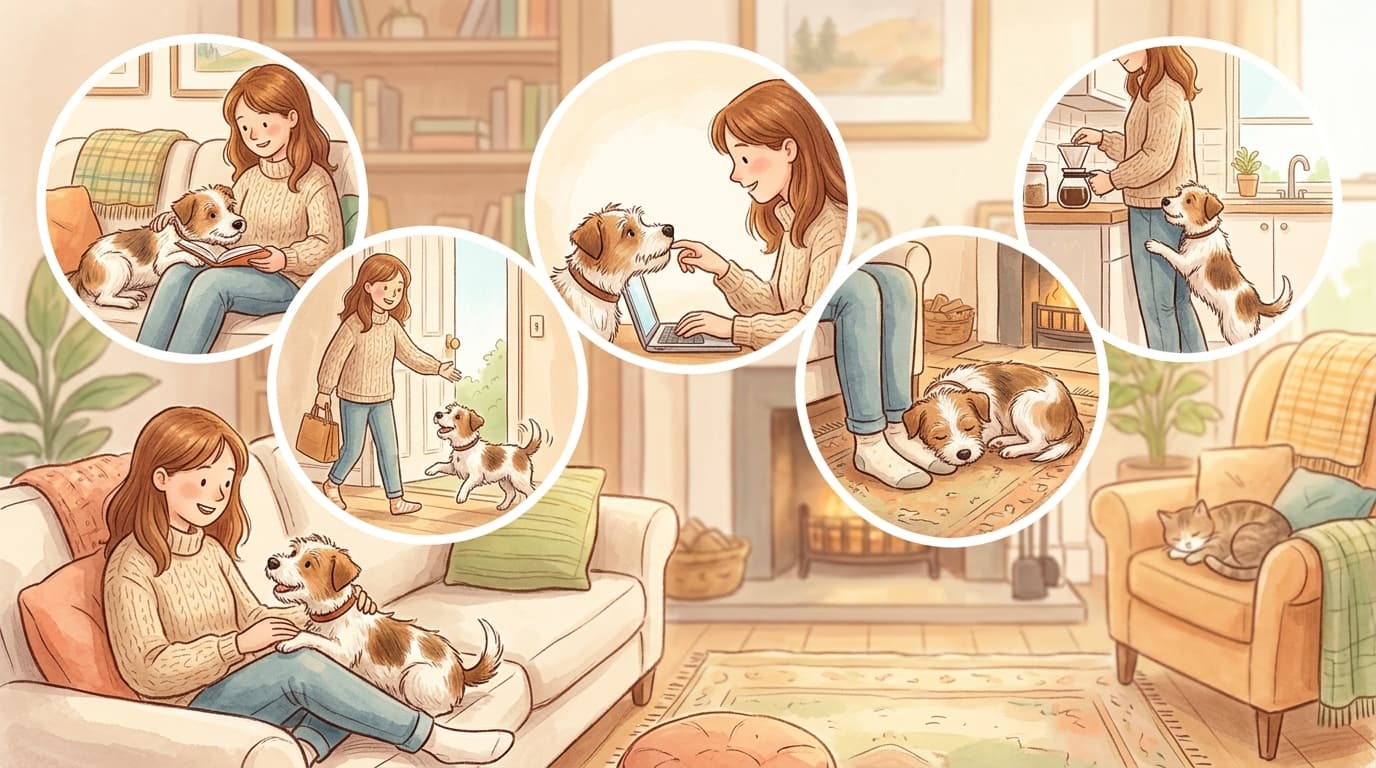
You stand up and your dog stands up. You change rooms and they’re already there. It’s easy to chalk this up to curiosity (or snack surveillance), but following you can also be attachment in motion.
Dogs tend to stick close to the person who consistently meets their needs and makes them feel safe. When your dog chooses to hang near you even when nothing “exciting” is happening, it’s often a quiet compliment: I like being where you are.
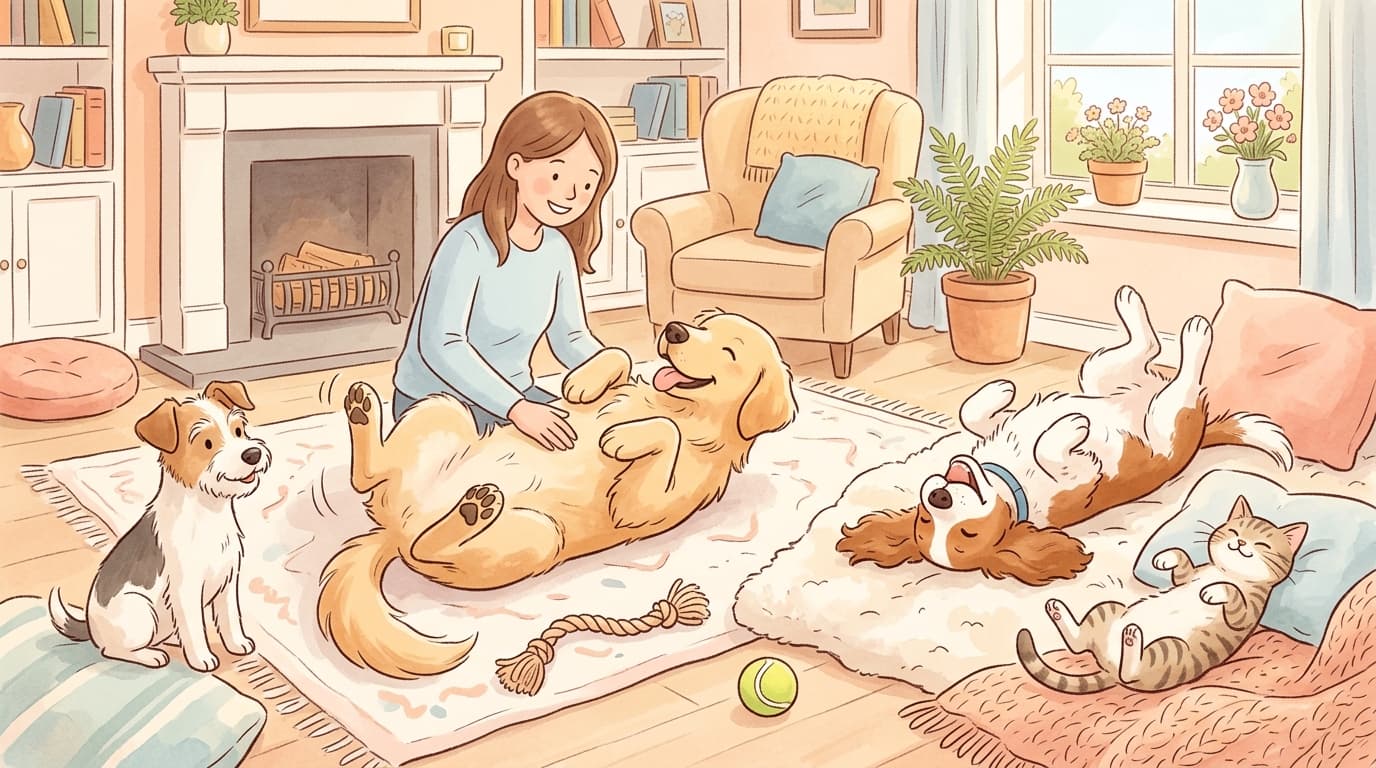
4) The guarding nap: resting like they’re on gentle duty
Some dogs don’t just plop down anywhere—they curl up nearby in a position that looks relaxed, but not totally switched off. You’ll see them facing the door, or choosing a spot that lets them keep tabs on the room.
That kind of nap can be more than comfort. It can be your dog returning the favor after you’ve cared for them (especially after something stressful like fireworks or a busy day): you’ve had my back, so I’m going to keep an eye out for you.
5) Soft eyes and slow blinks: the calm, trusting look
Cats get all the credit for slow blinks, but dogs have their own version of that “I feel safe with you” face. After a nice moment—brushing, cuddling, a calm hangout—you might catch your dog looking at you with relaxed eyelids, gentle blinks, and a loose, soft expression.
In dog body language, that relaxed gaze is huge. It’s often a sign of trust and comfort, and it can absolutely be a subtle “thank you” for making them feel good.
6) The gentle nudge: a soft little acknowledgment
Sometimes after you scratch the right spot or give them some care, your dog doesn’t walk away—they nudge you with their nose or bump you lightly with their head.
Yes, nudging can be a request for more attention. But in the right context—right after you did something kind—it can also read like a polite, tactile “I noticed that, and I liked it.” Dogs communicate with their bodies. A gentle nudge can be a warm, wordless appreciation.
7) The calm lean: your dog’s version of a quiet hug
The classic dog lean is underrated. Your dog sits next to you and slowly presses their shoulder or side into your leg like they’re trying to merge into your skeleton.
Leaning tends to show up when a dog feels safe and bonded. And if it happens after you helped them through something uncomfortable—like a stressful outing or a scary noise—it can be their steady way of saying, “Thanks for being my safe place.”
8) Gratitude zoomies: the joyful victory lap
You feed them, bathe them, or take them on their favorite walk and suddenly they’re sprinting around the house like a four-legged pinball. Zoomies aren’t only “extra energy.” They can be a burst of relief and happiness.
In other words: sometimes your dog’s thank you looks like pure celebration. Their body gets so excited it has to spill out into motion.
How to spot the difference between “thanks” and “I want something”
A good clue is timing. Gratitude behaviors often happen right after you’ve done something supportive—food, comfort, grooming, play, reassurance. Another clue is softness: relaxed body, loose face, gentle movements, no frantic intensity.
And if you’re ever unsure, watch what happens next. A “thank you” moment often ends with your dog settling nearby, relaxing, or just happily existing in your space.
The takeaway
Your dog may never write you a card, but they’re probably thanking you all the time in tiny, sweet ways. Start noticing the gifts, the soft eyes, the lean, and those ridiculous zoomies—and you’ll see just how much your everyday care lands with them.
Continue reading

7 Dog Body Language Signals Most Owners Miss (And What Your Dog Is Really Saying)
From play bows to doorway guarding, learn the dog body language signals that reveal trust, comfort, and connection.

Why Your Cat Climbs on You: It’s Not “Just Love” (And What They’re Really Saying)
From lap-sitting to cheek rubs, your cat’s “cute” habits are secret messages about safety, scent, and trust.

Dog Body Language Signs of Love: 7 Little Moments That Mean “You’re My Person”
From the play bow at the door to sleeping pressed against you, these dog body language signs quietly prove how much your dog loves you.