How to Leave Your Dog Home Alone Without Triggering a Panic Spiral
Simple, science-backed leaving routines that reduce stress: skip emotional goodbyes, use grounding touch, and match rituals to short vs long absences.
Your dog can look totally fine while you grab your keys—quiet, relaxed, even a little tail wag. But for many dogs, the “leaving” stress response starts long before the door closes, and a few well-meaning habits can crank that stress up fast.
The good news: small changes to how you leave your dog alone can make departures feel boring instead of heartbreaking.
Your dog starts worrying before you even leave
Most pet owners think the stressful part is the moment the door shuts. For a lot of dogs, it starts earlier—sometimes up to 20 minutes earlier—because your routine becomes a predictable countdown.
Dogs are incredible at pattern detection. The coffee machine finishing, different footsteps in shoes, the zipper of a bag, the jingle of keys… these are all “signals” that separation is coming. Keys are a big one for many dogs, and they can spike stress before you’ve even stepped outside.
What to do instead:
- Break up your pre-departure pattern. Pick up keys at random times during the day without leaving.
- Do some “fake outs” where you put on shoes, then sit back down.
- Keep your final 10–20 minutes before leaving as low-drama and routine-free as possible.
Skip the emotional goodbye (it can backfire)
If you’ve ever crouched down, made eye contact, and given your dog a heartfelt speech—you're not alone. Most pet owners don’t realize that a tender, emotional goodbye can act like a warning siren.
That extra intensity (the special voice, the lingering pets, the “I’ll be back soon!” energy) can prime your dog to feel like something awful is about to happen. In other words, you’re accidentally making departures feel significant.
Try this: keep exits calm and plain. No big announcement. No lingering. Just leave like it’s normal—because you want your dog’s brain to file it under “normal.”
Don’t hype your dog up right before you disappear
A quick game of fetch, excited belly rubs, or a burst of playful attention right before you go can create a rough emotional swing: high arousal… then sudden isolation.
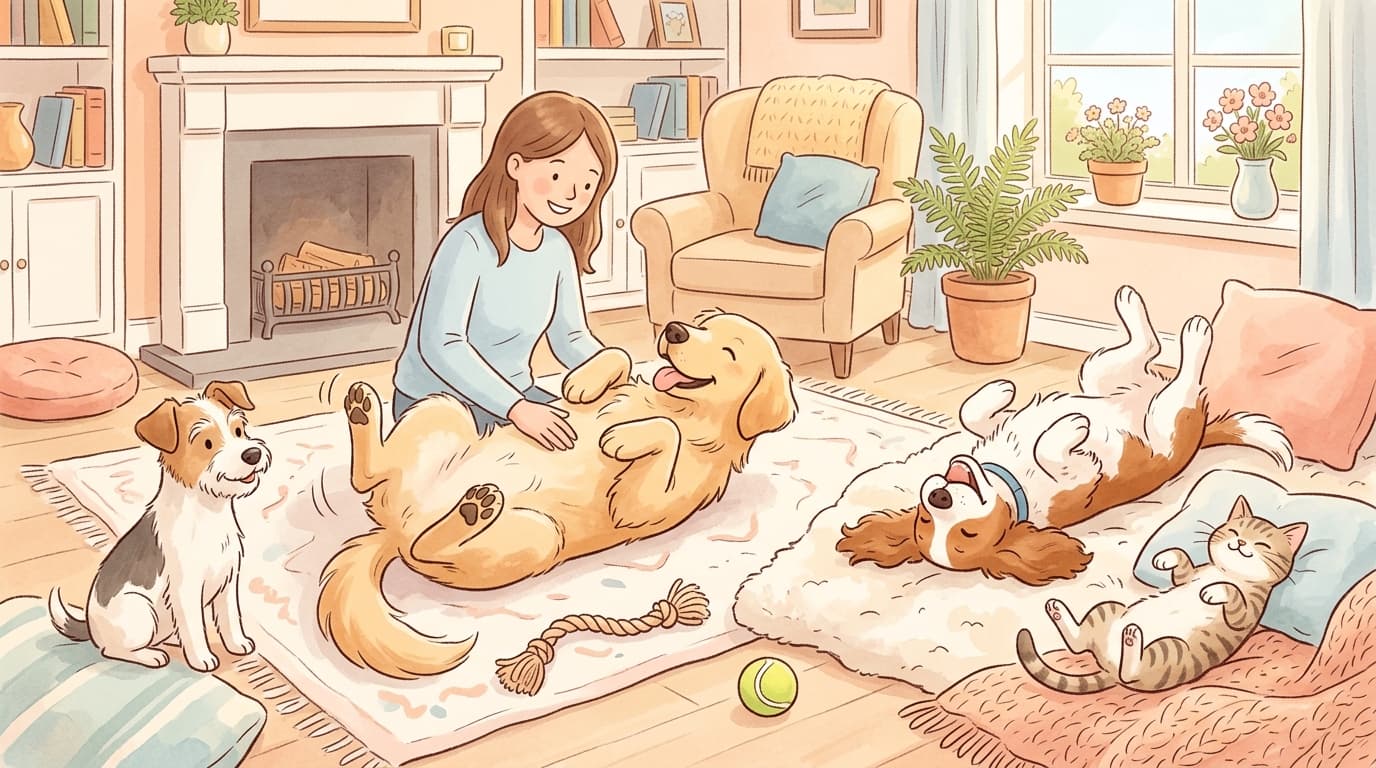
If you’ve noticed your dog gets extra clingy or zoomy as you prepare to leave, that last-minute excitement may be adding fuel.
Better option: aim for “neutral calm” before departure. Save the energetic play for times you’re staying home.
Use “grounding touch” about 5 minutes before you leave
There’s a simple technique that can help many dogs settle: steady, still pressure—no petting, no chatter, no eye contact.
About five minutes before you head out:
- Place your hand firmly on your dog’s chest or shoulder.
- Hold steady pressure for around 30 seconds.
- Stay quiet and calm.
This kind of still touch can cue your dog’s calming system (the rest-and-settle mode) rather than revving them up.
If your dog is touch-sensitive: try lightly covering their paw instead of pressing on the chest/shoulder—same idea, just gentler.
Match your leaving routine to how long you’ll be gone
One of the sneakiest mistakes is using the same ritual for every absence.
For short departures (under 15–30 minutes): no ritual is often best
If you’re grabbing the mail or running a quick errand, the lowest-stress option for many dogs is making your exit almost invisible. No goodbye, no special touch, no “be right back” routine.
Leave while your dog is already occupied—sniffing, resting, or chewing something appropriate.
For longer absences (over a couple of hours): predictable calm can help
For longer stretches, some dogs do better with a consistent, boring sequence that always looks the same—like a repeatable script that says, “This is normal.”
That might include:
- The same grounding touch in the same spot
- The same neutral phrase (or none at all)
- The same quiet pacing with no excitement
The key is consistency and calm, not affection and intensity.
The 30-second pause that changes what happens after the door closes
Dogs often “decide” what to do right after you leave—panic or settle—very quickly. One helpful habit is a brief pause right before you go.
Instead of rushing out, stand still for about 30 seconds near the door. No talking. No touching. No revving the moment up. This gives your dog a chance to downshift from the mild stimulation of you moving around.
Counterintuitive, but many dogs handle this better than the rushed “rip the bandage off” exit.
Watch where your dog waits—it's a clue to their stress level
In the minutes before you normally leave, your dog’s position can reveal how they’re coping.
- Blocking the door: often a sign they’re trying to prevent the separation.
- Shadowing you room to room: can be a “pre-grieving” pattern—maximizing contact before isolation.
- Resting in a favorite spot where they can see the door: often the calmest sign; it’s like they’re practicing being alone while you’re still home.
What you can do: encourage a “safe zone” habit. Reward your dog for relaxing on their bed or mat during your normal pre-leaving time (well before you actually leave).
Your scent can act like a timer—use it on purpose
Dogs don’t just notice you’re gone; many can track absence through scent fading over time. The strongest scent is often on whatever you touched most recently.
That means if you touch your dog’s favorite comfort item right before leaving, you may accidentally turn it into a “countdown object.”
A smarter approach: about 10 minutes before you go, touch a specific item near the door (like a small mat or cushion). This can act like a scent “bridge” at the exit point, making the departure feel less abrupt.
For longer absences, leaving out a rotated piece of unwashed clothing can provide a steady, familiar scent without making your dog’s favorite bed feel like a ticking clock.
“Meltdown days” often follow extra-social days
Ever notice your dog is fine alone most of the time… then randomly has a terrible day? A common pattern is the day after a big social surge—guests over, a fun weekend, playdates, or you being home all day.
The contrast between “tons of together time” and “sudden quiet house” can hit harder than a normal routine day.
Prevention that actually fits real life: on high-social days, build tiny separations into the day. Close a door between you and your dog for five minutes a few times. Those micro-breaks help keep alone-time skills online, even when the day is exciting.
A calm exit is a kindness your dog can understand
Leaving your dog alone doesn’t have to feel like a dramatic event—they learn what your departures mean based on the patterns you repeat. Make the lead-up quieter, keep goodbyes neutral, and use calm touch and timing strategically.
Over time, you’re teaching your dog one simple message: you leaving is normal, and they’re safe until you come back.
Continue reading

Male Dogs vs Female Dogs: 5 Real Differences You’ll Notice at Home and on Walks
From pee-mail to leash pulling and rough play, here are 5 everyday ways male dogs tend to differ from females.

Dog Body Language Decoded: 10 Subtle Behaviors That Show What Your Dog Really Feels
Learn 10 dog body language signals—from play bows to sighs—that reveal trust, excitement, and how safe your dog feels with you.

How to Leave Your Dog Home Alone Without Triggering Separation Anxiety
Use these 9 simple routines to keep your dog calm, busy, and secure when you leave the house.