That sad little whimper you hear as you pull the door closed isn’t “just being dramatic.” For many dogs, your everyday leaving routine can feel like a real emotional emergency—and you might be accidentally starting it long before you ever touch the doorknob.
The good news: you can make leaving feel normal and safe. It’s less about one magic trick and more about a repeatable routine that keeps your dog’s brain from spinning up into panic.
Dogs are scary-good at pattern recognition. If you’ve ever noticed your dog get clingy the moment you put on certain shoes or reach for your keys, you’ve seen it in action.
Those little cues—coat, bag, keys, even the “different” sound of your footsteps—can become a countdown that tells your dog, “I’m about to be alone.” Once that countdown starts, stress builds fast. By the time the door closes, some dogs are already past the point of settling.
If keys equal panic, you want keys to become boring again.
A few times a week (when you’re not leaving), casually pick up your keys, jingle them, then sit back down. Put on your work shoes and make lunch. Grab your bag and fold laundry. The goal is to break the one-to-one connection between “cue happens” and “you disappear.”
Over time, those objects stop being alarm bells.
When you’re rushing around towering over your dog, it can read as pressure. Instead, slow your body down on purpose.
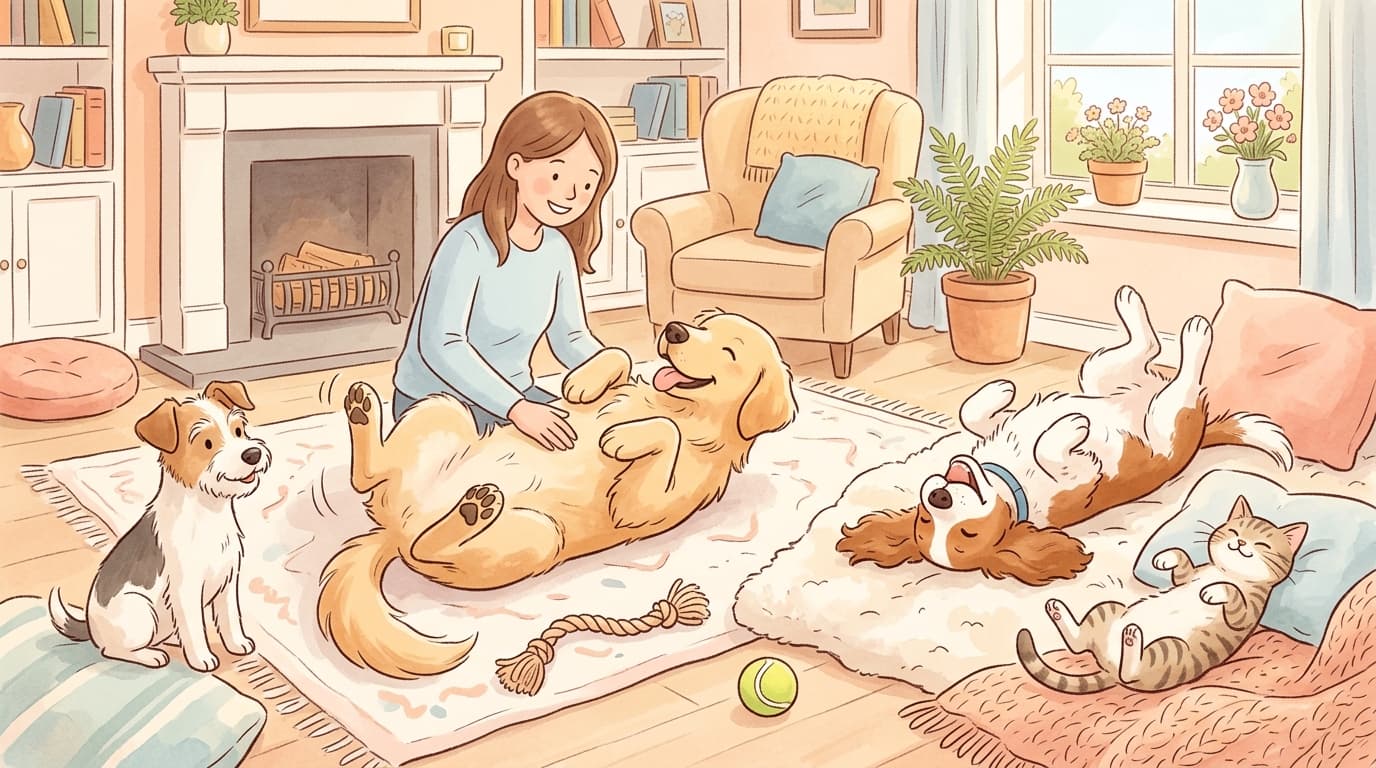
Sit on the floor for a moment. Don’t hype your dog up, and don’t turn it into an obedience drill. Just be calm in the same space and let your dog choose to come over.
That voluntary contact—your dog leaning in, you giving slow gentle pets—helps set a calmer baseline before the separation even happens.
Your dog experiences the world through scent in a way we can’t really imagine. When your fresh scent disappears, the house can feel suddenly wrong.
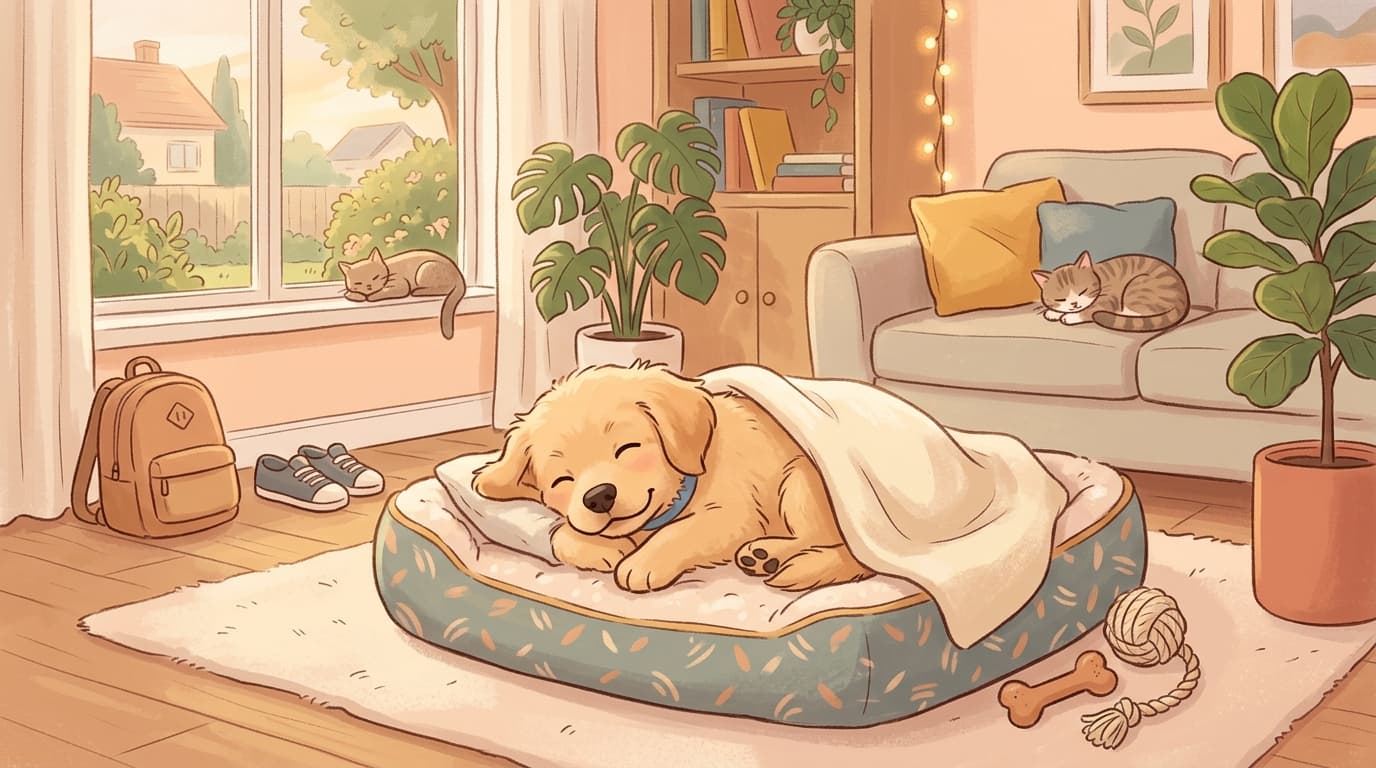
Leave an item that smells strongly like you in your dog’s resting spot: a slept-in t-shirt, a recently used towel, or a blanket you actually lounge on. Think of it as an emotional anchor your dog can return to.
Most pet owners don’t realize how much this can reduce pacing, whining, and restless checking-the-door behavior.
A silent house can make every outside noise feel huge. But random TV can be worse—commercials, sirens, shouting, sudden music stings.
What tends to work best is consistent, low-intensity sound:
- soft classical (or other slow, steady music)
- gentle nature sounds
- a simple fan for a predictable hum
You’re basically building a sound “buffer” so the unpredictable world outside doesn’t keep jolting your dog awake.
An idle dog brain can turn anxious fast. Instead of serving breakfast in a bowl your dog finishes in 30 seconds, make them work for it.
Try one of these right before you leave:
- a puzzle feeder
- kibble or treats rolled into a towel
- a stuffed (and frozen) rubber toy
- a scatter hunt in a safe area
Sniffing and foraging are naturally regulating for dogs. It shifts their focus away from “Where are you going?” and onto “I’m on a mission.”
Some owners shut everything down before leaving—lights off, curtains closed—trying to save energy. For a dog that’s already uneasy, a dark, cave-like house can feel heavy and isolating.
Let in natural light if you can, or leave a warm lamp on in the area your dog uses most.
Also pay attention to what your dog can see. For some dogs, a big window view turns into eight hours of “guard duty” (people passing, dogs walking by, delivery trucks). If that’s your dog, limit window access with curtains, blinds, or frosted film so they can actually clock out and rest.
Dogs don’t need a heartfelt speech. They need predictability.
Pick one short phrase you’ll always use, and say it the same way every time—low, warm, and casual. Something like “See you later” or “Watch the house.”
Avoid the apologetic, emotional goodbye voice. If you sound worried, your dog learns there’s something to worry about.
This is the hardest part for humans.
Once your dog’s environment is set and they’re busy with their puzzle or chew, leave. No hovering at the door. No sad looks back. No drawn-out moment where your dog watches you hesitate.
A clean, boring exit teaches your dog that departures are normal.
If you come home and throw a huge greeting party, you accidentally teach your dog that your return is the biggest event of the day—which makes being alone feel even bigger.
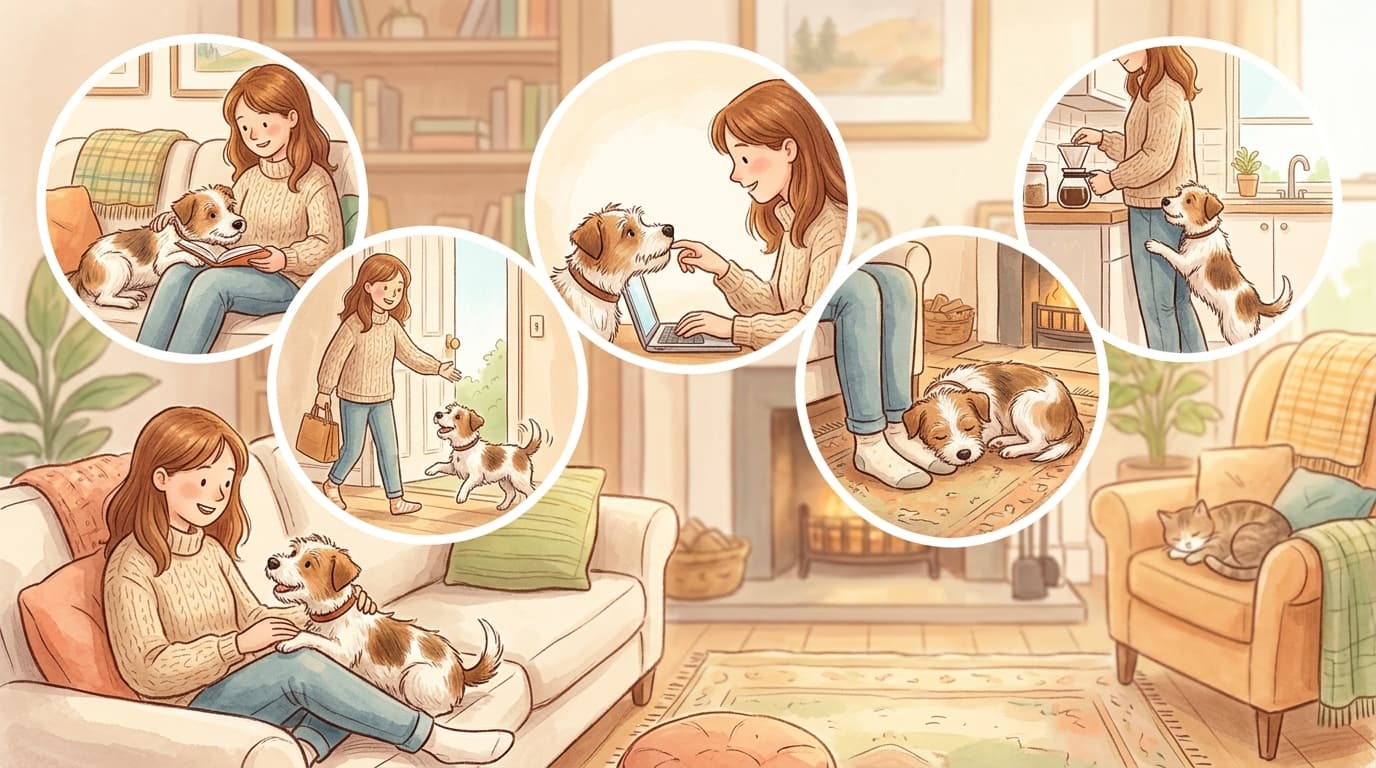
Walk in calmly, put your things down, and wait a minute or two. Then give attention when your dog’s paws are on the floor and their energy has softened. You’re not withholding love; you’re rewarding calm.
Your dog doesn’t need you to feel guilty—your dog needs you to be consistent. When your leaving routine becomes predictable, calm, and a little bit enriching, alone time stops feeling like a crisis and starts feeling like a normal part of the day.
If you try just two things tomorrow, make it this: neutralize the key-and-shoes triggers, and pair your exit with a food puzzle or long-lasting chew so your dog has something better to do than worry about the door.