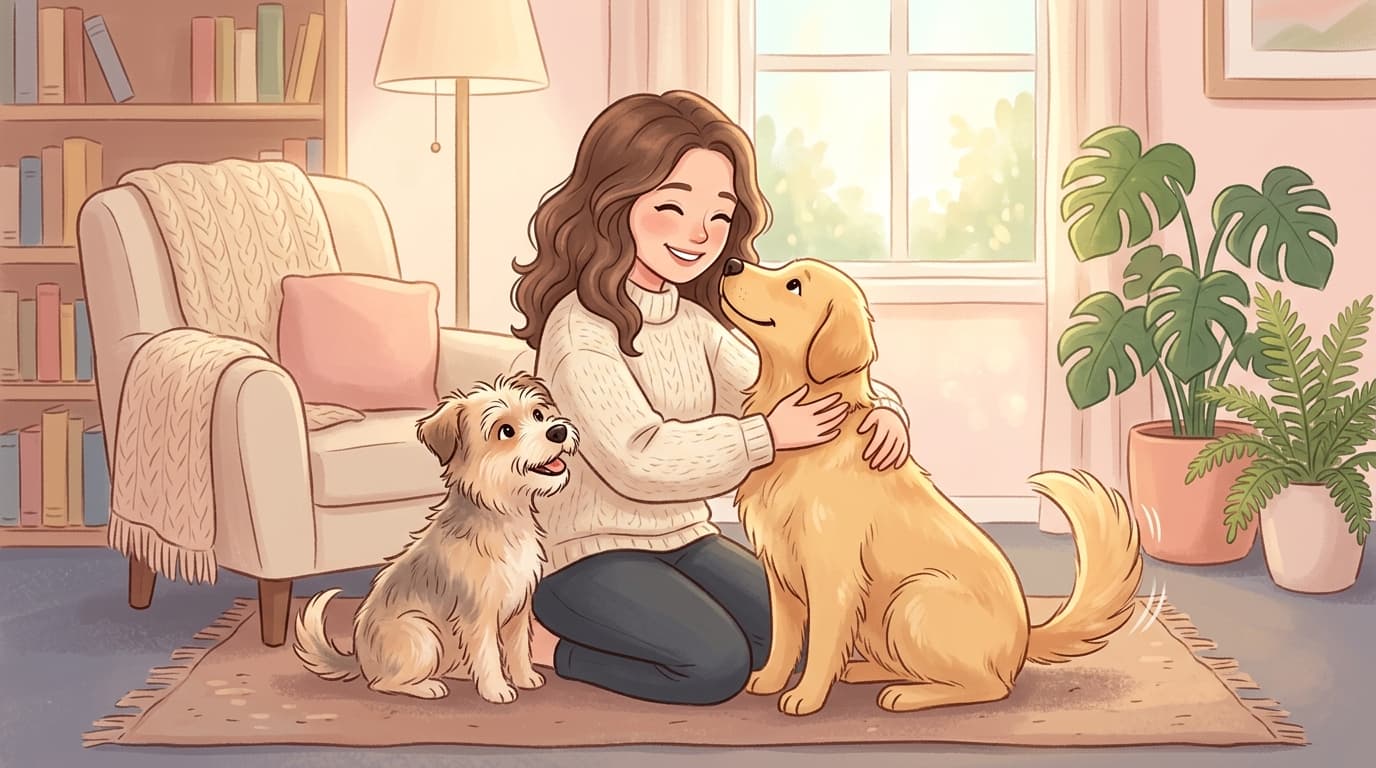
You live with your dog every day, so it’s easy to assume they understand you the way another person would. But your dog’s picture of you is built from scent, sound, routine, and emotional signals you don’t even realize you’re giving off.
What that adds up to is surprisingly intense: your dog doesn’t see you as “a human roommate.” In many ways, you’re their home base, their comfort system, and the center point they organize life around.
A lot of people assume dogs treat us like oversized pack members. But research that looks at how dogs’ brains respond to different smells suggests something more specific: your dog categorizes you as your own special “type.”
Other dogs are social equals. You’re different. Your scent can trigger a strong reward response—more like “my person” than “another animal in the group.” That’s why your dog can be friendly with plenty of dogs (and people), but still light up in a completely different way for you.
If you’ve ever wondered whether your dog understands how long you’re gone, it helps to remember they don’t run on calendars and clocks. Dogs track time through patterns: daylight shifts, body rhythms (like hunger), and—most powerfully—how your scent changes in the home.
When you leave, your smell is strong. As hours pass, it weakens. Many dogs learn that “this level of faint” usually means you’re about to come back.
And if you don’t come back? Your dog may not grasp the idea of “never.” Instead, they can get stuck in a loop of expectation—waiting for the normal rhythm to restart.
Most pet owners don’t realize how transparent they are to their dog.
You might keep your voice steady and your face calm, but your body tells on you. Stress and sadness shift your internal chemistry, changing what you release through breath and skin. Dogs can detect hormones linked to stress (like cortisol) and pick up on subtle odor changes tied to emotional states.
§ 02
Continue reading
The stare that would be rude in the wild is love at home
If you’ve ever cried quietly and your dog still showed up to press against you or nudge your hand, it’s not because they understood the details of your day. It’s because your body broadcasted, loud and clear, that something was wrong.
Dogs don’t just recognize “you.” They recognize your baseline.
When something in the body changes—metabolism, blood sugar patterns, even the chemical signals associated with certain illnesses—new scent markers can appear. Some dogs become fixated on a specific spot on their person’s body, or act strangely persistent about getting attention in a way that feels unusual for them.
It’s one reason so many real-world stories exist of dogs alerting to problems earlier than expected. Your dog’s nose is not just impressive. It’s detailed enough to notice tiny shifts you’d never sense on your own.
Here’s a wild thought: your presence can literally help your dog relax.
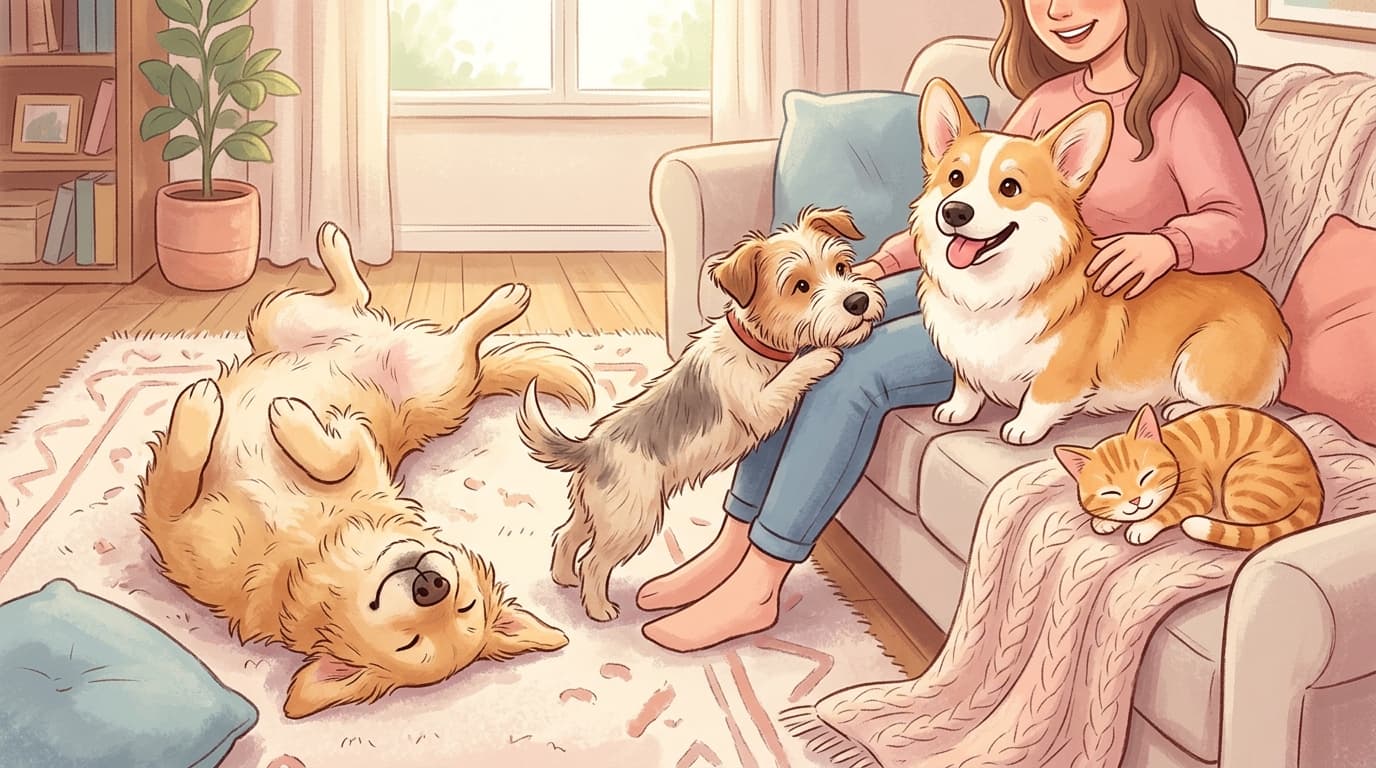
Bonded interactions—like gentle petting and soft eye contact—are linked with higher oxytocin (the bonding hormone) and lower stress levels in dogs. In plain terms, you help your dog come down from alert mode.
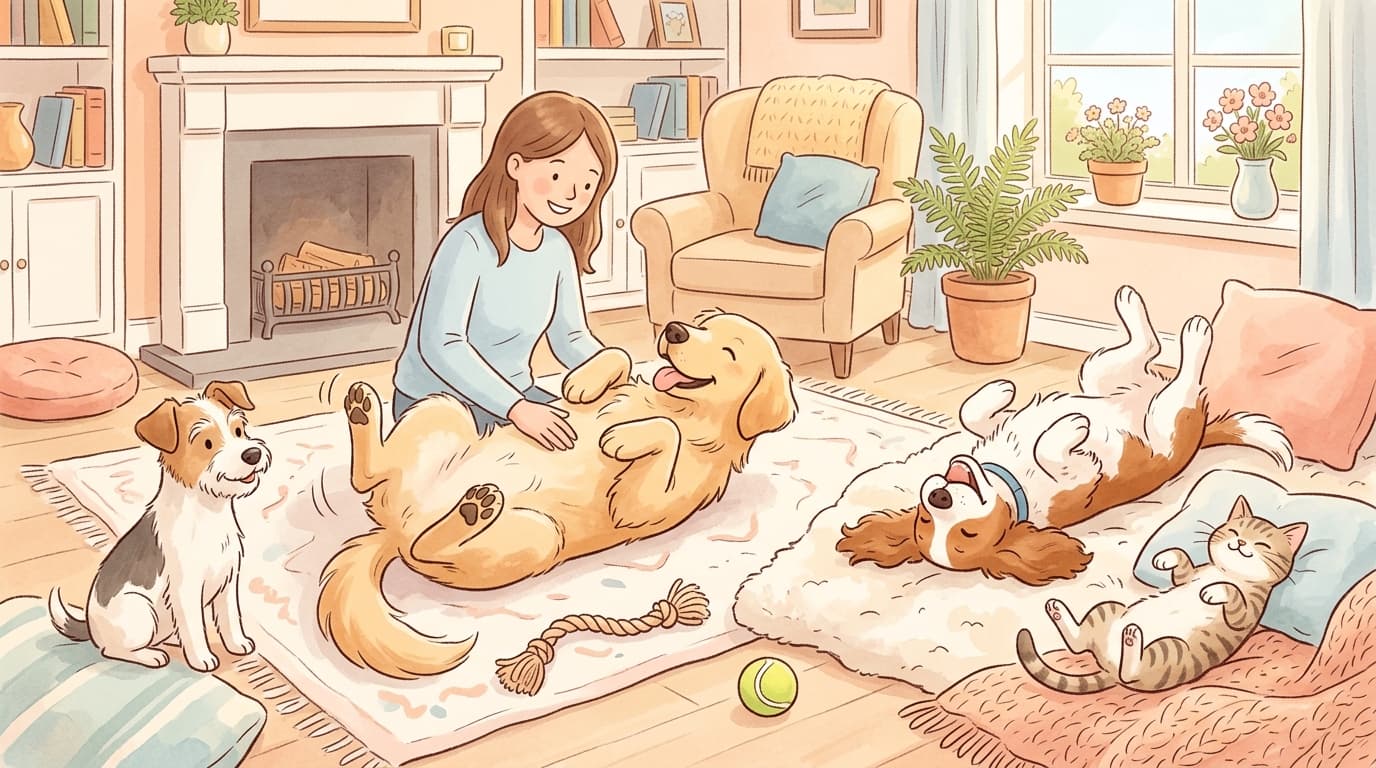
That deep, sprawled-out sleep where they expose their belly and twitch through dreams? Many dogs only feel safe enough to do that when they believe someone they trust is “on watch.” In your dog’s mind, that someone is you.
If you’ve ever yawned and watched your dog yawn right after, it can feel like a cute coincidence. But contagious yawning is often tied to social bonding and emotional attunement in highly social species.
And it doesn’t stop at yawns.
On days you’re restless and rushing around, your dog may pace, hover, or seem unsettled. When you finally sit down and exhale, they suddenly relax too. Your dog isn’t only following your movements—they’re tracking your emotional weather.
Off-leash (or even on a long leash), lots of dogs do a little run-sniff-explore routine… then glance back at you. Again and again.
That “check-in” is more than habit. It’s a relationship signal.
Your dog is making sure the unit is still together: you’re there, they’re here, everything is okay. Dogs that feel deeply bonded often want freedom, but not at the cost of losing connection.
That moment when your dog presses their weight into your legs can look like clinginess. But in dog language, leaning is often a comfort-seeking gesture and a trust move.
Sometimes it shows, “I’m unsure—help me feel steady.” Other times it’s more like, “I’m with you. You’re not alone.” Either way, it’s physical closeness used as emotional communication.
In most of the animal world, direct eye contact is a challenge.
With your dog, it can be the opposite—especially the soft, relaxed stare from across the room. Dogs have adapted to read human faces and eyes unusually well, and mutual gaze can boost bonding chemicals in both of you.
If you catch that quiet look and you have a spare ten seconds, look back gently and blink slowly. To your dog, that tiny moment can feel huge.
Dogs don’t build elaborate grudges, but they absolutely remember how interactions feel.
If you snap, shove them away, or reject affection in a sharp way, your dog usually won’t understand the “why.” They won’t connect it to your email, your deadline, or your bad day. They’ll just register that their safest person suddenly became unpredictable.
That’s why emotional consistency matters so much. And if you do lose patience, repairing the moment—calling them back, softening your voice, offering calm contact—can reset the safety signal they rely on.
You see furniture and rooms. Your dog experiences an invisible landscape made of lingering scent and tiny traces you leave behind.
That’s why they gravitate to your side of the bed, your favorite chair, or the spot where you put on your shoes. Those places aren’t just “comfy.” They’re saturated with you.
If your dog drags off a sock or curls up with a worn shirt, it’s tempting to label it mischief.
But notice what they choose: not freshly washed items, not random fabric—your strongest-smelling, most “you” things. For many dogs, surrounding themselves with your scent is a self-soothing strategy when you’re gone. It’s security-blanket logic, just in dog form.
You have a life full of layers—work, friends, plans, distractions, future goals. Your dog’s world is smaller and more focused.
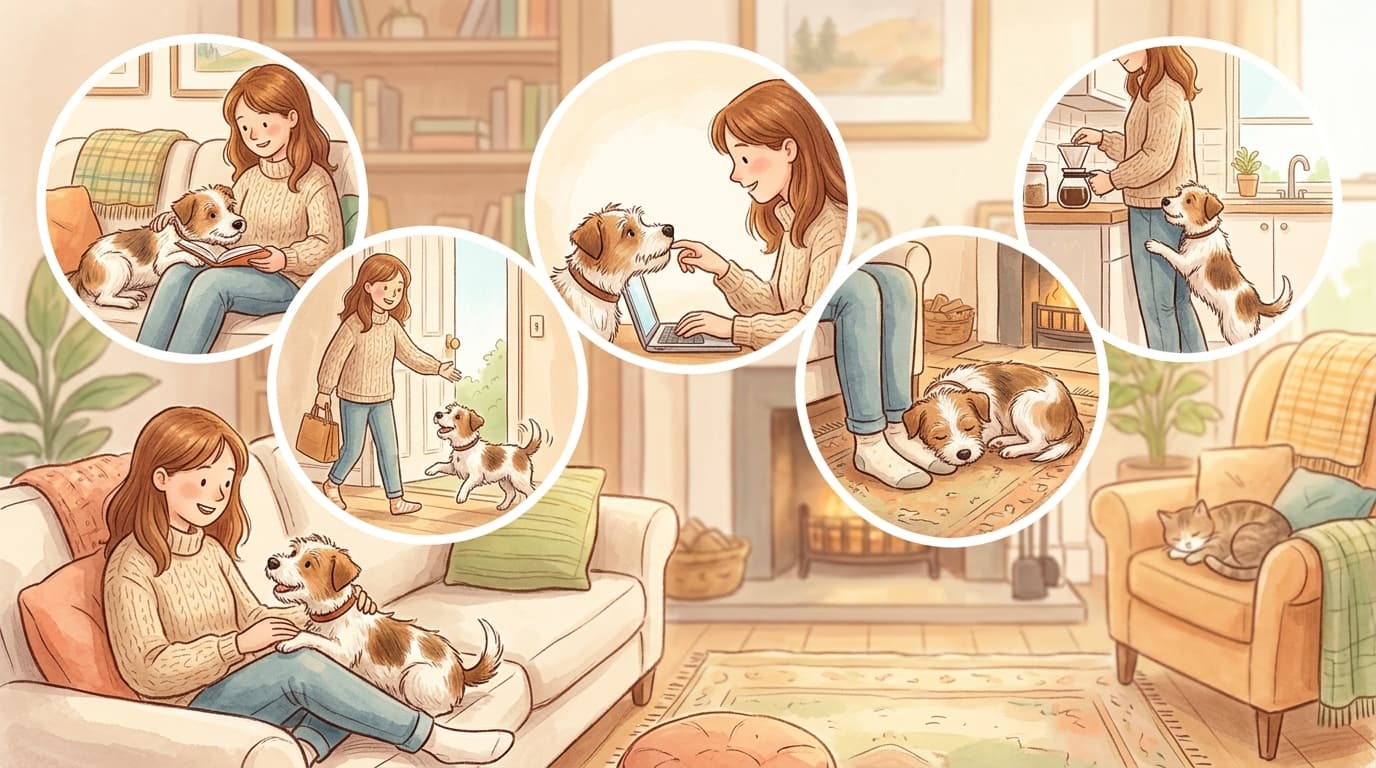
You’re the main event. The day is measured in your comings and goings, your mood shifts, your attention, your touch, your voice. That’s why a two-minute trip outside can earn a reunion like you’ve returned from a year-long voyage.
You don’t need to be perfect to be everything to your dog. You just need to be present more often than not, and gentle when it counts.
The next time your dog leans into you, checks in on a walk, or quietly watches you from across the room, pause for a beat. Offer a hand on their head, a calm voice, or a soft look back.
To you, it’s a tiny moment. To your dog, it’s the sun coming out.