Microchipping Cats in Spain: What the Law Requires (and What Happens If You Skip It)
Spain now requires microchips for all cats. Learn what the law says, possible fines, and how microchipping works.
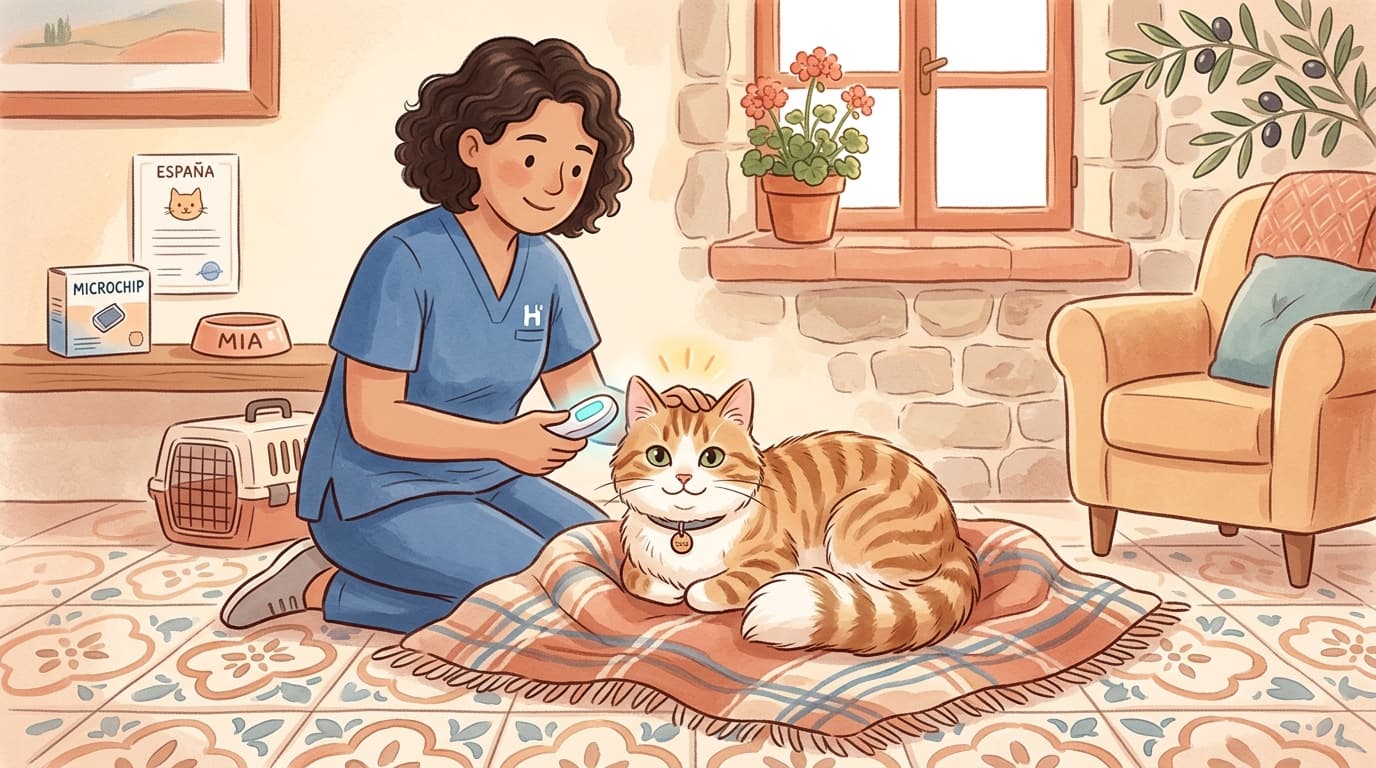
Your cat might be an indoor nap champion, but one open door or spooked moment can change everything. Since 2023, Spain has made cat microchipping more than a “good idea”—it’s a legal must.
Is microchipping cats mandatory in Spain?
Yes. As of September 2023, Spain’s Animal Welfare Law made official identification mandatory for all companion animals, including cats. In practical terms, the officially recognized identification method is the microchip.
This is a big shift for cat owners because, historically, cats have been less regulated than dogs in many places. The law basically closes that gap: if you have a cat, your cat needs to be individually identified.
Why the microchip matters (beyond legal compliance)
Most pet owners don’t realize how many lost cats are found every year—and how many never make it back home for one simple reason: there’s no reliable way to prove who they belong to.
A microchip links your cat to you in a clear, official way. If your cat is picked up, a vet or authority can scan the chip, pull up the registered information, and contact you quickly. Without that link, even a friendly cat can end up stuck in the system with no way home.
If you’ve ever noticed your cat slipping into the hallway like a tiny ninja the second you open the door, you already understand why “he never goes out” isn’t a real safety plan.
What happens if you don’t microchip your cat?
Skipping the microchip can lead to real consequences:
- Fines: Not identifying your cat can be treated as a serious violation, with penalties commonly cited in the €10,000 to €50,000 range for serious infractions related to lack of identification. In the most severe cases, sanctions can reach up to €200,000.
- A much lower chance of getting your cat back: If your cat is lost or picked up and there’s no chip, proving ownership becomes difficult, and reunification is far less likely.
So while the fine is the headline, the everyday reality is what hits hardest: no chip often means no reunion.