Midnight Cat Zoomies Explained: Why Your Cat Seems Faster at Night
Your cat isn’t magically faster at night—low-light hunting instincts, crepuscular habits, and stored energy fuel midnight zoomies.
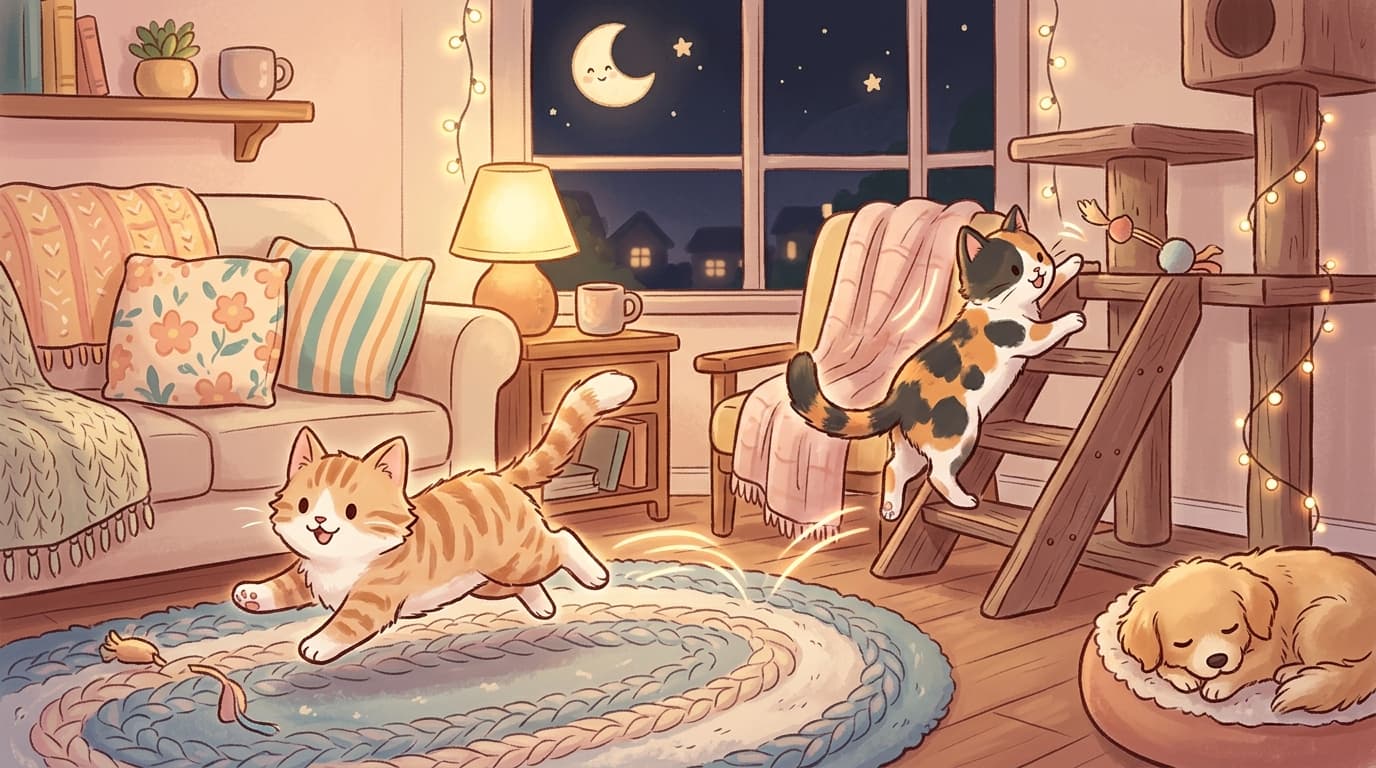
Your cat isn’t turning into a superhero after dark—your home is just watching a built-in hunting system switch on. In low light, their instincts and senses kick into high gear, and suddenly your hallway looks like a racetrack.
Why cats seem faster at night (they’re not actually speeding up)
Cats don’t gain extra miles per hour at bedtime. What changes is the playing field.
Cats are designed to function in dim conditions far better than we are. Their eyes are built to gather more available light, and they have a reflective layer in the eye that boosts what they can see when it’s dark. So when you turn off the lights, your cat gains a huge advantage while you lose one.
That difference makes their movements look sharper and more dramatic—like they’re darting through the shadows with perfect timing—because, honestly, they kind of are.
Cats are crepuscular, not nocturnal
Most pet owners don’t realize cats aren’t truly nocturnal. They’re crepuscular, meaning they’re naturally most active around dawn and dusk—exactly when many small animals are also on the move.
So when the light starts to drop, your cat’s brain isn’t thinking “time to wind down.” It’s thinking “prime hunting hours.” Even if your cat has never hunted a real thing in their life, the internal schedule is still there.
What midnight zoomies really are
Those sudden bursts of sprinting, skidding, leaping onto furniture, and ricocheting off corners are commonly called zoomies. They’re short, intense explosions of energy—your cat’s way of unloading built-up fuel.
If you’ve ever noticed your cat sleeping for most of the day (with occasional breaks to snack, stretch, and judge you), that stored energy has to go somewhere. Nighttime often becomes the perfect release valve.
Why your home triggers “hunt mode” after dark
At night, your cat’s environment feels different—even if nothing has moved.
- The house is quieter, so tiny sounds stand out