Male Dogs vs Female Dogs: 5 Real Differences You’ll Notice at Home and on Walks
From pee-mail to leash pulling and rough play, here are 5 everyday ways male dogs tend to differ from females.
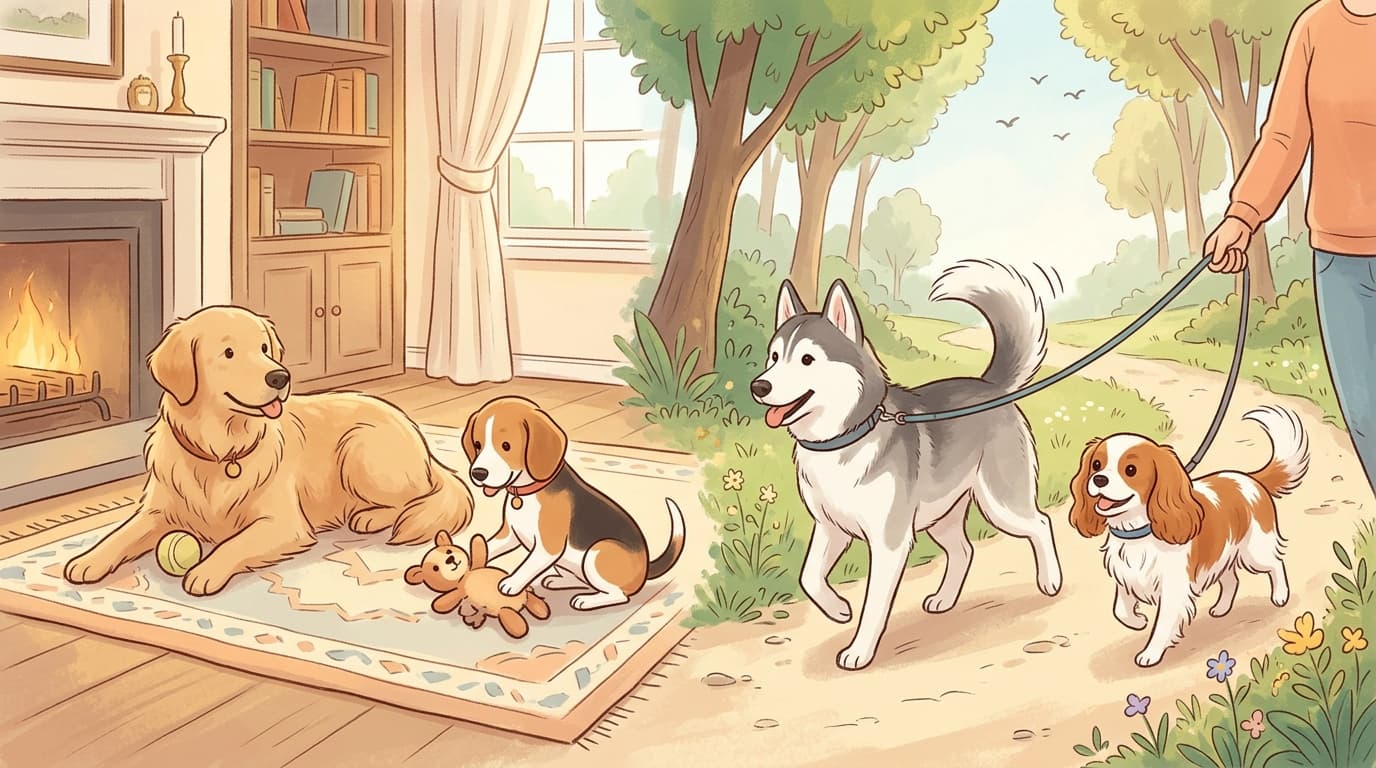
Male dogs don’t just seem different from female dogs—many of their everyday habits are powered by instincts that push them to move, communicate, and bond in their own style. If you’ve ever wondered why your boy dog turns a simple walk into a full investigative mission, you’re not imagining it.
1) Male dogs leave an “invisible map” on every walk
That leg lift isn’t only about emptying a bladder. For many male dogs, it’s communication.
Urine carries chemical signals that other dogs can read like a bulletin board: who was here, roughly how mature they are, and even clues about overall condition and mood. Those scent messages can linger for a long time—long enough that your dog may return to the same spot days later like he’s checking the neighborhood news.
Testosterone tends to crank up this urge to mark, which is why it often intensifies around adolescence (many males start seriously marking around the time hormones surge). And while neutering often reduces marking a lot, it doesn’t always erase it completely. Once a dog has practiced a behavior repeatedly, part of it can become habit—his default way of “showing up” in the world.
Most pet owners don’t realize that when their dog sniffs a spot and then marks right over it, he’s essentially replying. It’s not random. It’s social.
2) Leash pulling isn’t just bad manners—it’s motivation
If your male dog hits the end of the leash like he’s got somewhere important to be, there’s a good chance he does—at least in his head.
Research comparing shelter dogs has found males tend to pull more and create higher leash tension than females, and it isn’t fully explained by size or strength. A big part of it is drive. Male dogs are often more likely to surge forward to investigate what’s ahead, especially when a high-value scent is in the area.
One scent in particular can flip the switch: a female in heat. For intact males, that smell can narrow their focus so much that it feels like they “forget” their training. This is also where you get the sudden escape-artist behavior—digging, fence testing, door-dashing—because the urge to locate the source is incredibly strong.
Neutering can reduce roaming and mate-seeking behavior significantly, but even neutered males may keep that forward momentum: the need to check what’s around the next corner.