
The Physics Behind Cat Jumps: How Cats Leap So High So Easily
Cat jumps aren’t magic. Learn how your cat measures distance, stores energy like a spring, and twists midair to land safely.
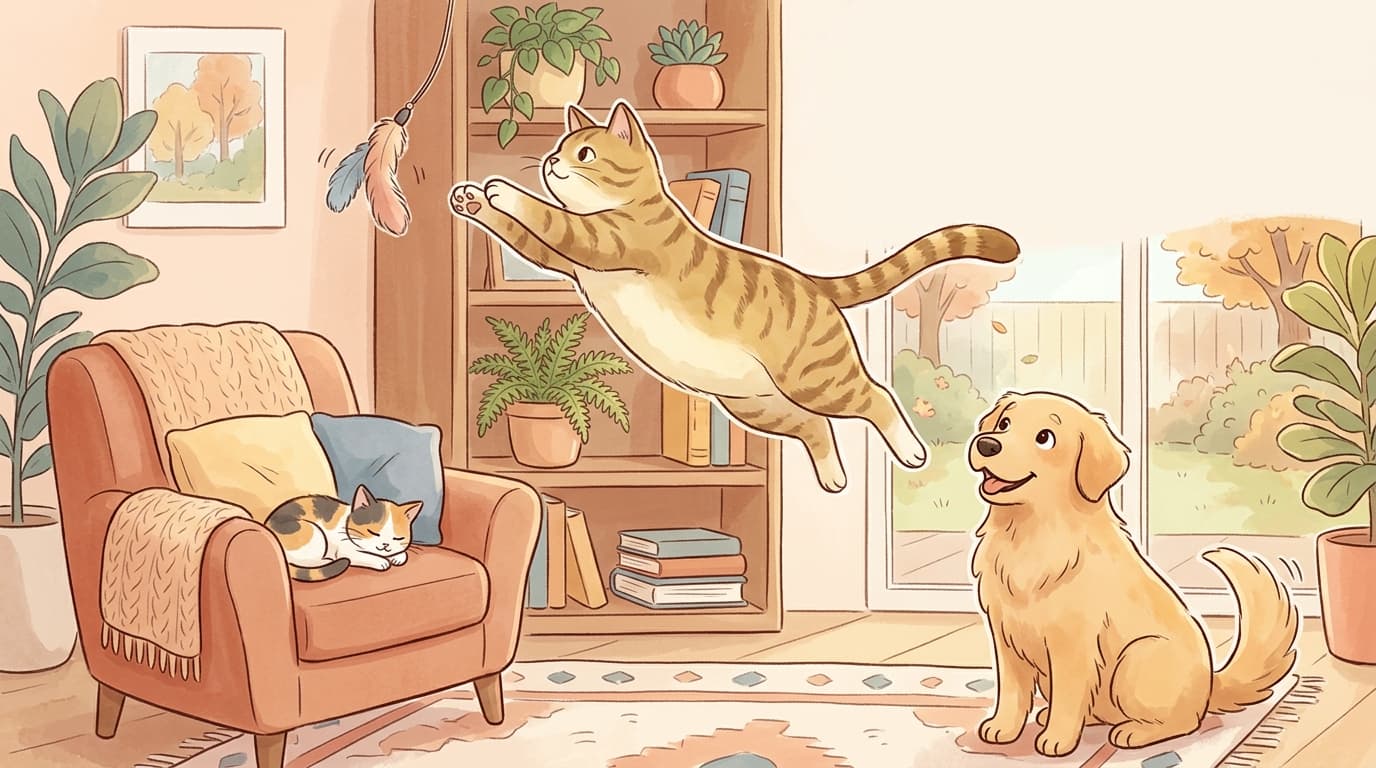
Watching a cat clear a height that looks downright unreasonable can make your brain glitch for a second. But those “impossible” cat jumps aren’t magic — they’re a mix of fast decision-making, spring-loaded muscles, and a body built for midair adjustments.
If you’ve ever noticed your cat freezing and staring at a shelf or windowsill before launching, that pause is part of the trick.
Cat jumps start with a split-second “calculation”
That intense stare isn’t your cat being dramatic. It’s your cat gathering information.
In a moment, your cat’s brain pulls together what they see (distance, height, landing area) with what they remember from past attempts. They’re judging whether the surface looks stable, whether there’s enough room to land, and whether the jump is worth the effort. It’s not conscious math — it’s instinctive processing that happens incredibly fast.
Most pet owners don’t realize how much decision-making happens before the paws even leave the ground.
The secret weapon: powerful legs that act like springs
A cat’s body is light, but their limbs are seriously strong for their size. When your cat crouches before a jump, they’re doing more than “getting ready.” They’re loading energy into their muscles and tendons like a spring being compressed.
The deeper and more controlled the prep, the more energy they can store — and the more energy they can release in the push-off. That’s why cat jumps can look effortless: the work happens in the crouch, then the launch is a clean burst.
A flexible spine turns a leap into an aerial adjustment
Leg power gets your cat off the ground. Their spine helps them handle everything that happens after.
Cats have an unusually flexible backbone, which lets them change body position midair. That flexibility helps them fine-tune their trajectory, bring their legs under them for landing, and adjust if the takeoff or landing spot isn’t exactly what they expected.
It’s one reason a cat can jump to a narrow surface and still look composed — they’re not just flying forward, they’re actively shaping their body while they’re airborne.