Why Your Cat Doesn’t Experience Petting Like You Think (And How to Touch Them the Way They Prefer)
Your cat reads petting as scent-sharing and stimulation. Learn where to touch, when to stop, and how to let your cat lead contact.
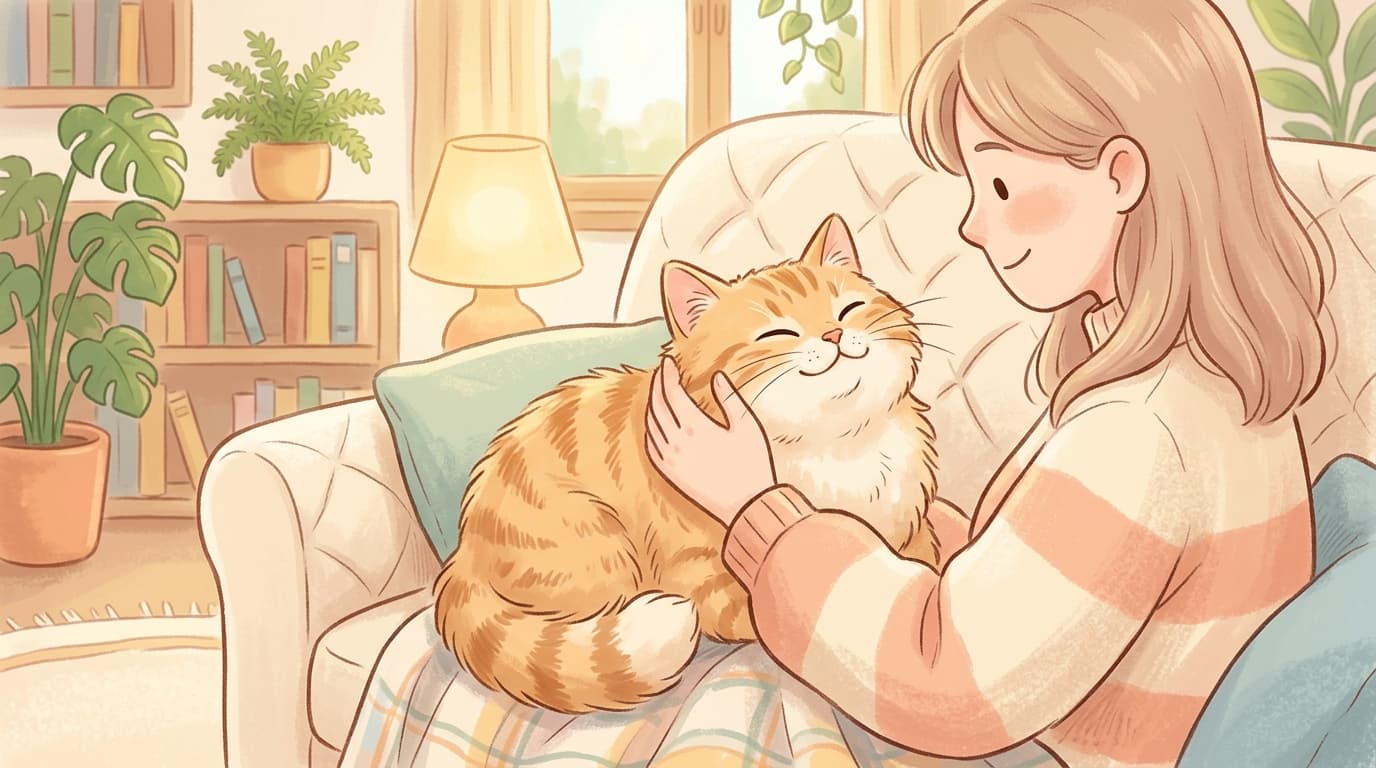
You stroke your cat’s back and expect that steady purr that feels like instant closeness. To you, petting is simple affection—almost automatic. To your cat, that same contact can mean something entirely different.
Your cat experiences petting as communication, not “human affection”
Humans lean on words, facial expressions, and obvious gestures to show love. Cats don’t. Your cat lives in a world that’s built on scent and physical signals—quiet, constant information that tells them what’s safe, what’s familiar, and who belongs.
So when your hand moves through your cat’s fur, your cat isn’t necessarily thinking, “Ah, my person is being sweet.” Their brain often reads your hand as part of a cat-style social system: contact that can help determine closeness, safety, and shared identity.
That’s why the way you touch your cat can do two very different things: it can deepen trust… or it can quietly stress them out without you realizing why.
Scent-sharing: the hidden meaning behind head rubs and cheek touches
In cat relationships, one of the biggest bonding behaviors is social grooming and scent exchange. Cats learn “who is mine” by mixing scents—creating a shared, familiar smell that signals safety.
Your cat has scent glands in key areas, especially around the face (think cheeks and head). If you’ve ever noticed your cat leaning into your fingers when you touch their cheek, it may not be them begging for “more pets” in the human sense. It can be your cat actively participating in scent-sharing—guiding your hand to help spread and mix those familiar smells.
In your cat’s mind, a consistent-smelling environment is a safer environment. And you, when you smell “right,” feel more like part of their inner circle.
Why your cat grooms right after you pet them
Some pet owners feel a little rejected when their cat immediately starts licking themselves after being touched—like the cat is trying to erase the interaction.
Most of the time, it’s not rejection. It’s continuation.
Your cat may be spreading that shared scent across their body, essentially “wearing” the connection as they move around the house. It’s a subtle behavior, but it often fits the way cats maintain familiarity and comfort.