Your cat can look perfectly fine—playing, eating, purring—while their kidneys are quietly struggling. The scary part is that cats are experts at hiding discomfort, so you often don’t see obvious symptoms until the problem is already advanced.
Kidney issues are one of the biggest health threats for house cats, but a lot of the risk comes down to everyday habits: how your cat drinks, what they eat, and whether you catch small changes early.
Cats didn’t evolve as big water drinkers. Their ancestors came from hot, dry regions and survived by conserving every drop. That means two things in modern homes:
- Cats naturally produce very concentrated urine. When urine is thick and concentrated, crystals can form more easily.
- Cats don’t feel strong thirst the way many animals do. In nature, much of their water came from prey (which is mostly water). A mouse is roughly 80% water.
Now compare that to dry kibble, which is usually around 10% moisture. If your cat eats mostly dry food, they often don’t “make up” the missing water by drinking more. So you can end up with a cat who seems normal but is chronically under-hydrated—exactly the situation that can stress the urinary system and kidneys over time.
People lump a lot of problems under “kidney issues,” but two common scenarios look very different in real life.
Think of this as a plumbing problem. Crystals or stones can irritate the bladder and urinary tract, cause bleeding and pain, or—worst case—block urine from leaving the body.
If you’ve ever noticed your cat repeatedly visiting the litter box and producing almost nothing, that’s not “being weird.” That can be a true emergency.
A cat who can’t pee for about 24 hours is in dangerous territory. This is one of those situations where waiting it out can turn a treatable problem into a crisis.
This is more like a filter wearing out. Kidney tissue doesn’t simply “bounce back” after damage; it tends to scar. Over time, less working kidney tissue means poorer filtering, and waste products build up in the body.
The trap is that cats can act normal for a long time because the kidneys compensate—until they can’t.
Cats rarely announce pain dramatically. Instead, they show you little clues. Watch for:
- More frequent litter box trips, straining, or only a few drops
- Crying or yowling while trying to pee
- Blood-tinged urine (pinkish litter is easy to miss)
- Excessive licking under the tail
For chronic kidney problems, the signs can be quieter:
- Drinking noticeably more than before
- Peeing much more (you’re cleaning the box more often or it clumps heavily)
- Staring at the water bowl but not drinking normally (sniffing, hesitating, drinking “oddly”)
- Bad breath that smells harsh or ammonia-like
- A dull, greasy, unkempt coat
Most pet owners don’t realize that “My cat is finally drinking a lot of water—great!” can sometimes be the opposite of great. In some cases, increased thirst happens because the body is trying to dilute built-up toxins.
You don’t need to be doing something extreme to cause trouble. A few common patterns add up.
Hydration is the foundation. Two big issues show up in homes:
- Water quality: If your tap water is very hard (high mineral content), it may contribute to crystal formation in some cats.
- Water access: Cats are famously “why would I walk to the kitchen?” creatures. If water isn’t convenient, they may drink less.
What tends to help:
- Try filtered or bottled water if your water is very hard.
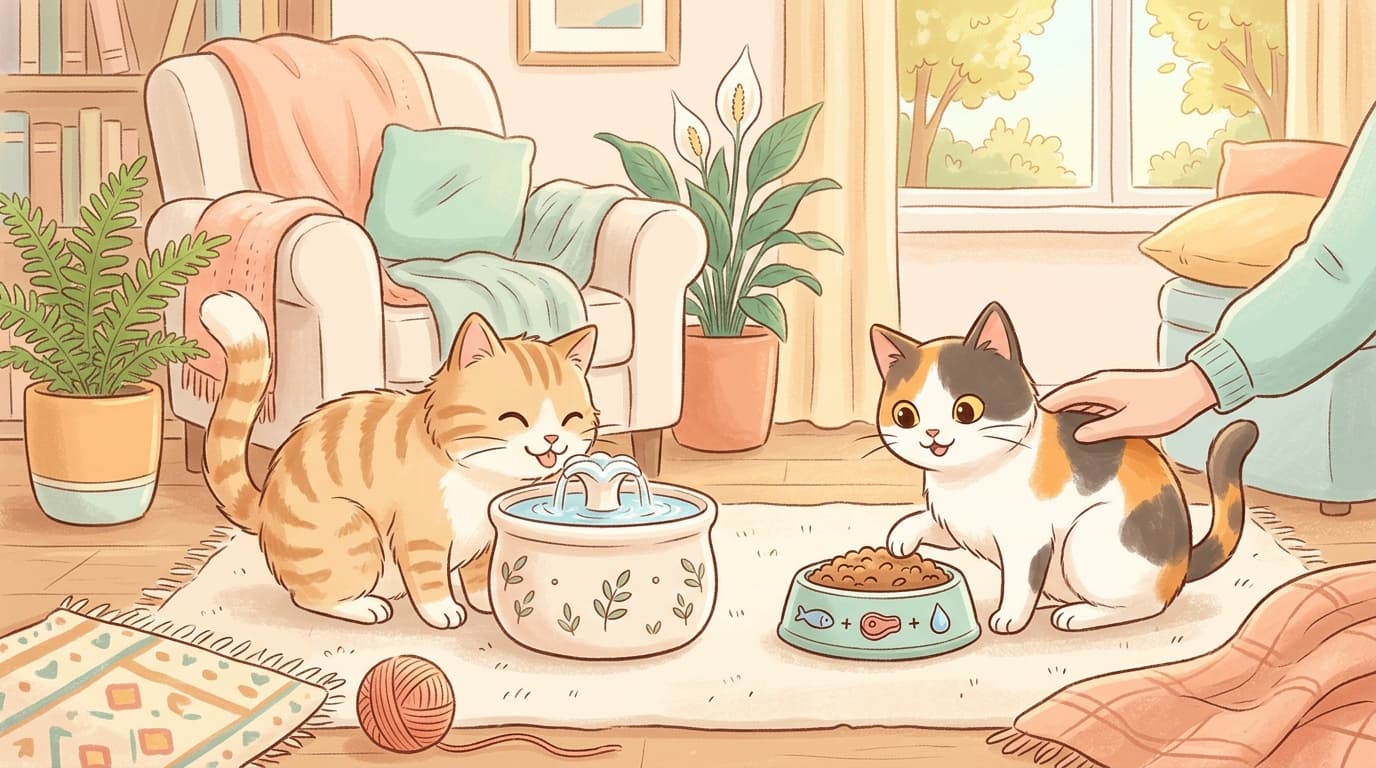
- Put multiple water bowls in different rooms.
- Choose ceramic or glass bowls and wide shapes (many cats dislike their whiskers touching narrow rims, especially plastic).
Protein quality and mineral balance matter.
Two extremes can cause problems:
- Very cheap foods that rely on low-quality animal byproducts can increase the workload on the kidneys.
- All-meat or poorly planned homemade diets can be loaded with minerals—especially phosphorus, which is a major enemy of struggling kidneys.
Homemade feeding isn’t automatically bad, but it’s not “give them what I’m eating.” It’s a precise nutritional formula. If you want to go homemade, it has to be done with real planning.
Also, be careful with “kidney” or “urinary” prescription-style foods: some are designed for a specific goal (like dissolving certain stones) and aren’t meant to be used forever unless your vet directs it.
Stress doesn’t just affect behavior—it can affect the urinary tract. Some cats develop stress-related bladder inflammation, and during stressful events (moving, visitors, big routine changes), the urinary tract can tighten up. Less urine flow means more stagnation, more irritation, and more risk.
If your cat suddenly hides, avoids the litter box when people are around, or seems “off” after changes at home, don’t write it off as personality.
This one is simple and serious: don’t give your cat medication from your own cabinet unless a veterinarian specifically instructs you. Some human painkillers can cause sudden, severe kidney damage in cats.
Milk is food, not water—and many adult cats don’t tolerate it well. Diarrhea dehydrates your cat, and dehydration is rough on the kidneys.
Neutering itself isn’t the direct cause. The common link is lifestyle: some neutered cats become less active, gain weight, and drink less because they move less. Weight and inactivity are the real problems to manage.
Some therapeutic diets are meant for specific phases (like dissolving certain crystals). Using them long-term without guidance can shift urine chemistry in the wrong direction for a different type of stone.
If you want a practical checklist you can actually stick to, start here:
- Schedule routine checkups. Once a year for most cats; every 6 months for cats over 7.
- Ask for kidney screening basics: urine test, bloodwork, and an ultrasound when appropriate.
- Consider SDMA testing if it’s available and within budget—this can flag kidney changes earlier than some standard markers.
- Use the “multiple water stations” rule. Aim for several bowls around the home.
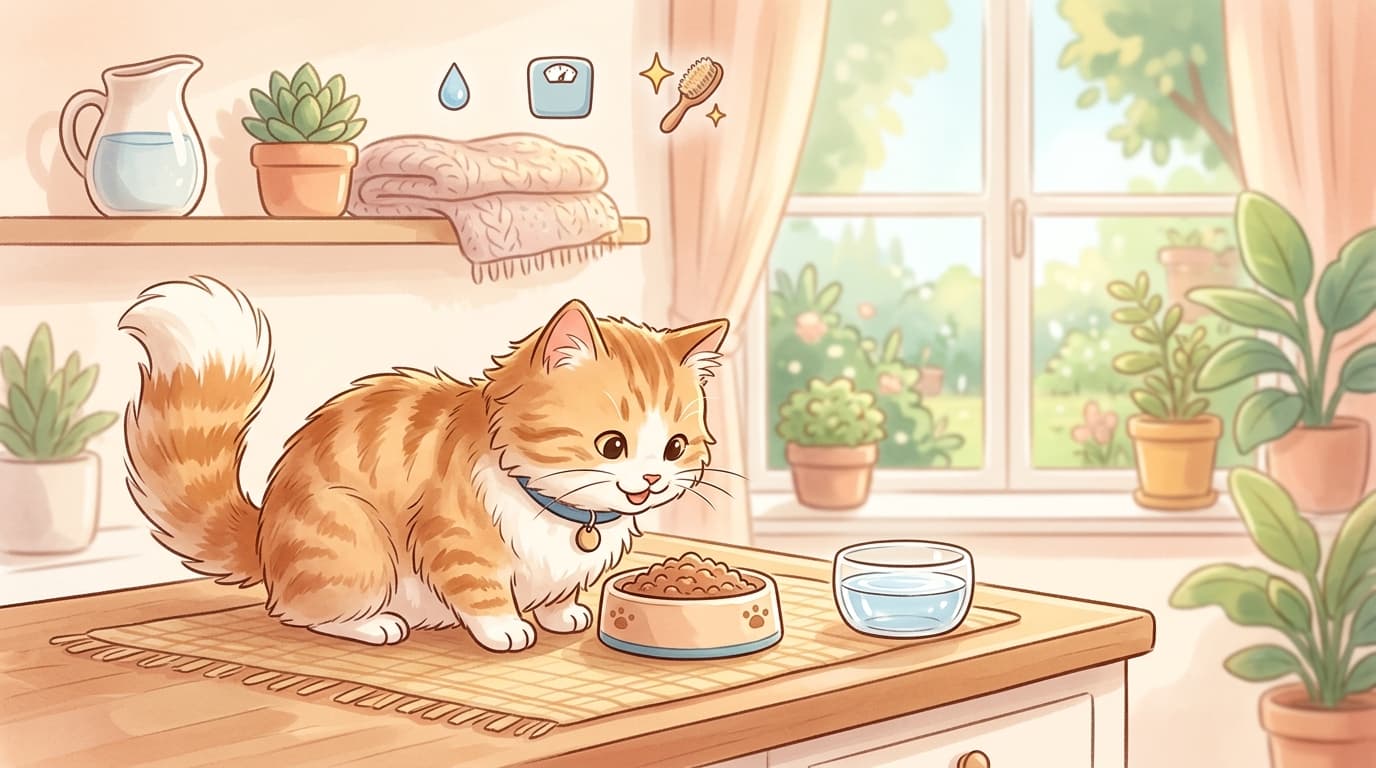
- Help your cat stay lean. Weigh monthly and adjust portions if weight creeps up.
- Add wet food daily if you can. Even one serving a day boosts water intake in a way most cats won’t achieve by drinking alone.
- Keep people-food off the menu. Especially salty, seasoned foods—and never give onions/garlic, grapes/raisins, chocolate/caffeine, or alcohol.
Kidney problems in cats are scary partly because they’re quiet. But your attention—watching the litter box habits, noticing changes in drinking, making hydration easy, and feeding in a kidney-friendly way—can genuinely buy your cat more good years.
Your cat can’t tell you “this burns” or “I feel nauseous.” They’re counting on you to notice the small stuff early.