4 Quiet Signs Your Dog Truly Trusts You (That Most Owners Overlook)
From leaning their back on you to dreaming deeply nearby, these four subtle behaviors reveal when your dog feels truly safe with you.
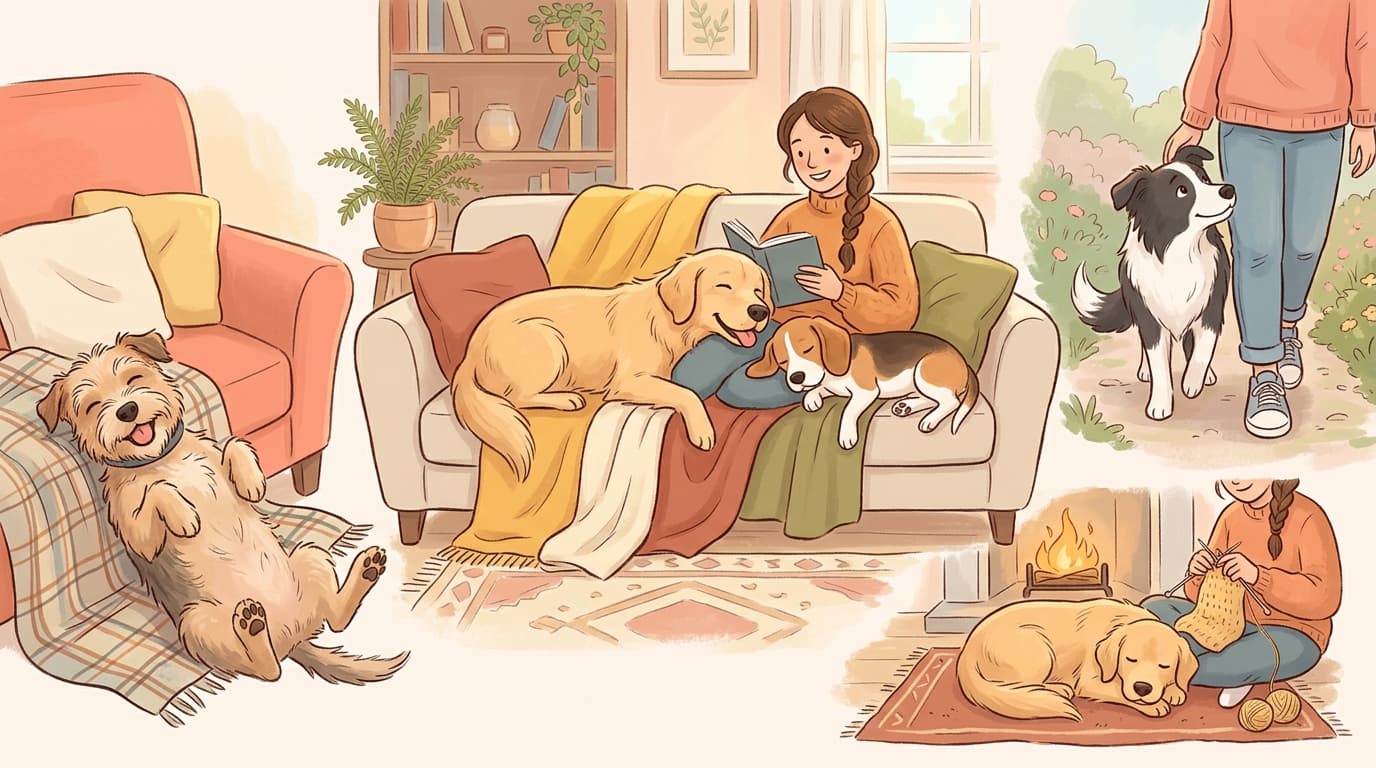
Your dog doesn’t usually “announce” trust with big, obvious gestures. It shows up in tiny choices—where they walk, how they sit, what they allow, and even how deeply they sleep—so it’s easy to miss if you don’t know what you’re looking at.
Below are four of the clearest signs your dog trusts you, plus what makes each one so meaningful.
1) They come to you when they’re scared (instead of hiding)
A sudden bang outside. Thunder rolling in. A weird noise that makes your dog freeze for a second. Then they choose a direction—and it’s straight toward you.
If you’ve ever noticed your dog pressing into your side while trembling, the shaking is the part most people focus on. But the bigger signal is the decision that happened right before it: your dog picked you as their safest place.
From an instinct point of view, that’s a big deal. Dogs are descended from animals that survived by avoiding vulnerability. In the wild, looking weak can make you a target. So when your dog feels overwhelmed and still moves closer to you rather than retreating to a corner, they’re doing something that goes against a deep “self-protection” impulse.
There’s also science behind why this happens. Studies looking at dogs under stress have found that a strong bond with their person is linked to lower stress responses (including lower cortisol) during scary events. The threat might still be there—but your presence changes how their body processes it.
2) They turn their back to you—or lean their spine into you
A dog sitting with their back facing you can look like they’re ignoring you. In dog body language, it often means the opposite.
Turning away is an exposed position. They can’t see what’s behind them, and their strongest defenses (teeth and forward-facing posture) aren’t aimed at you. So when your dog casually plops down with their spine against your leg, or settles with their back toward you while calmly watching the room, they’re essentially saying: “I don’t need to monitor you. You’re safe.”
You’ll often see this paired with a loose, soft body—relaxed jaw, soft eyes, no tight shoulders—especially when they’re leaning into you for contact. That’s different from a stiff, tense dog who’s guarding something or trying to control space.
Most pet owners don’t realize this signal can grow over time. A dog who barely touched you at first may slowly become the dog who drapes across your feet a year later. That gradual increase is trust building through repetition: you stayed predictable, nothing bad happened, and their body learned it could fully settle.
3) They “allow” touch in vulnerable places—and they don’t tense up
Petting feels simple from the human side. From your dog’s side, it’s a rapid-fire decision every time your hand approaches: stay or move away, soften or stiffen, accept or decline.
Researchers studying dog communication around handling have pointed out that dogs often give subtle “I’m not sure about this” signals that people miss—tiny lip licks, a slight head turn, jaw tension, ears shifting back. Those cues don’t mean your dog is “bad.” They mean your dog is communicating.
So what does trust look like?
- They stretch out and stay loose while you touch them.
- They lift their chin to invite under-the-neck rubs.
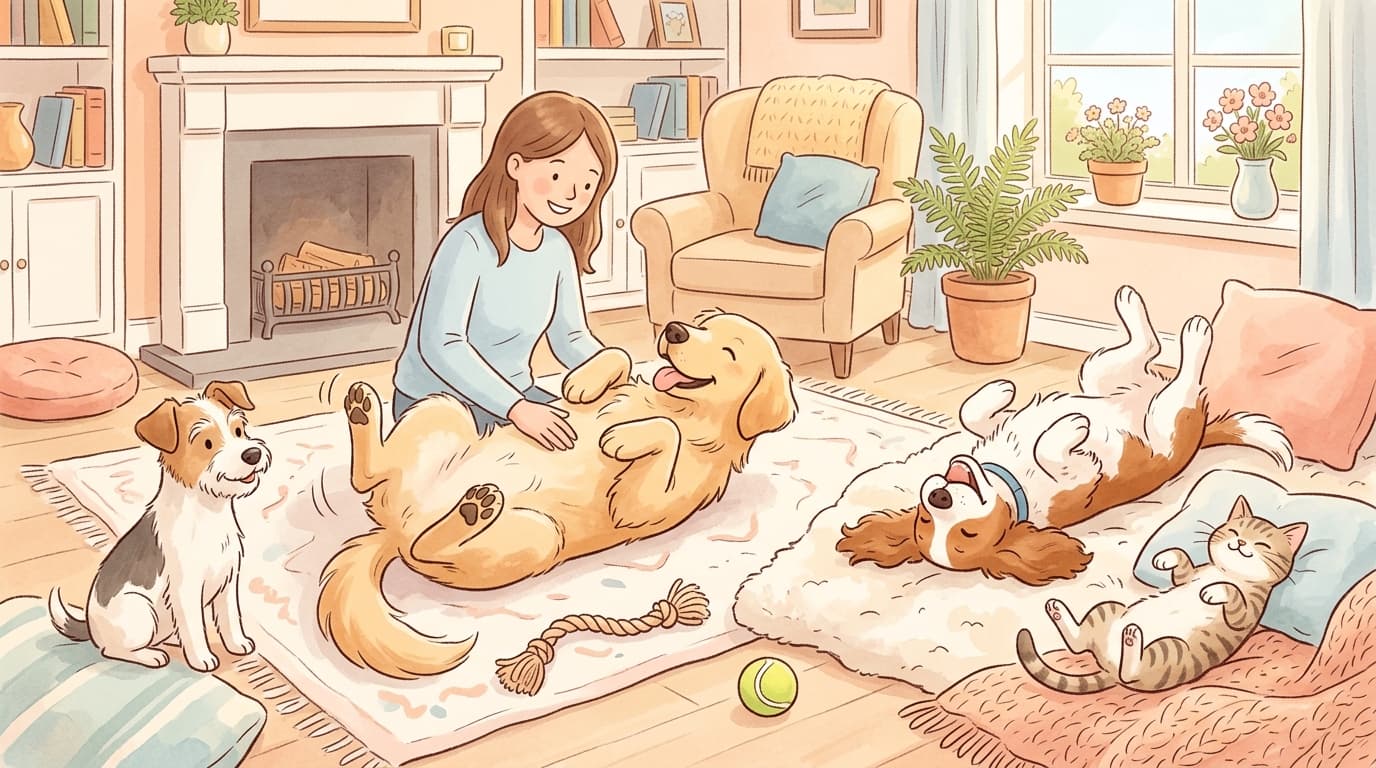
- They roll onto their side and feel heavy and relaxed (not tight or ready to spring up).
- They let you touch sensitive areas—especially paws—without yanking away.
Paws are a huge one because dogs rely on their feet for traction, movement, and sensing the ground. Many dogs will tolerate a head pat from a stranger but protect their paws instantly. If your dog lets you hold a paw and stays relaxed, that’s a strong sign you’ve earned real trust.
A simple way to respect (and build) this trust: pet for a few seconds, then pause. If your dog nudges your hand or leans in, they’re asking for more. If they look away, shift back, or move off, they’re telling you they’re done. Listening to those “votes” is how many dogs become more open over weeks and months.
4) They fall into deep, twitchy dream sleep while you’re still awake
You’ve probably seen it: paws twitching, tiny muffled barks, eyelids fluttering. That’s dream sleep.
Here’s why it matters: dogs are naturally lighter sleepers than we are. They tend to stay more ready to react to sounds and movement around them. So when your dog drops into full REM sleep—the stage where dreaming happens—their internal threat-monitoring turns way down.
If your dog is able to do that while you’re still moving around the house, before the lights are out, it’s a powerful sign they feel safe with you specifically. They didn’t wait for the whole environment to become “officially quiet.” Your presence was enough for them to fully let go.
There’s also a bonding chemistry piece here. Research has shown that dogs and humans can share an oxytocin-based bonding loop—oxytocin is a hormone strongly associated with social bonding and lowered threat perception. Positive proximity, gentle touch, and friendly interaction can raise oxytocin in both of you, which helps the brain feel safer. Interestingly, this effect appears tied to dogs’ domestication history in a way that doesn’t show up the same way in human-raised wolves.
The takeaway: trust is built in tiny moments, not big speeches
If your dog seeks you out when they’re scared, relaxes with their back to you, melts into your touch, or dreams deeply nearby, you’re seeing trust in its purest form. Notice those small choices, keep being steady and kind, and your dog will keep leaning into the bond you’ve built—sometimes literally.
Continue reading

7 Dog Body Language Signals Most Owners Miss (And What Your Dog Is Really Saying)
From play bows to doorway guarding, learn the dog body language signals that reveal trust, comfort, and connection.

Why Your Cat Climbs on You: It’s Not “Just Love” (And What They’re Really Saying)
From lap-sitting to cheek rubs, your cat’s “cute” habits are secret messages about safety, scent, and trust.

Dog Body Language Signs of Love: 7 Little Moments That Mean “You’re My Person”
From the play bow at the door to sleeping pressed against you, these dog body language signs quietly prove how much your dog loves you.