7 Rare Signs Your Dog Has Chosen You as Their Forever Person
From scent-sleeping to syncing your pace, these rare behaviors can reveal your dog has chosen you as their forever person.
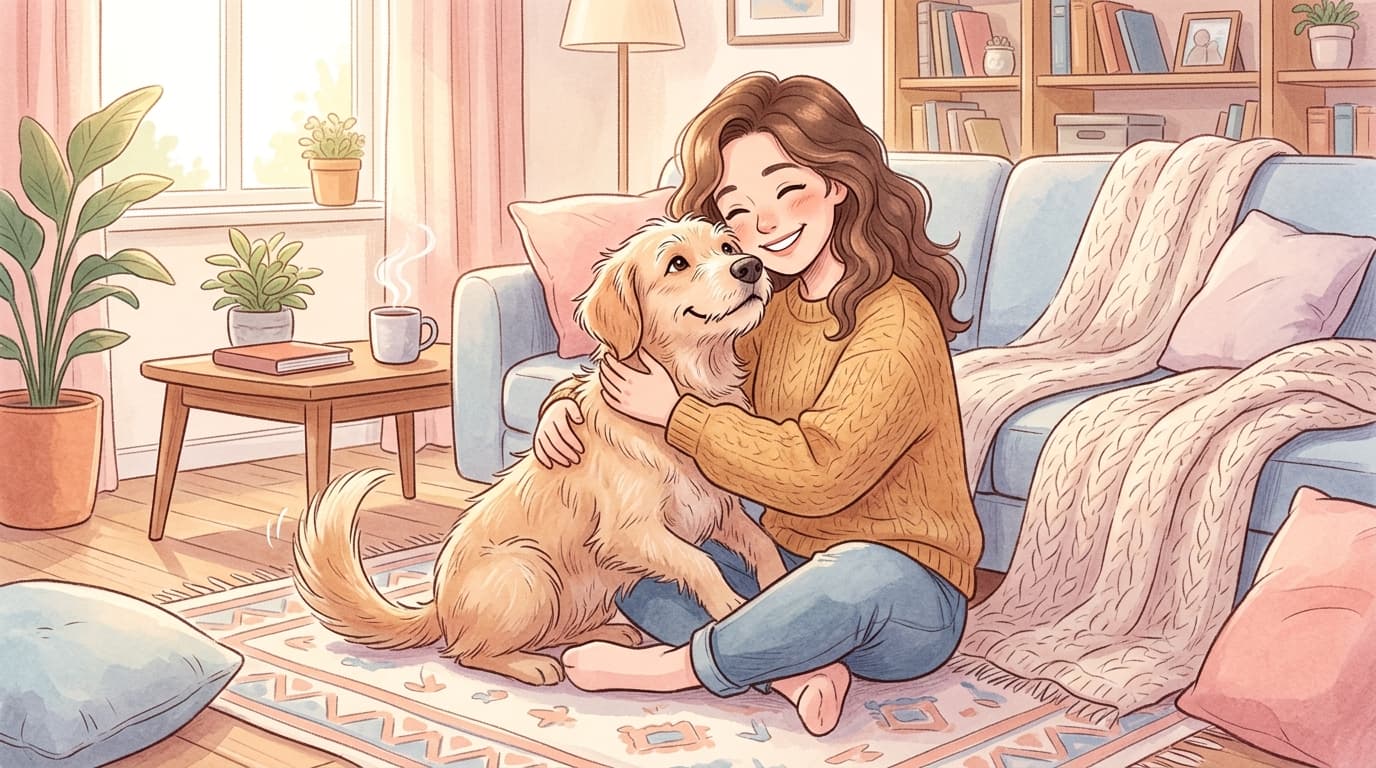
Some dogs love everyone—and honestly, that’s part of their charm. But every so often, a dog quietly decides that one human isn’t just “a favorite,” they’re the person: the safe base, the comfort, the home.
If you’ve ever wondered whether your dog has truly picked you as their forever person, look for these subtle (and surprisingly specific) signs.
1) They sleep close—but their nose aims for your skin
Plenty of dogs like to sleep in your room or hop on the bed. The rare part is how they position themselves.
If your dog keeps placing their nose right near your bare skin—your hand, ankle, cheek, even the edge of your foot—it’s often because they’re seeking your scent on purpose. Your smell is calming to them in a way we can barely imagine, because their nose is built to read the world in high-definition.
If you’re trying to tell “intentional scent-snuggling” from a random flop, watch for these clues:
- They choose your direction even if another spot is warmer or softer.
- After you move or someone walks by, they re-orient their nose back toward you.
- They keep that position as they fall fully asleep, instead of shifting away.
Most pet owners don’t realize that for some dogs, your scent isn’t just familiar—it’s emotional regulation.
2) They pick you over the fun stuff (even food and other dogs)
Picture a busy park or a backyard get-together. New people, new dogs, and the kind of food smells that make every dog’s brain short-circuit.
A dog who’s strongly bonded to you may still sniff around—but then they’ll break away and come back to you without being called. Not because they’re scared or “boring,” but because you’re the best option in the room, even compared to instant rewards.
There’s research on free-ranging dogs showing that food wins at first, but as trust and familiarity build, affection and relationship start to compete with (and sometimes match) the pull of calories. In other words: food grabs attention fast, but a real bond changes what your dog values.
How to encourage this over time:
- Don’t make every “come to me” moment a treat-bribe. Let them choose you, then reward with praise, touch, or play (food can be part of it, just not the whole story).
- Avoid harsh scolding for wandering in social settings. You want “returning to you” to feel safe.
- Work on being calm and steady in busy places—dogs come back to the human who feels like a grounded home base.
3) They do the “check-in loop” in new places
If you bring your dog somewhere unfamiliar, do they trot out a short distance, pause and look back, then circle back to you—over and over—before expanding their range?
That looping pattern isn’t necessarily clinginess. It’s often your dog testing the environment while keeping you as their reference point. Each loop is basically them saying: “Still there? Cool. I can go a little farther now.”
Dogs with a strong attachment often explore more confidently when their chosen person is nearby, because you function like a safe base.
If you want to support this behavior:
- Let them check in without constantly calling or waving.
- Reward returns calmly—no big hype that turns it into frantic ping-pong.
- Keep your own body language relaxed; if you look nervous, they’ll loop more.
4) They relax faster with your handling than with anyone else
Some moments of dog ownership are intimate but not exactly glamorous: cleaning ears, checking paws, brushing teeth, holding a collar, looking at a sore spot.
A dog who has chosen you may still dislike the procedure, but they’ll soften faster with you than with other people. You might see a quicker exhale, gentler eyes, less bracing through the body—like their nervous system trusts your hands.
If your dog isn’t there yet, you can build it:
- Move slowly, speak softly, and pause the second you feel tension.
- Don’t only touch paws/ears/mouth during “serious” moments. Lightly and briefly handle those areas during play or cuddles so the sensation stops predicting stress.
5) They follow you everywhere… then give you space
This one throws people off. Your dog trails you from room to room like your shadow—then once you sit down, they settle on the other side of the room.
That can actually be a sign of a secure bond: they want to be with you, but they’re not frantic about being on top of you. It’s closeness without neediness—your dog feels connected and also confident enough to have a little independence.
If you’ve ever noticed your dog doing this and thought, “Why did you bother following me then?”—the answer might be simple: being in the same space as you is the point.
6) Their greeting is happy… but not panicked
Yes, some dogs go full pogo-stick when you come home. But an intensely frantic reunion can sometimes be less about love and more about anxiety—your dog wasn’t sure you’d return.
A dog with a deeply secure attachment may still be thrilled to see you, but the vibe is different: more warm joy than frantic relief. They trust the rhythm of your comings and goings.
7) They sync their movement to yours like a quiet duet
One of the most fascinating signs is how your dog moves with you.
On walks (or even around the house), a strongly bonded dog often starts matching your pace and flow. If you slow down, they slow down. If you hesitate, they hesitate. If you change direction slightly, they adjust without you “driving” them.
It’s not robotic obedience—it’s attunement. In many species, movement synchrony is tied to rapport and connection. And there’s emerging interest in the idea that this syncing can go beyond footsteps, potentially extending into shared rhythms like breathing and heart rate.
A small takeaway that means a lot
If your dog shows one or two of these signs, you’re doing something right. If you see several—especially the scent-seeking sleep, the check-in loop, and the calm handling—you may be your dog’s chosen person for life.
So soak it in. Be consistent, be kind, and keep being the place your dog can return to when the world feels big.
Continue reading

7 Dog Body Language Signals Most Owners Miss (And What Your Dog Is Really Saying)
From play bows to doorway guarding, learn the dog body language signals that reveal trust, comfort, and connection.

Why Your Cat Climbs on You: It’s Not “Just Love” (And What They’re Really Saying)
From lap-sitting to cheek rubs, your cat’s “cute” habits are secret messages about safety, scent, and trust.

Dog Body Language Signs of Love: 7 Little Moments That Mean “You’re My Person”
From the play bow at the door to sleeping pressed against you, these dog body language signs quietly prove how much your dog loves you.