5 Small Things That Make Your Cat Feel Truly Loved (No Treats Required)
Give your cat what they actually want: a high perch, calm proximity, a nose-first greeting, floor time, and a replied-to meow.
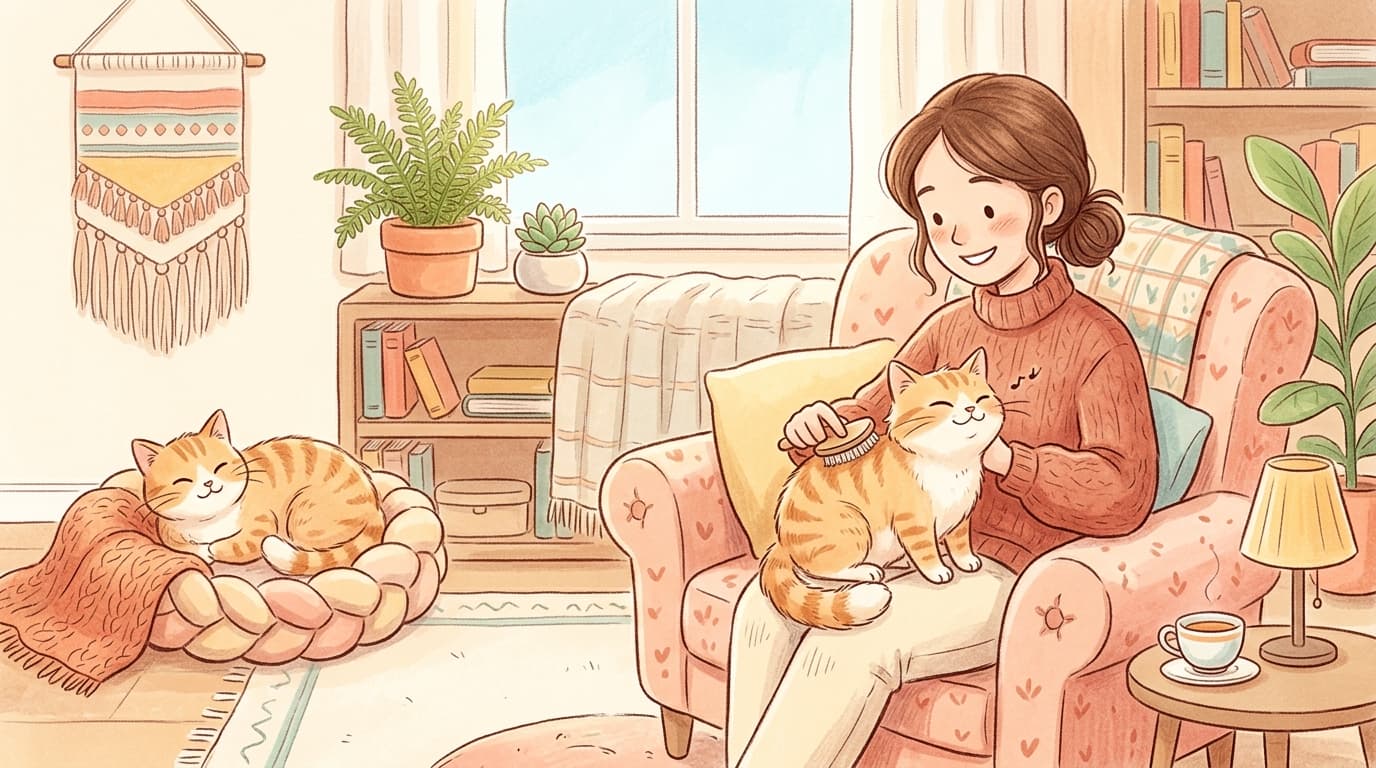
Most cats aren’t waiting for a new toy or a fancier bowl. They’re waiting for you to understand a few quiet signals—little moments that tell them they’re safe, respected, and genuinely loved.
If you’ve ever reached to pet your cat and watched them calmly stand up and leave, you’ve already seen how “love” can look totally different in cat language.
The one shift that changes everything: respect your cat’s terms
A lot of cat bonding comes down to a simple idea: your cat wants to feel in control of their own body and space. Once you start interacting in ways that let your cat choose “yes” or “no,” their trust tends to grow fast.
The five actions below all work for the same reason: they reduce pressure and increase safety. And for a cat, safety is love.
1) Give your cat a high “throne” that nobody messes with
If your cat keeps climbing the fridge, the top of the bookshelf, or the highest kitchen cabinet, they’re not being naughty. They’re doing what cats are wired to do: get vertical.
Height is security. From up high, your cat can watch the room, track movement, and relax without feeling cornered. Instead of constantly lifting them down, set up one approved high spot that’s theirs.
Try this tonight:
- Clear a high shelf (or the top level of a sturdy cat tree)
- Keep it mostly empty so it feels like a dedicated perch
- Make it a “no bothering” zone—no grabbing, no sudden petting, no kids reaching up
Many cats get noticeably calmer once they have a reliable lookout point. You may even see less hiding, because they finally have a place that feels like control.
2) Pass the “calm proximity” test (by doing nothing)
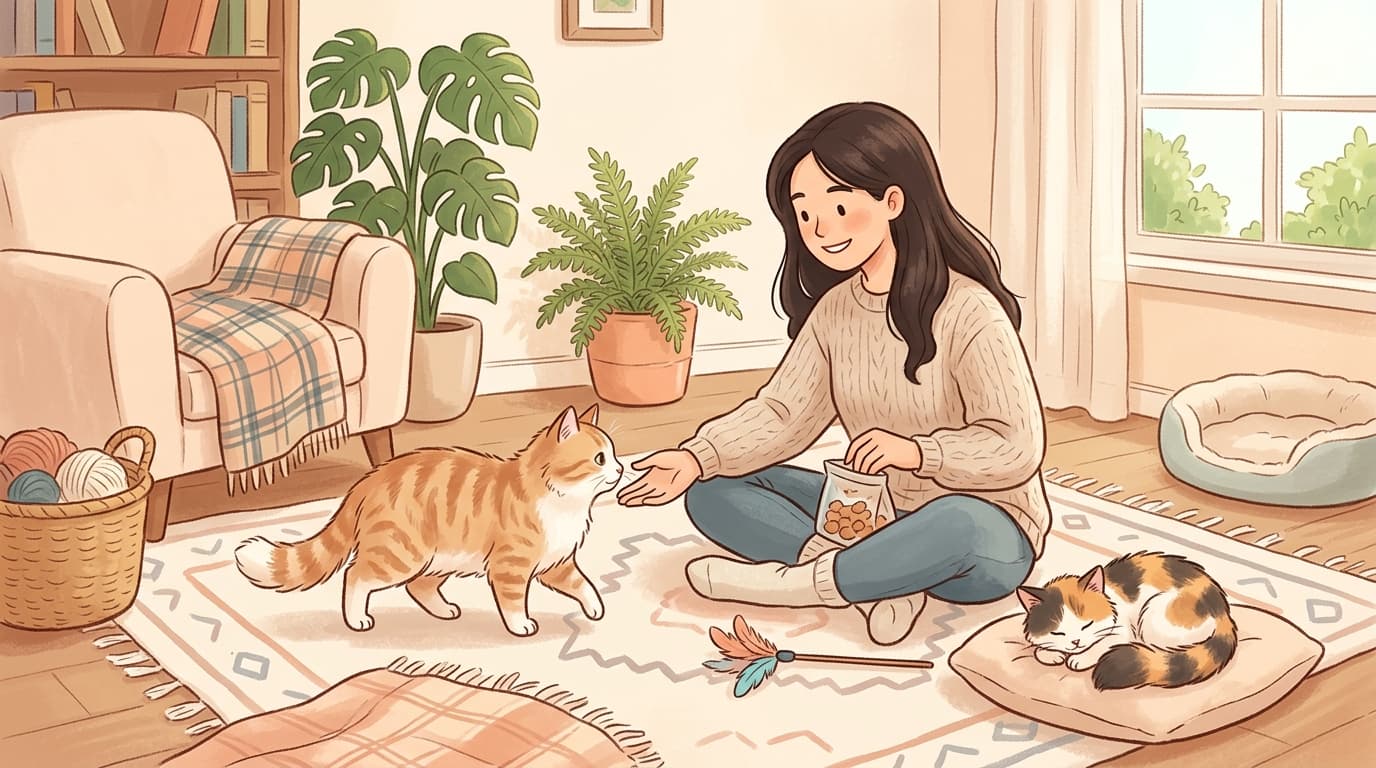
Cats often build trust through closeness, not contact. So when your cat sits a few feet away from you—same room, same vibe, no touching—they may be asking a quiet question: “Can I exist near you without being handled?”
Most pet owners don’t realize this is a test until they fail it. The classic moment: your cat sits nearby, you reach out to pet them, and they leave like you broke a rule you didn’t know existed.
Next time, try this instead:
- Don’t reach
- Don’t lean toward them
- Just stay relaxed and let the silence be normal
If your cat wants more, they’ll close the distance. If they don’t, you still just proved you’re safe to be around.
3) Use a nose-first greeting (the “one finger hello”)
Imagine someone twice your size rushing in and hugging you without warning. That’s how sudden face-petting can feel to a cat—especially right when you walk in.
Your cat’s world starts with scent. A respectful greeting is one that lets them check you first.
Do this:
- Hold out one finger about two inches (around 5 cm) from your cat’s nose
- Keep your hand still
- Wait for your cat to lean in
If your cat touches their nose to your finger, that’s a clear “green light.” It’s a small ritual, but it tells your cat you understand consent in cat language.
4) Spend 10 minutes on the floor at your cat’s level
To your cat, you’re a moving tower. Even if you’ve never stepped wrong in your life, your size alone can feel intense—especially for shy or newly adopted cats.
Sitting on the floor changes the whole dynamic. You become less looming, less unpredictable, more like a calm presence in their space.
Make it simple:
- Sit on the floor for 10 minutes a day
- Don’t chase your cat with attention
- Let them approach, circle, sniff, or ignore you
This “doing nothing” is actually you doing something very specific: lowering the pressure and giving your cat a chance to choose you.
5) Reply to the “language” your cat made for you
Adult cats don’t typically meow back and forth with each other the way they do with humans. Many cats develop meows specifically to communicate with their people—and they can recognize your voice.
So if your cat meows at you and you always stay silent, you might be missing a bonding moment that matters to them.
You don’t need to be clever. Just respond.
- Answer in a soft, normal voice
- Say a quick sentence about what you’re doing
- Ask a gentle question like you would to a friend
The point isn’t training. It’s acknowledgement. You’re telling your cat, “I hear you,” and that can change the emotional tone of the whole house.
What to do today (a simple 3-step reset)
If you want the fastest, least complicated start:
- Clear a high shelf and make it your cat’s dedicated perch
- The next time your cat sits near you, don’t reach—let closeness be enough
- The next time your cat meows, answer softly like you’re having a tiny conversation
Some cats respond quickly. Others—especially timid or adopted cats—may take weeks or months. That’s not rejection; it’s them healing at their own pace.
The takeaway
You can’t buy the kind of love most cats are asking for. You earn it by offering safety, choice, and quiet respect—one small moment at a time.
Your cat’s whole life is built from ordinary days with you. Make a few of those days feel gentler, and you’ll be surprised how much closer your cat comes.
Continue reading

Does Your Cat Really Love You? 8 Quiet Signs of Trust Most People Miss
From slow tail-tip curls to choosing your seat, these 8 subtle behaviors can reveal how deeply your cat trusts you.

Why Your Cat Climbs on You: It’s Not “Just Love” (And What They’re Really Saying)
From lap-sitting to cheek rubs, your cat’s “cute” habits are secret messages about safety, scent, and trust.

Pumpkin for Cats: The Simple Food Add-In That Supports Digestion and Helps Push Out Worms
Plain pumpkin puree can support your cat’s digestion and make the gut less welcoming for worms—plus most cats accept it well.