7 Subtle Behaviors That Show Your Dog Is Truly Happy (And Feels Safe With You)
You can live with a dog for years and still miss the little signals that say, “Yep, life is good.” Some of the clearest signs of a happy dog are quiet, quick, and easy to brush off as “just a habit.” Once you know what to look for, you’ll start noticing your dog’s contentment everywhere.
1) The tail wag that leans to one side
Most people watch how fast a tail moves. Fewer people notice where it swings.
There’s evidence that tail direction can hint at what your dog is feeling: a wag that favors the right side tends to show more positive, “I want to approach” emotions, while a wag that favors the left side is more likely to show uncertainty or stress.
If you’ve ever noticed your dog greeting you with a tail that seems to arc more to one side, you’re not imagining it. Even other dogs appear to react differently depending on the wag direction, which suggests it’s a real social signal, not just random motion.
2) The play bow that restarts the fun
You’ve seen it: front end down, rear end up, elbows close to the floor. The classic play bow.
What’s especially interesting is when many dogs do it. Instead of only using it before things get rough, dogs often bow after a brief pause, like they’re pressing the “resume” button on play. And right after that bow, play usually ramps up—chasing, bouncing, zooming, the whole package.
Another tell: dogs tend to bow when someone is actually watching. It’s communication on purpose.
3) The long, soft exhale when they finally settle
That big sigh your dog lets out after circling their bed (or stealing your spot on the couch) is more than a cute sound effect.
A slow, deep exhale—especially paired with a loose body, droopy eyelids, and a calm face—often shows your dog is releasing tension and getting comfortable. All mammals sigh for physical reasons, but the sigh you notice during cozy “settling in” moments can also line up with emotional ease.
Next time you hear it, look for the full picture: soft eyes, relaxed jaw, limbs loose, no “ready to pop up” stiffness.
4) The gentle nibble (aka “cobbing”)
Some dogs do a funny little front-teeth nibble on your hand, sleeve, or arm—light pressure, rhythmic, almost like they’re grooming you.
This behavior is often tied to early puppyhood and social bonding. Puppies use gentle mouth behaviors with their mom and littermates, and some dogs keep a version of that into adulthood with the humans they adore.
The difference between sweet and concerning usually comes down to pressure and posture. Affectionate nibbling is typically light, using the front teeth, with a loose body and relaxed face. Many retrievers and herding breeds show mouthy affection more often because they were bred to use their mouths in controlled ways.
Most pet owners don’t realize it, but if your dog “cobs” you during calm cuddle time or right after you get home, it can be their version of, “You’re my person.”
5) The quick “check-in” glance on walks
Your dog is sniffing, exploring, maybe tracking a squirrel like it’s their job… and then they flick their eyes back at you for half a second.
That tiny look is called checking in, and it’s a really sweet sign of a secure bond. It often means your dog feels confident enough to explore, but still wants to confirm you’re there—like a kid at a playground who periodically looks back to make sure their parent is nearby.
Dogs that check in tend to handle stress and new situations better because they’re not emotionally “alone” out there. They know you’re part of their safety net.
When you catch the glance, you don’t need to make a big deal of it. A calm word or a small acknowledgment is plenty.
6) The greeting stretch the moment they see you
Dogs stretch after naps all the time. But there’s a specific stretch that can happen right when you appear—before your dog even moves toward you.
It often looks like a play-bow-ish stretch: front legs forward, chest low, rear end up. The key is the timing and the overall vibe. If it comes with a soft face and loose body, it can act like a relaxed greeting—your dog’s way of saying, “Ah, you’re here. All good.”
A dog who’s tense or unsure is more likely to freeze, assess, or hold their body tight first. A quick, easy stretch right away is a small sign of comfort.
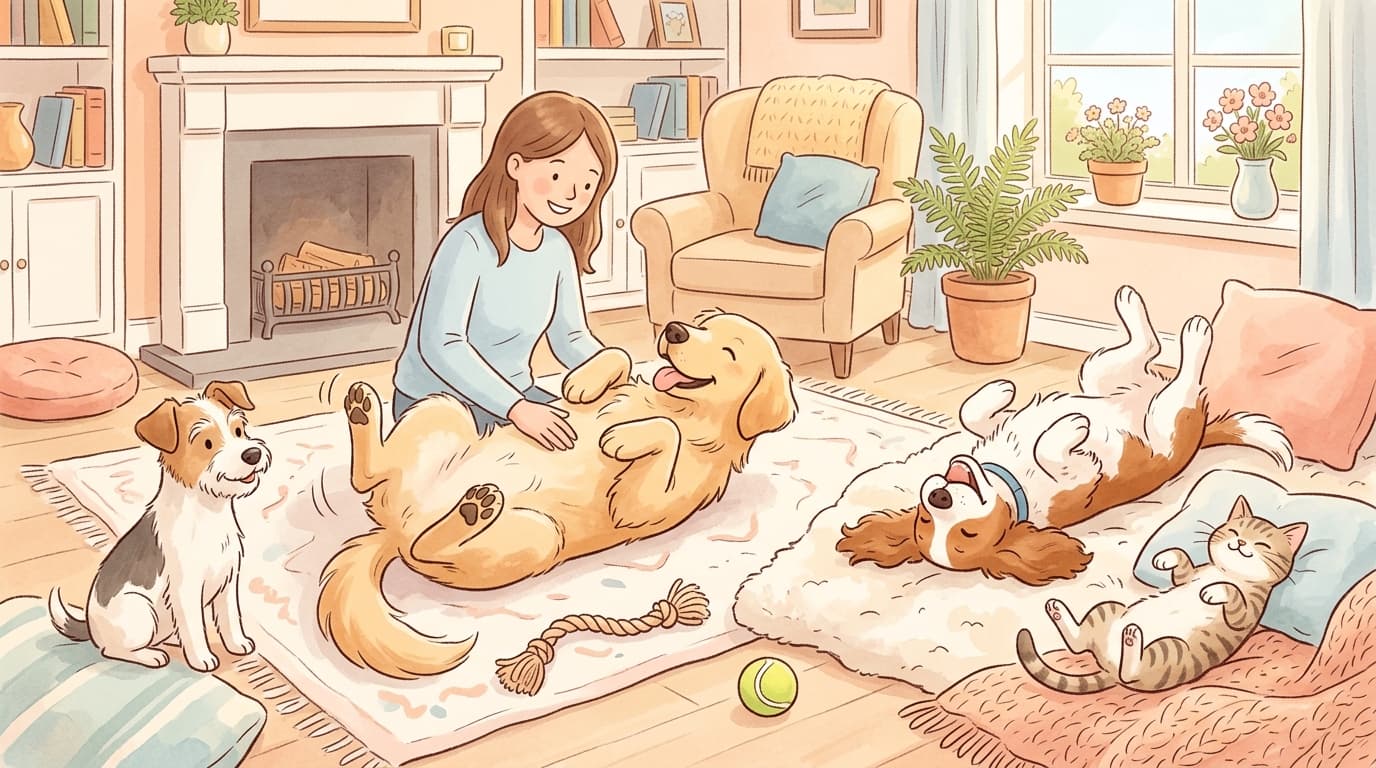
7) The belly-up roll that’s actually about trust
A dog showing their belly can mean different things depending on the rest of the body language.
A truly relaxed belly-up moment tends to look like this:
- Loose, wiggly body
- Soft eyes (not wide and worried)
- Gentle tail movement or total calm
- No sudden stiffness when you move closer
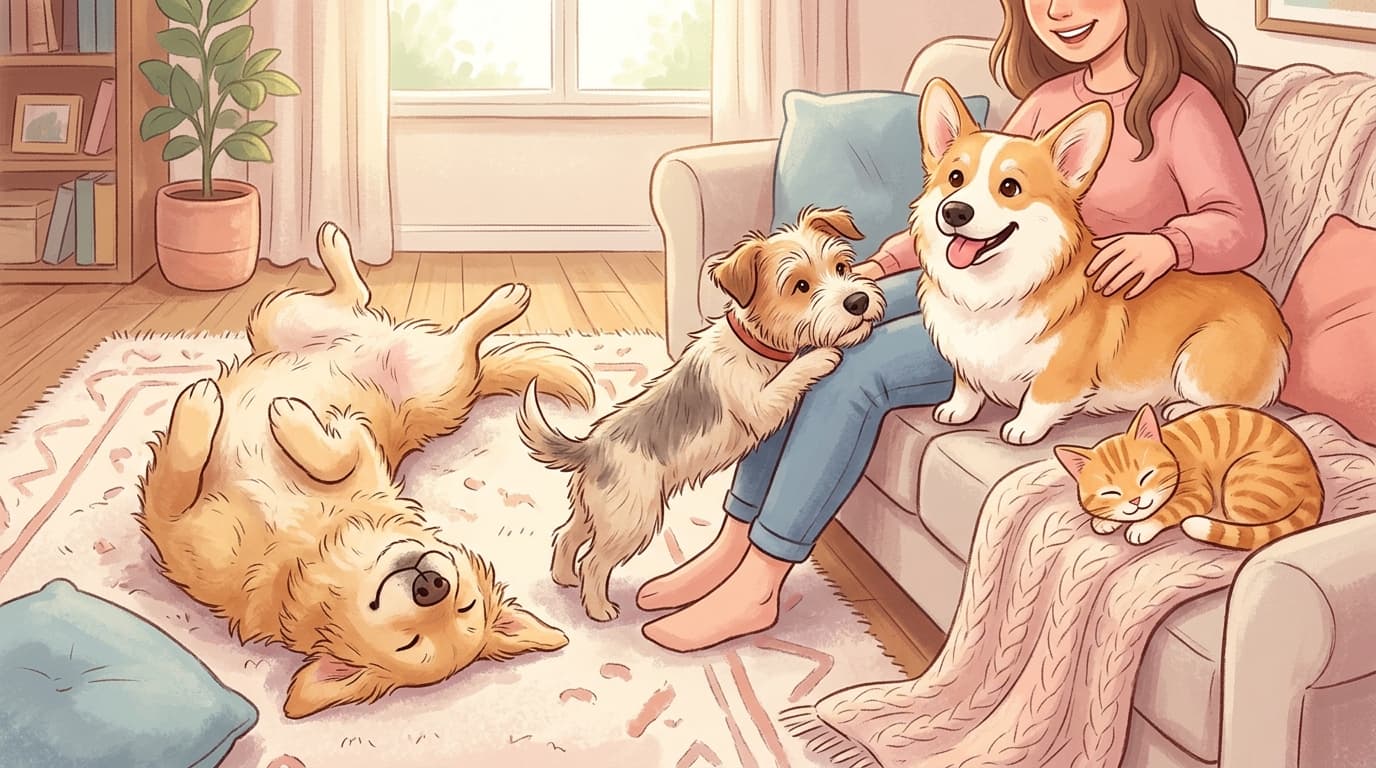
That’s vulnerability, and it’s a big deal. When your dog flops over with paws in the air and stays relaxed, they’re basically telling you they feel safe enough to stop guarding themselves.
The takeaway: happiness looks like ease
A happy dog isn’t “on” all the time—they’re relaxed, secure, and comfortable being themselves around you. Pay attention to the small stuff this week: the tail’s direction, the tiny check-in glance, the sigh when they settle. Those little moments are your dog quietly saying, “Life with you feels good.”
Continue reading

How to Leave Your Dog Home Alone Without Triggering Separation Anxiety
Use these 9 simple routines to keep your dog calm, busy, and secure when you leave the house.

Everyday Habits That Hurt Your Dog’s Feelings (and What to Do Instead)
Small daily habits can quietly stress your dog. Learn what hurts your dog’s feelings—and the simple swaps that rebuild trust.

Female Dogs Aren’t Just “Smaller Males”: 8 Key Differences Every Dog Owner Should Know
Female dogs often learn faster, bond differently, and hide pain better. Here are 8 real-life differences to understand your girl.