6 Subtle Signs Your Cat Truly Loves You (That Most People Misread)
From slow blinks to “making biscuits,” these 6 behaviors reveal when your cat genuinely trusts and loves you.
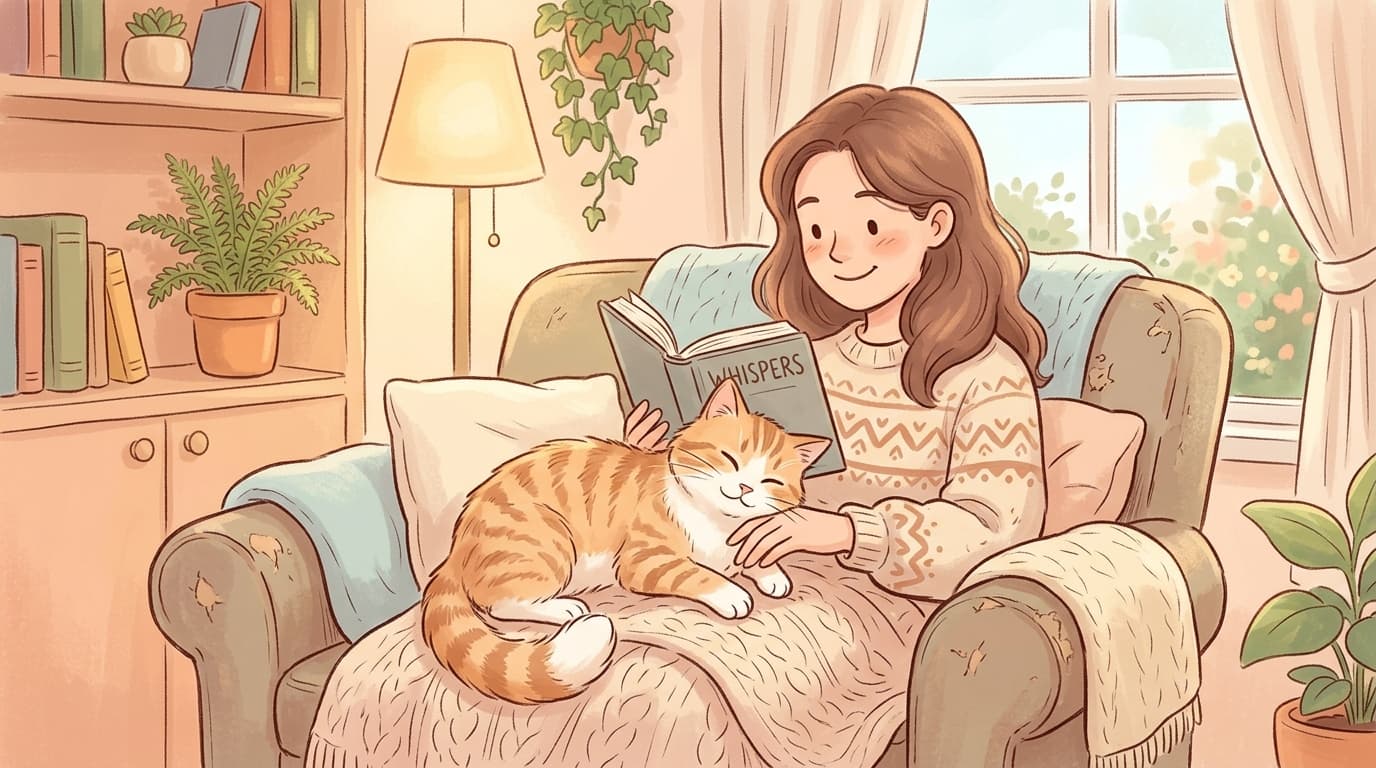
Cats don’t usually do big, dramatic displays of affection—most of their “I love you” moments are quiet and easy to miss. The funny part is you might be seeing them every day and assuming they’re random habits.
Below are six behaviors that typically show up when a cat feels real trust and comfort with you.
1) The slow blink: your cat’s calm “I trust you”
If you’ve ever noticed your cat staring at you from the couch or across the room and then closing their eyes in a long, unhurried blink, you’ve seen one of the sweetest signals in cat body language.
Closing the eyes—even briefly—creates vulnerability. Your cat is essentially saying, “I feel safe enough around you to drop my guard.” Many cats reserve this for the people they’re closest to, and they’re more likely to do it with familiar humans than strangers.
Want to respond? Try a gentle slow blink back. Keep it soft and relaxed, not intense.
2) Belly up near you (without asking for belly rubs)
A cat flopping over and showing their belly can look like an invitation to rub it. Then you reach in and—oops—your hand gets grabbed or lightly bunny-kicked, and it feels like a mixed message.
It’s usually not a trick. Your cat’s belly is a sensitive, protective zone where vital organs are exposed. Rolling over near you often means, “I’m comfortable here. I feel secure with you close by.”
Some cats enjoy belly rubs, but many don’t. If your cat shows the belly and stays relaxed, take it as a trust signal first, and a petting invitation only if they clearly enjoy it.
3) “Gifts” left by your bed or at the door
Finding a toy beside your pillow, a leaf dragged in from the balcony, or (unfortunately) a dead bug in the hallway can be confusing—and a little gross.
But in a cat’s instinctive world, bringing “presents” can be a social behavior. Mother cats bring prey to kittens to feed them and help teach hunting skills. Even well-fed house cats may still do a version of this, not because they’re hungry, but because the behavior is deeply wired.
So if your cat is leaving you little offerings, it can be their odd but meaningful way of including you in their inner circle.
4) Head-butting and cheek rubs: “You’re one of mine”
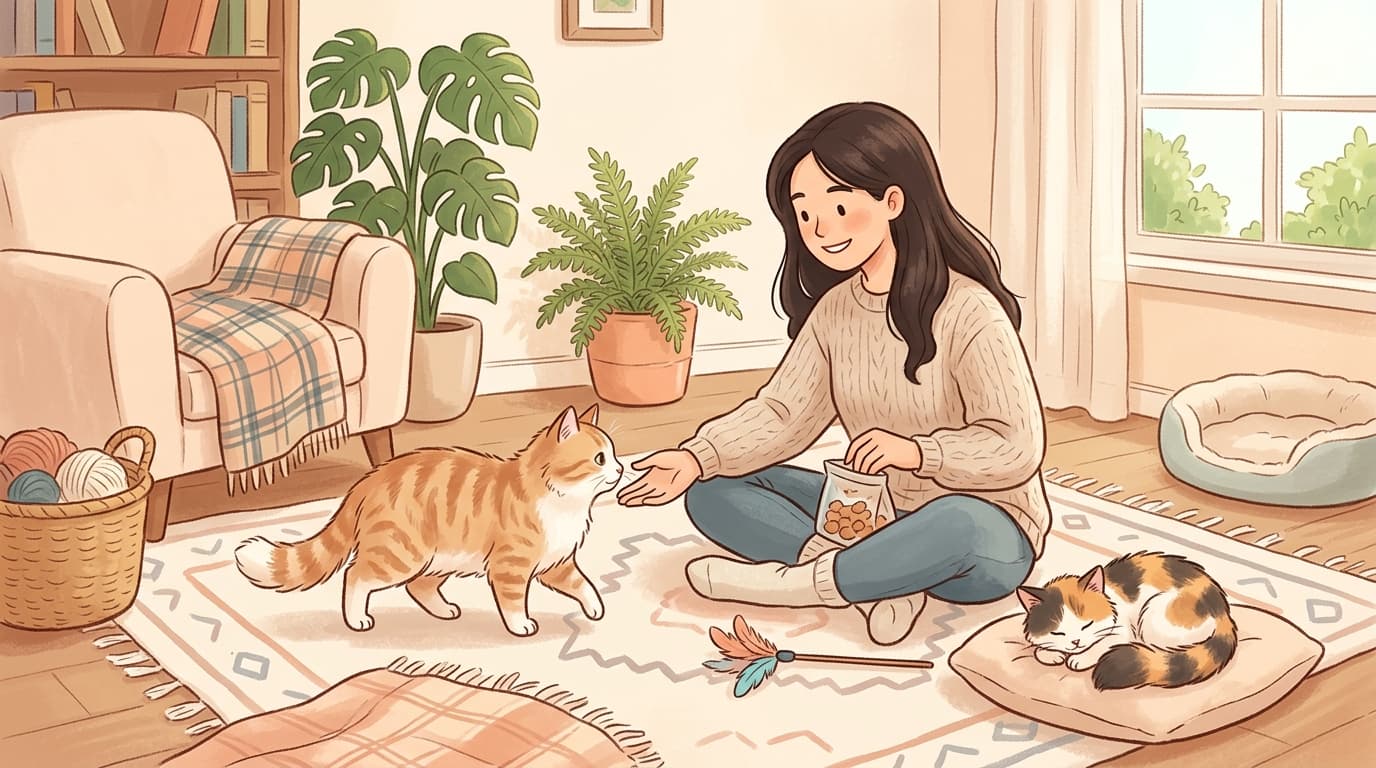
That gentle bump of your cat’s forehead against your hand—or the slow rub along your leg—can feel like a casual hello. It’s actually more personal than it looks.
Cats have scent glands around the forehead, cheeks, and chin. When they rub on you, they’re leaving their scent as a kind of social marker. In multi-cat homes, you’ll see cats do this with each other when they have a friendly bond.
When your cat does it to you, they’re treating you like family: familiar, safe, and part of their home base.
5) Sleeping on you or pressed tightly against you
Cats have multiple favorite nap spots, and they rotate through them like tiny, picky landlords. But choosing to sleep on your lap, curl against your back, or settle on your chest is a different level of closeness.
Sleep is when an animal is most vulnerable. A cat that chooses your body as a sleeping place is showing they feel protected around you—safe enough to fully relax.
Most pet owners don’t realize this is also why, in a household with several people, a cat often “picks” one person to snuggle with most. It’s not always favoritism in the human sense; it’s often about who makes them feel calm and secure.
6) “Making biscuits” on you: comfort that goes back to kittenhood
Kneading—pressing the front paws alternately like your cat is working dough—is one of the most recognizable affectionate habits. Many cats knead blankets and pillows simply because it feels good.
But kneading on your body can be especially intimate. Kittens knead their mother while nursing to stimulate milk flow, and that motion becomes linked with warmth, safety, and being cared for. When an adult cat climbs onto you and starts kneading with half-closed, sleepy eyes, it often means they’re feeling deeply relaxed—secure in the same way they once felt as a tiny kitten.
Not every cat does this with just anyone. When it’s directed at you, it’s a strong sign you’re a trusted place.
The takeaway: your cat’s love language is mostly trust
Cats rarely show affection with grand gestures. Instead, they offer small moments of vulnerability—slow blinks, exposed bellies, sleepy cuddles, and those gentle head bumps.
If your cat does even one of these regularly, you’re not just “the person who feeds them.” You’re someone they feel safe with, and in the cat world, that’s the real definition of love.
Continue reading

Does Your Cat Really Love You? 8 Quiet Signs of Trust Most People Miss
From slow tail-tip curls to choosing your seat, these 8 subtle behaviors can reveal how deeply your cat trusts you.

Why Your Cat Climbs on You: It’s Not “Just Love” (And What They’re Really Saying)
From lap-sitting to cheek rubs, your cat’s “cute” habits are secret messages about safety, scent, and trust.

Why Your Cat Walks on You at Night (And What They’re Really Trying to Tell You)
If your cat steps on your chest at night, it’s not random. Here are the real reasons—and how to respond without encouraging 5 a.m. wakeups.