Most people try to win their cat over with food and cuddles… and still get ignored. The twist is that cats fall in love with tiny, specific experiences—little signals that tell them they’re safe, understood, and in control.
Below are 10 things cats love that many owners accidentally skip (or do backwards). Try a few and watch how your cat’s “I’m busy” attitude starts turning into real connection.
If you’ve ever noticed your cat vanishing the second you call them, it might not be stubbornness—it might be training.
A lot of us only say a cat’s name right before something they hate: the carrier, nail trims, a bath attempt, a vet visit. Your cat learns fast: name = trouble, so ignoring you becomes self-protection.
What to do instead:
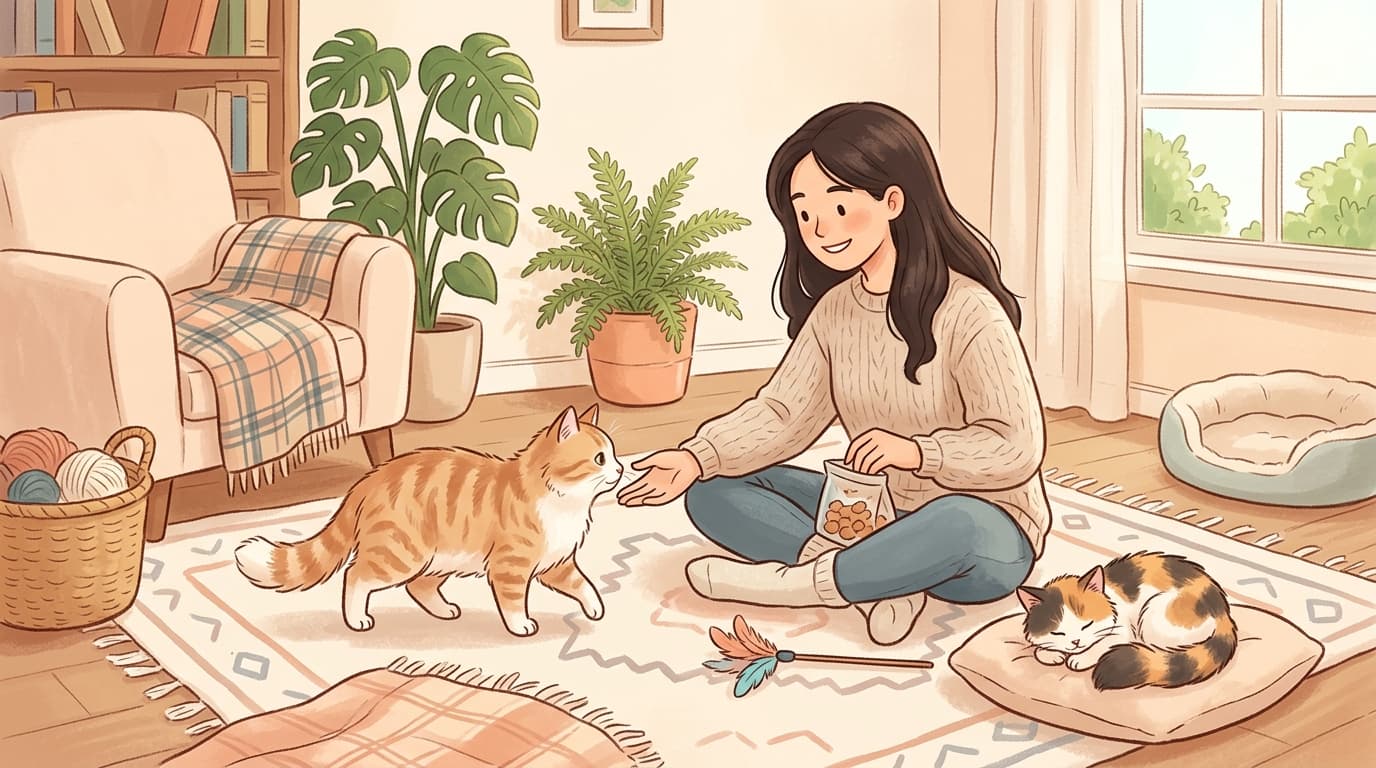
Say your cat’s name during calm, neutral moments when you don’t need anything.
The instant they look at you, reward them (treat, gentle praise, a quick play session).
Keep the “name = scary stuff” association from building by using a different cue for unpleasant tasks (even something simple like “time to go”).
Many cats tolerate full-hand petting, but they don’t necessarily enjoy it. A broad palm with pressure can feel overwhelming—especially if your cat is the sensitive, easily-overstimulated type.
Cats naturally socialize and groom in smaller, more precise contact zones.
What cats tend to love:
Use just your index and middle finger.
Make slow, tiny circles at the base of the ears and along the cheek/jaw area.
Keep it light and controlled, and let your cat lean in rather than you reaching in.
This is one of those changes that can make a “meh” cat suddenly act like you’ve discovered their secret on-switch.
Play isn’t just entertainment for cats—it’s a full instinct loop. If your cat chases a wand toy or laser and never gets to catch it, you’re basically building frustration.
Putting the water bowl right next to the food bowl feels logical to us. To a cat’s instincts, it can feel… suspicious.
Cats have deep-rooted reasons to avoid water near “prey,” and many cats also have a low thirst drive—meaning they don’t feel thirsty until they’re already behind.
Then there’s whisker fatigue: narrow, deep bowls can irritate your cat’s whiskers as they drink.
Easy upgrades:
Place water in a different spot than food (even a different room).
Offer multiple water stations around the house.
Try wide, shallow bowls or even a simple glass of water in a safe location.
Many owners don’t realize how much more their cat will drink once water feels inviting.
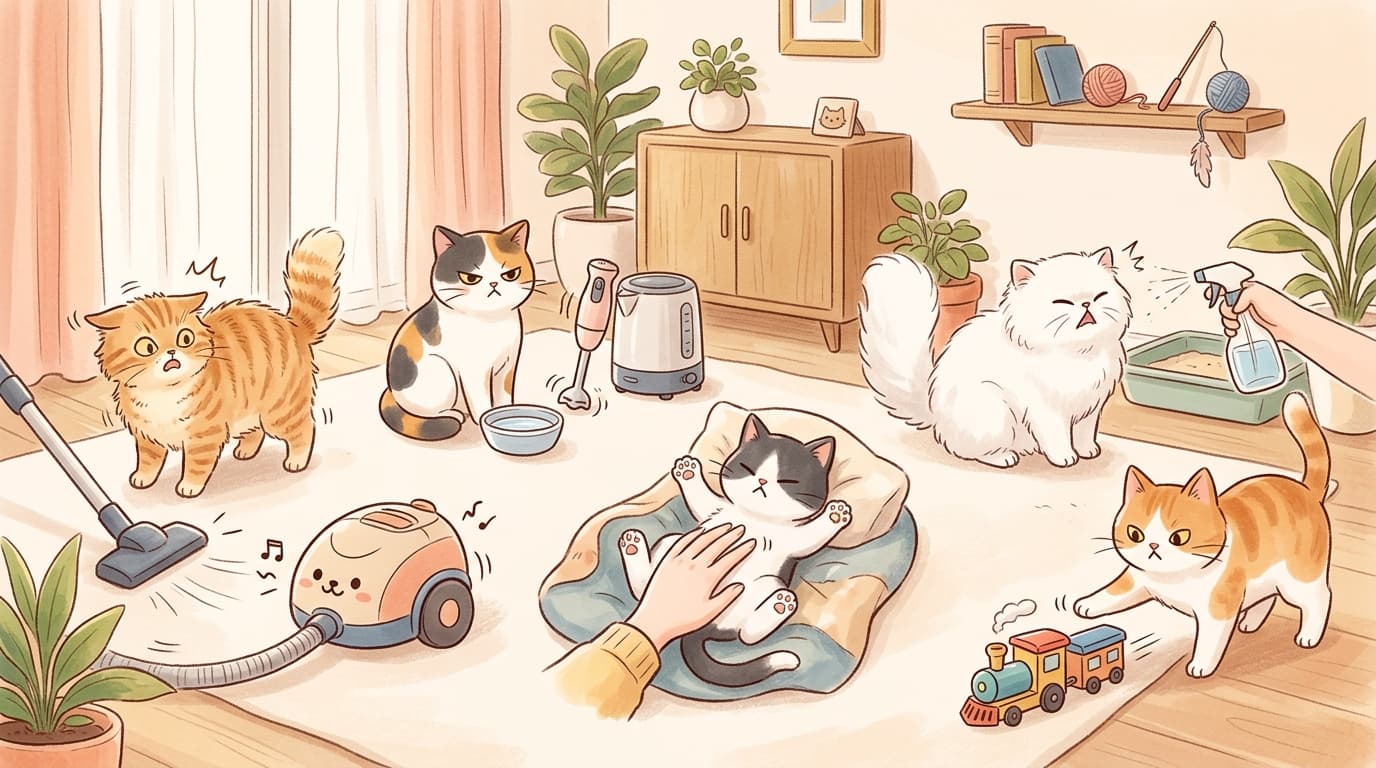
Your home can seem quiet to you and still feel noisy to your cat.
Cats hear higher frequencies than we do, so subtle sounds—electronics, appliance hums, router buzz, notification pings—can be a constant background irritant. Some cats respond by avoiding certain rooms, acting jumpy, or seeming “moody” for no clear reason.
What helps:
Notice where your cat chooses to nap and hide—cats often pick the calmest sound zones.
Place beds, feeding areas, and water away from loud appliances.
Lower sharp notification sounds if your cat startles at them.
Using the litter box is a vulnerable moment for a cat. If you hover, stare, talk to them, or rush in to clean the second they step out, some cats interpret it as danger.
That stress can contribute to litter box avoidance over time—especially in anxious cats.
Make the box feel safe:
Put it in a low-traffic, calm area.
Don’t interrupt your cat while they’re using it.
Avoid immediately “resetting” the box every single time; a familiar scent can help your cat feel that the area is secure territory.
Paws are sensitive and important—packed with nerve endings and tied to how cats explore, hunt, and feel vibration. Many cats protect their paws instinctively.
So if your cat allows gentle paw handling, it’s not just cute. It’s serious trust.
How to build up to it:
Start by lightly touching the fur on top of the paw while your cat is already relaxed.
If they stay calm, gently rub one toe bean for a second, then stop.
Keep sessions short and positive so your cat doesn’t feel trapped.
Most pet owners don’t realize how calming this can become once a cat feels safe with it.
If your cat sleeps on your laundry or steals your spot in bed, that’s not them being weird. Your scent is a security blanket.
Cats use smell as emotional grounding. When you’re gone for hours, leaving a familiar scent can reduce stress—especially for clingy cats, newly adopted cats, or cats who get uneasy when routines change.
Simple move:
Place a recently worn (not freshly washed) T-shirt or hoodie in your cat’s favorite sleeping corner.
It’s cheap, effortless, and surprisingly powerful.
This one surprises people because it feels almost too simple.
Using a soft-bristled toothbrush with a little warm water, you can mimic the sensation of a mother cat’s grooming—rhythmic, gentle, slightly damp. For many cats, it taps into deep comfort memories.
How to do it:
Use warm (not hot) water and a very soft brush.
Stroke slowly on the forehead between the eyes and behind the ears.
Watch your cat’s body language: relaxed face, closed eyes, leaning in, purring.
This can be especially soothing for cats that seem anxious or were separated early.
Pick three of these cat-loving habits and try them today. Small changes—how you call their name, where you place water, how you end play—can make your cat feel understood in a way treats alone never will.
Your cat doesn’t need you to be perfect. They just want you to speak their language.