Why Your Cat Headbutts You: The Sweet Meaning Behind Feline “Head Bunting”
Cat headbutting (head bunting) is a sign of trust and affection. Learn what it means and how to respond the right way.
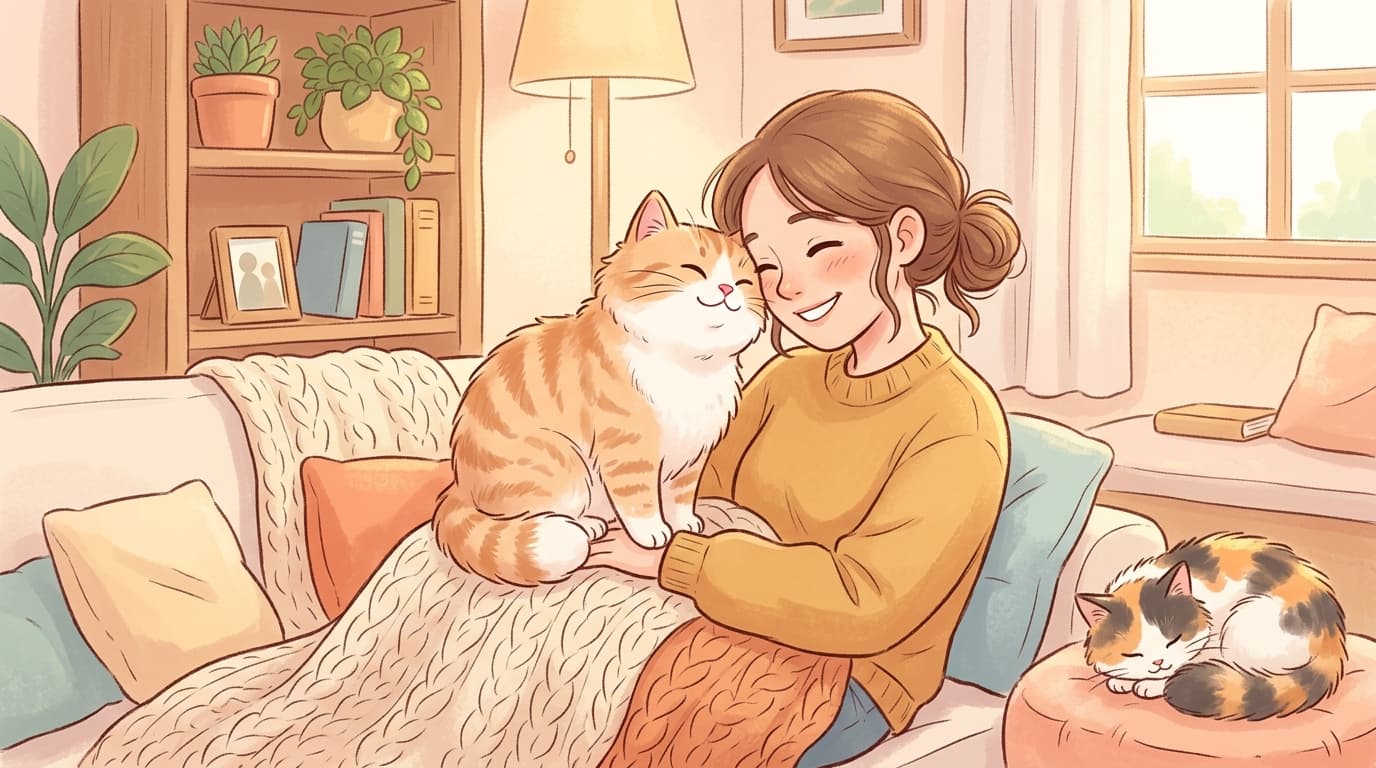
If your cat walks up and gently bumps their head into you, you’re not being “bonked” at random. You’re being chosen. That little headbutt is one of the warmest compliments a cat can give.
What it means when your cat headbutts you (head bunting)
The behavior has a name: head bunting (sometimes called “head banting”). Cats do it by pressing or rubbing the top of their head, cheeks, or chin against something—often you.
Cats are naturally territorial creatures, and they rely heavily on scent to feel secure. On their head, cheeks, and chin they have scent glands that release pheromones. When your cat rubs those areas on furniture, doorways, or corners, they’re basically creating a familiar “this is safe, this is mine” scent map.
But when the target is you, the message gets a lot more personal.
Your cat is marking you… in the nicest way possible
Most pet owners don’t realize that scent-marking isn’t always about “ownership” in a bossy way. With people they trust, it’s more like a membership badge.
When your cat headbutts you, they’re transferring their scent onto you and essentially saying: you’re part of my inner circle. It’s a sign of comfort, attachment, and trust—not dominance, not attitude, and not a quirky habit they picked up for attention.
If you’ve ever noticed your cat doing this right after you get home, during a calm cuddle, or when they’re settling into a routine, that’s often because they feel safe enough to “refresh” that friendly scent connection.
The extra body language that confirms it’s affection
A headbutt alone is already a good sign, but cats love to bundle signals together. If your cat headbutts you and you also see any of these, you can feel pretty confident they’re relaxed and happy:
- Tail held up (often with a gentle curve at the tip)
- Purring
- Slow, half-closed eyes (that soft, sleepy look)