What Your Cat Really Feels When You Walk Through the Door
Your cat may act unimpressed when you get home, but subtle signs reveal relief, trust, and real attachment.
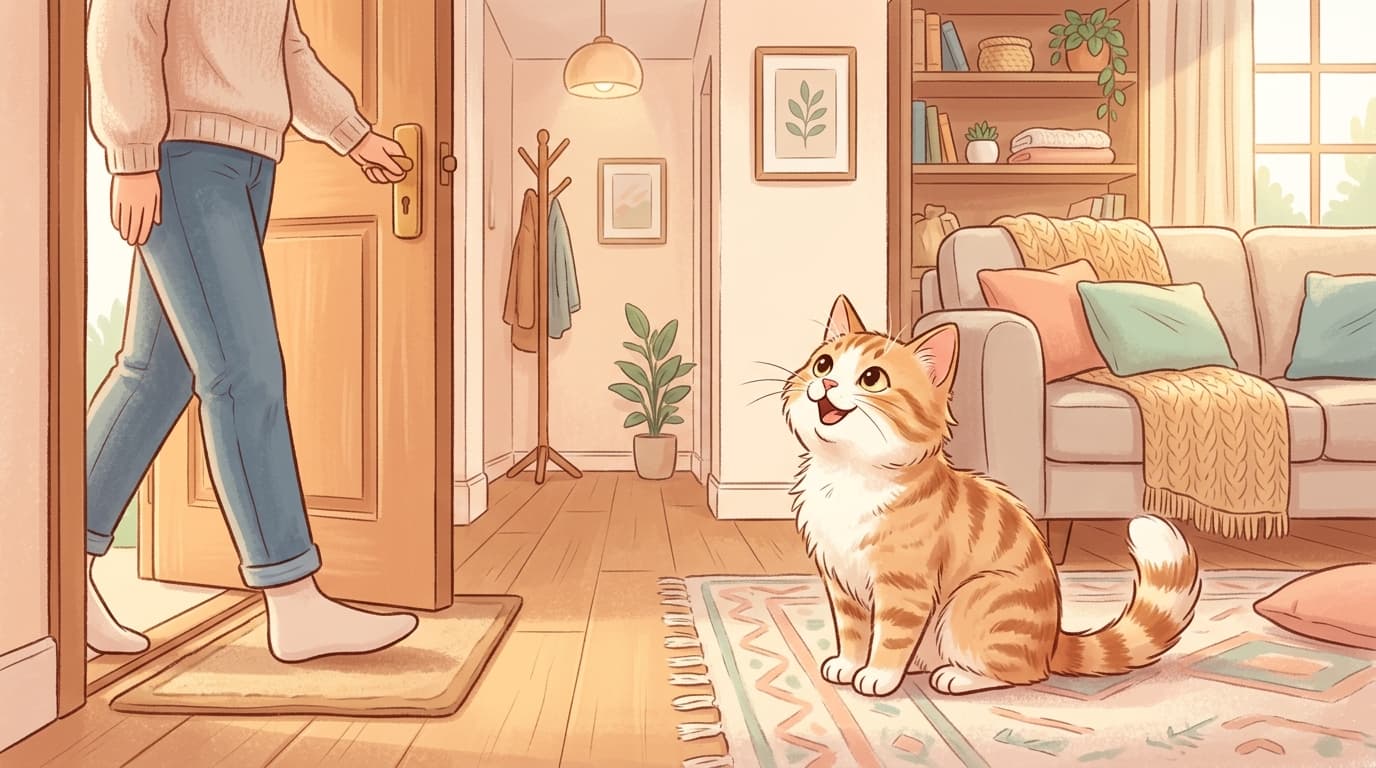
You come home and your cat just… sits there. No fanfare, no dramatic reunion—maybe a quick glance, an ear twitch, and that famously unreadable face. But what your cat feels when you come home is usually much bigger than it looks on the surface.
Cats aren’t cold. They’re subtle. And once you know what to watch for, their “nothing happened” greeting starts to look a lot like love.
What your cat feels when you come home: safety returning
To your cat, you’re not just a roommate with opposable thumbs. You’re a huge part of what makes their world feel stable.
You bring food, open doors, create routines, and—most importantly—show up again and again. Cats tend to thrive on predictability. Surprises aren’t their favorite hobby. So your return often creates a quiet sense of relief: the familiar sounds in the hallway, the key in the lock, your footsteps, your smell. Their territory feels “complete” again.
It may not look like a celebration, but for many cats it’s more like a deep exhale.
Why your cat doesn’t greet you like a dog
Dogs often wear their emotions on their sleeves. Cats tuck theirs away.
A cat can be genuinely happy you’re home and still choose to stay on the couch. Another might disappear under the bed and reappear five minutes later like nothing happened. That’s not necessarily rejection—it can be their way of managing excitement, caution, or simply keeping control of the situation.
Most pet owners don’t realize that feline affection often shows up as “I’m near you” rather than “I’m on you.”
The tiny greetings that mean a lot
If you’ve ever noticed your cat doing one of these after you get home, you’ve probably been welcomed more warmly than you thought:
- A slow blink while looking at you: This is one of the clearest signs of trust. In nature, relaxed eye-closing around danger would be a terrible idea. If your cat watches you and slowly blinks, they’re basically saying they feel safe with you.
- Sitting in the same room (without cuddling): This is classic cat closeness—quiet companionship. They’re choosing your space.
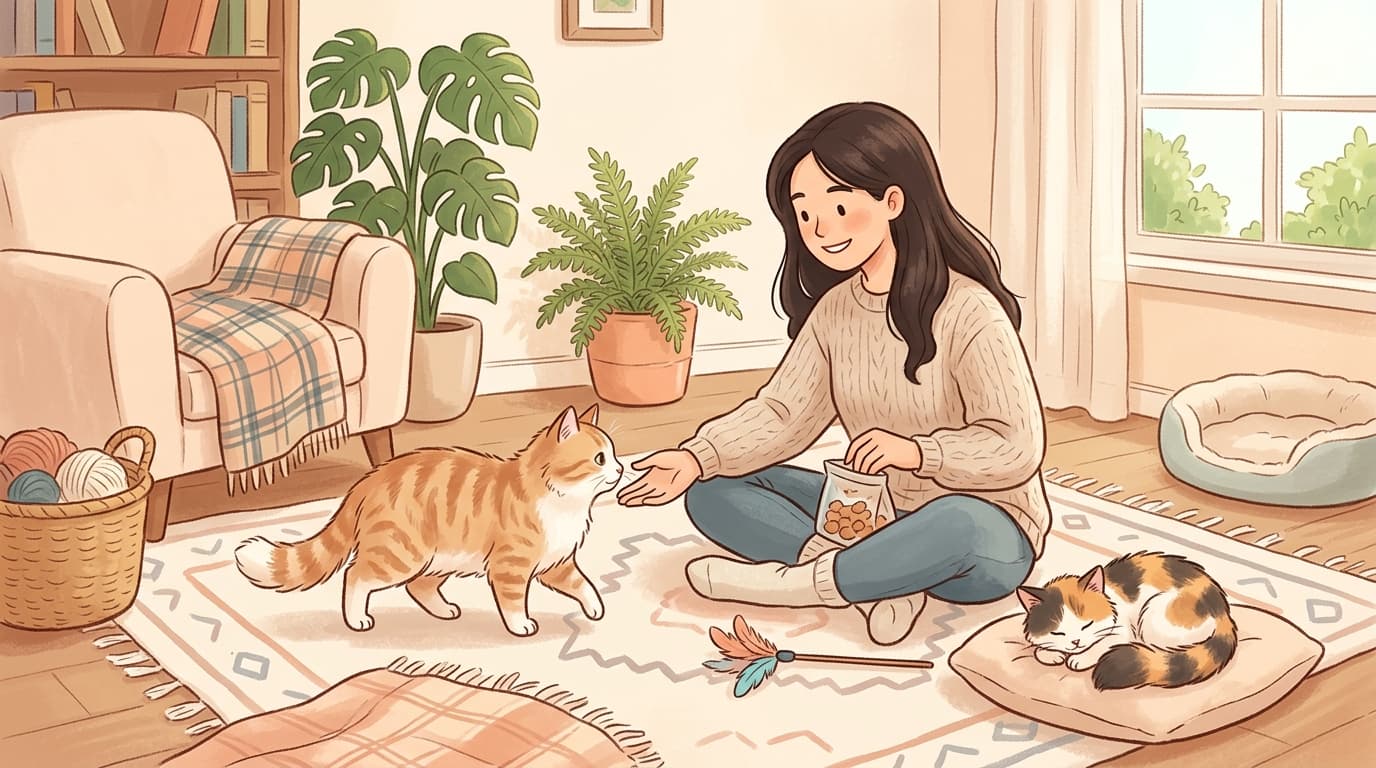
- A quick rub against your leg, then walking away: That brief contact can be both greeting and connection. It’s also a way to mix scents, which matters a lot in cat relationships.
- A small meow or chirp: Not every cat is chatty, but a simple vocal “hello” is still a greeting.
These are low-key signals, but they’re real.
Your cat may know you’re home before you open the door
It can feel like your cat magically appears at the entrance right as you arrive—and that’s often not an accident.
Many cats pick up on patterns and familiar cues: footsteps in the stairwell, the sound or vibration of your car, even your scent before you’re fully inside. So when your cat is already waiting, it’s not random. It’s expectation.
And expectation is emotional. You don’t anticipate the return of someone who doesn’t matter.
The clingy phase: re-connecting after you’ve been gone
Some cats turn into your shadow the moment you’re back. They follow you to the bathroom, supervise unpacking, hop onto the table, or insist on lap time right now.
That can be affection, sure—but it can also be a “reset.” You were gone, you’re back, and your cat wants to restore the normal feeling of togetherness.
You’ll often see:
- Head-butting or cheek rubbing
- Body weaving around your legs
- Circling close while you move around
Those rubs aren’t just cute. They’re a social behavior—your cat is collecting your scent and leaving a bit of theirs, which is a very cat-like way of saying, “You’re part of my safe world.”
The “I’m ignoring you” greeting can be emotional too
Then there’s the other type: the cat who acts like you never existed.
No meow. No glance. Maybe they walk away with extra attitude.
Oddly enough, that can still be part of what your cat feels when you come home. Some cats handle separation with controlled distance, like they need a few minutes to observe and decide how they feel. Think of them as the skeptics: “Are you staying, or are you about to disappear again?”
Cats can be proud and affectionate at the same time. The delayed greeting is often just their way of easing back into contact.
The “scolding” cat: why some cats seem offended
After a longer absence—like a trip—some cats look at you like you’ve committed a crime. They may pace, keep a little distance, or act restless while watching you.
It can feel like a lecture. But even that reaction usually means your return mattered enough to stir something up. Your presence makes a difference in their routine and emotional landscape, so the reunion comes with extra intensity.
Cats bond deeply—just differently
We’re learning more and more that many cats form strong attachments to their people. They recognize their favorite humans, orient to them for comfort, and respond to separation and reunion—just not with the same obvious enthusiasm you’d expect from a dog.
So if your cat seems calm when you walk in, don’t assume they don’t care. What your cat feels when you come home may be relief, safety, quiet happiness, or the simple comfort of having their world back in order.
You don’t need a dramatic greeting to be loved. With cats, the love is often in the small moments: the slow blink, the nearby presence, the gentle rub that says, “Okay. You’re home. All is well.”
Continue reading

Does Your Cat Really Love You? 8 Quiet Signs of Trust Most People Miss
From slow tail-tip curls to choosing your seat, these 8 subtle behaviors can reveal how deeply your cat trusts you.

Why Your Cat Climbs on You: It’s Not “Just Love” (And What They’re Really Saying)
From lap-sitting to cheek rubs, your cat’s “cute” habits are secret messages about safety, scent, and trust.

Why Your Cat Walks on You at Night (And What They’re Really Trying to Tell You)
If your cat steps on your chest at night, it’s not random. Here are the real reasons—and how to respond without encouraging 5 a.m. wakeups.