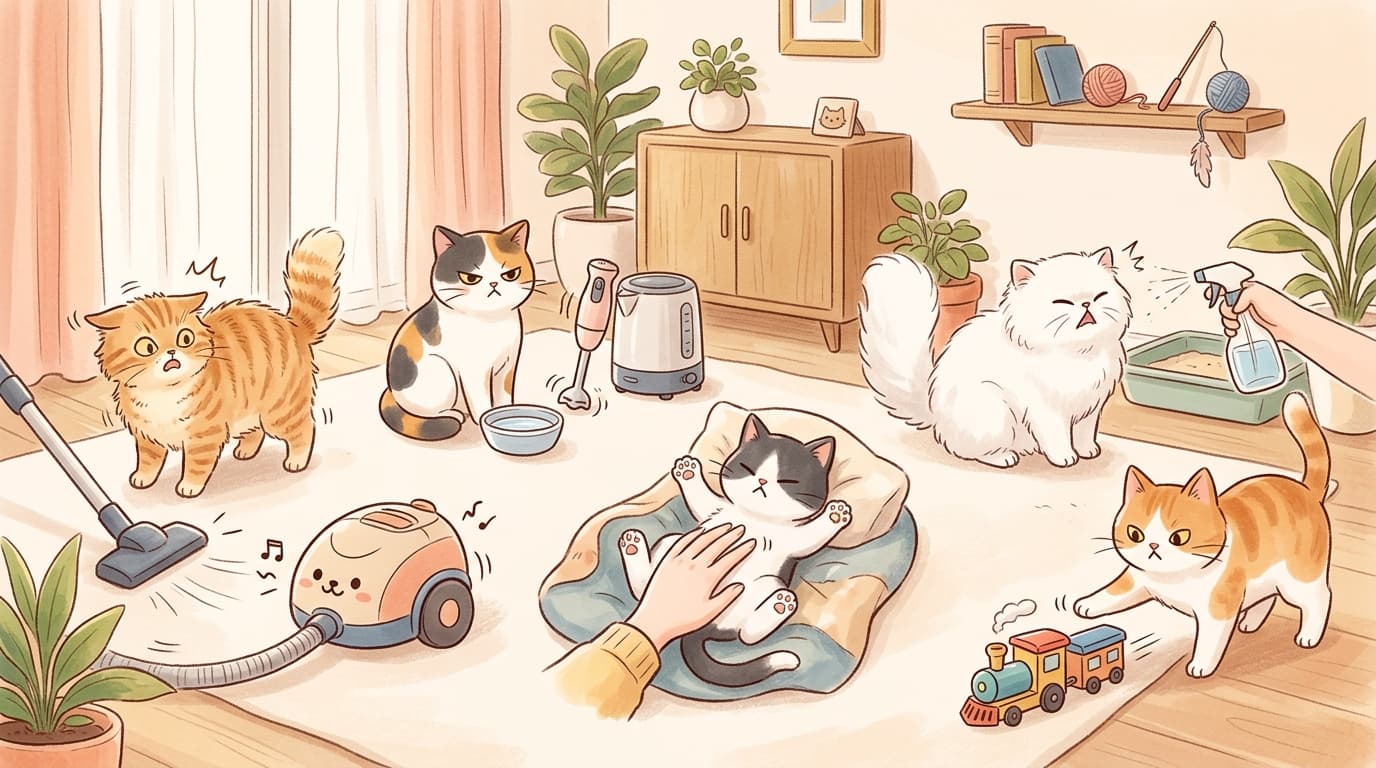
What Your Cat Really Feels When You Leave the House (and How to Make It Easier)
Cats notice every leaving cue. Learn what they feel when you go, why reactions vary, and simple ways to help them stay calm.
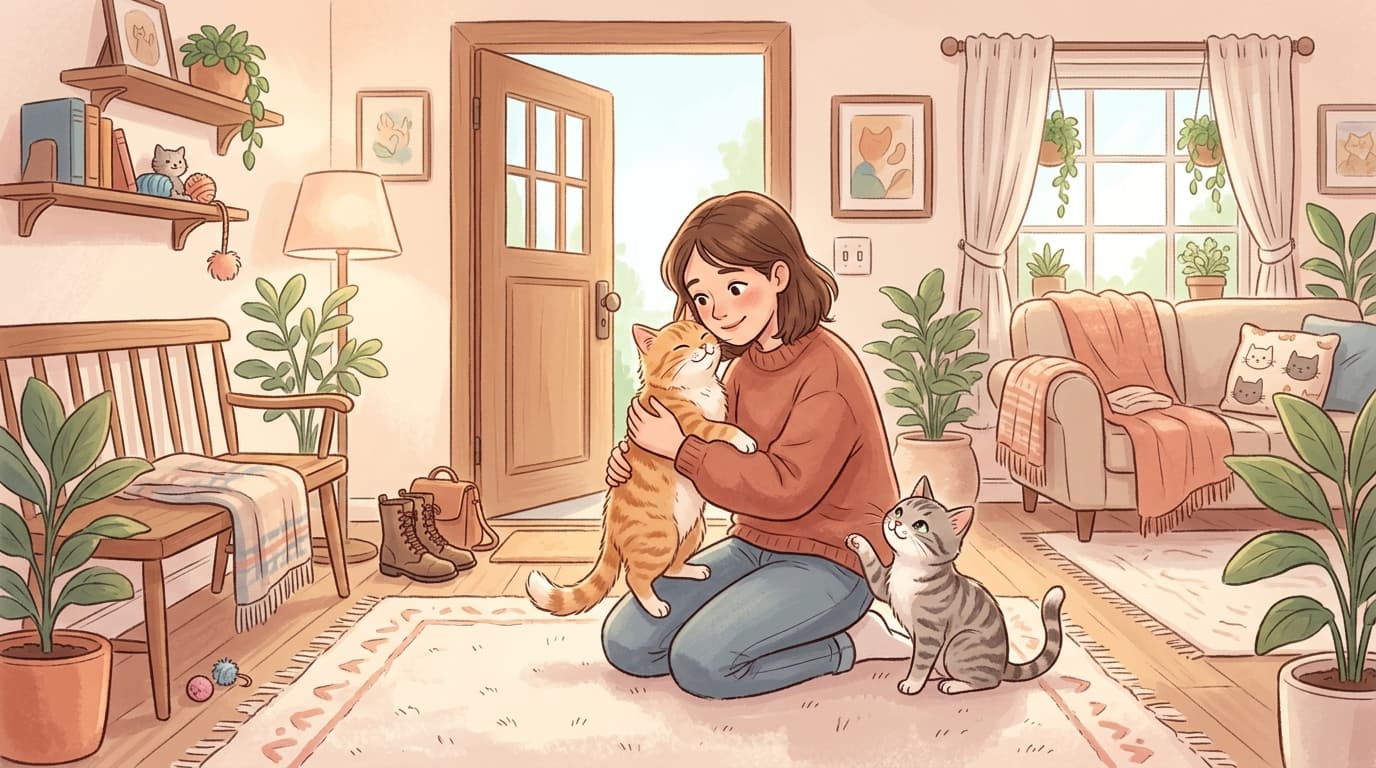
You grabbing your keys might feel like nothing, but to your cat it’s the start of a whole “event.” Many people assume cats don’t care when we leave—yet most cats notice the change instantly, and some feel it more deeply than they let on.
The moment your cat realizes you’re leaving
Cats are pattern-spotters. Long before you touch the doorknob, your cat has likely connected the dots: the jacket rustle, the key jingle, the slightly faster pace, the quick pat-down for your phone or wallet.
If you’ve ever noticed your cat suddenly appear in the hallway, sit and stare, or quietly trail you from room to room, that’s not random. Your cat is reading the “leaving routine” and switching into a more alert mode because something in the normal flow of the home is about to change.
Your cat’s bond with you is real (just not always obvious)
Cats don’t bond like dogs, but that doesn’t mean they don’t bond. For many cats, you’re not just the food person—you’re a steady part of their daily structure. You’re familiar, predictable, and often a source of safety.
Some cats show this loudly: they seek closeness, follow you, and clearly react to separation. Others look independent, but still rely on your presence as a kind of “anchor” in the home. When you leave, that anchor disappears for a while, and your cat has to adjust.
What your cat feels when you leave (it’s not “spite”)
When you walk out the door, your cat isn’t simply losing company. In your cat’s mind, the environment has changed. The routine has been interrupted.
For some cats, that change barely registers after a minute or two—they’ve learned the pattern and settle quickly. For others, it creates a lingering sense of uncertainty. Not dramatic, human-style sadness, but a watchful “something’s different” state that can last longer depending on personality and past experiences.
The chemistry behind it: stress and comfort hormones
Your cat’s body reacts to change, too.
- Cortisol (stress hormone): If your cat experiences your departure as uncertain or unusual, cortisol can rise. In relaxed cats it may bump up slightly and then drop as they nap or return to normal routines. In more sensitive cats, that heightened state can stick around—more scanning, more reacting to sounds, more pacing.
- Oxytocin (bonding hormone): This is associated with closeness and comfort—think calm petting sessions or relaxed time together. When you leave, that “together” signal fades, and oxytocin can dip a bit.
This doesn’t mean your cat is suffering every time you go out. It does mean your presence is biologically meaningful—and that two cats can react very differently to the same situation.
What your cat does after you leave: common behaviors
Cats cope in different ways, and most of them are completely normal.
- Sleeping or hiding out: Many cats simply retreat to a favorite spot and nap. Sleep is a very cat-like way to pass time and conserve energy.
- Patrolling and watching: Some cats walk through the home, check rooms, or park at a window. It can look like “searching,” but it’s often just orientation and monitoring.
- Self-soothing routines: Eating, intense grooming, or playing with toys can be your cat’s way of regulating emotions and filling the gap.
- More concerning signals: In rare cases, you might see inappropriate peeing, destructive scratching, or other stress behaviors. This isn’t revenge—it’s a sign your cat is overwhelmed.
Why every cat reacts differently when you leave the house
Most pet owners don’t realize how many variables shape this.
- Personality: Some cats are naturally bold; others are more sensitive.
- Age: Younger cats may adapt more easily, while older cats often prefer things to stay the same.
- Early experiences: Comfort with being alone can trace back to kittenhood and what “normal” felt like early on.
- Living situation: A solo cat may feel your absence more than a cat with another cat companion.
- Lifestyle: An outdoor cat may be busy exploring and barely notice the time passing, while an indoor cat depends more on the home environment for stimulation.
- Home enrichment: A stimulating space gives your cat more options for coping than a quiet, empty-feeling apartment.
How to make your cat feel better about being alone
You can’t (and shouldn’t) stop living your life—but you can make leaving easier.
Build a predictable routine
Cats relax when they can predict what happens next. If your schedule is fairly consistent, your cat learns that departures are normal and that you come back.
Set up “cat comfort zones”
Give your cat choices:
- Window perches for watching the world
- High resting spots for security
- Cozy hideaways for quiet downtime
A more interesting environment often means less stress.
Use your scent to your advantage
Cats are big on familiarity. Leaving a blanket, bed, or worn T-shirt with your scent can make the house feel more “steady” while you’re gone.
Keep goodbyes low-key
Big, emotional farewells can accidentally teach your cat that leaving is a Big Deal. A calm, normal exit helps your cat file it under “routine,” not “alarm.”
What it means when your cat greets you… or ignores you
Coming home is another change, and cats handle it in different ways.
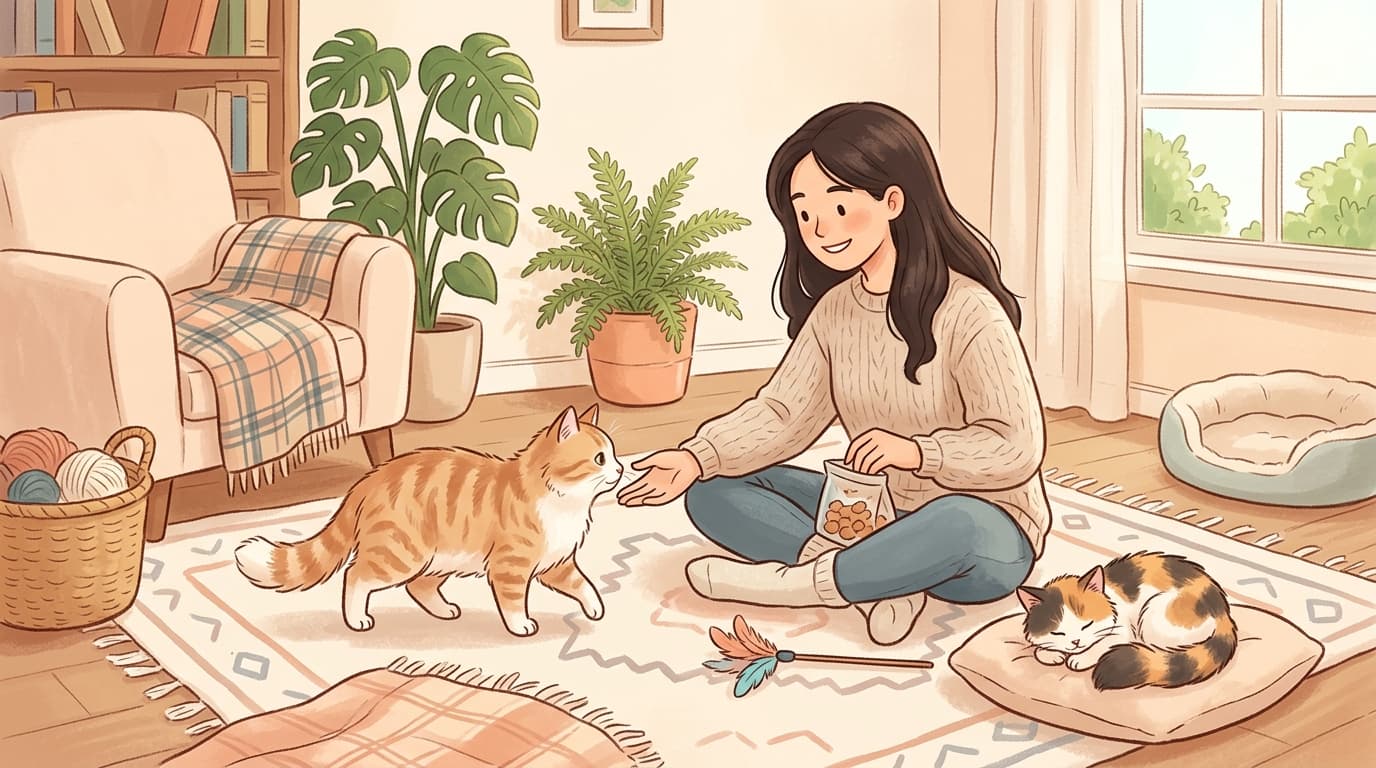
Some will meet you at the door, meow, rub your legs, and act like you’ve been gone for years. Others will act indifferent—maybe they stroll in later, or pretend they were busy the whole time.
Neither response means your cat doesn’t care. Often it’s emotional regulation: your return restores the familiar rhythm, and your cat re-adjusts in whatever way feels safest.
You don’t have to be home 24/7 to have a strong bond with your cat. Small routines, a comforting environment, and calm departures can make “alone time” feel secure—and make your reunions that much sweeter.
Continue reading

Does Your Cat Really Love You? 8 Quiet Signs of Trust Most People Miss
From slow tail-tip curls to choosing your seat, these 8 subtle behaviors can reveal how deeply your cat trusts you.

Why Your Cat Climbs on You: It’s Not “Just Love” (And What They’re Really Saying)
From lap-sitting to cheek rubs, your cat’s “cute” habits are secret messages about safety, scent, and trust.

Pumpkin for Cats: The Simple Food Add-In That Supports Digestion and Helps Push Out Worms
Plain pumpkin puree can support your cat’s digestion and make the gut less welcoming for worms—plus most cats accept it well.