Why Your Dog Sleeps With Their Tongue Out (And When It’s a Problem)
Tongue out during sleep is usually a sign of deep relaxation or cooling off. Learn why it happens and when to get it checked.
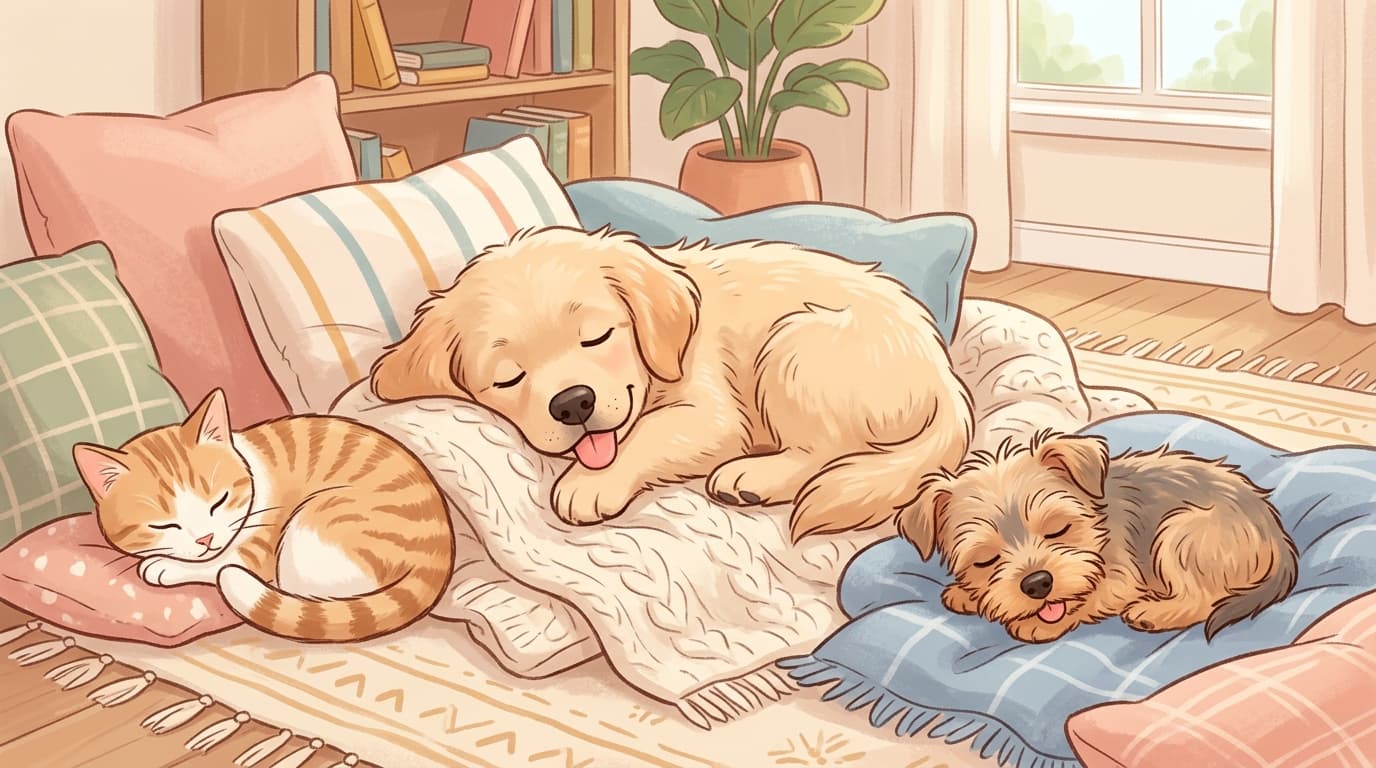
If you’ve ever glanced over at your dog mid-nap and spotted that tiny tongue “blep,” you’re not alone. Most of the time, a dog sleeping with their tongue out is simply a sign they feel safe, comfortable, and totally at ease.
Dog sleeping with their tongue out usually means they’re deeply relaxed
During sleep, your dog’s muscles loosen—just like yours do. For some pups, that relaxation includes the jaw and tongue, so the tongue slips out a little and stays there.
This isn’t really about being “extra tired.” It’s more like your dog has reached peak chill mode, and their face muscles have decided to clock out for a while. If your dog looks peaceful and is breathing normally, you can usually just let them enjoy their nap.
Your dog may be cooling down (especially on warm days)
Dogs don’t sweat the way humans do, so they rely on other ways to manage heat. One common strategy is letting moisture evaporate from their mouth and tongue—basically, using that exposed tongue area to help release heat.
If your home is warm, your dog has been sunbathing, or it’s a hot day, sleeping with the tongue out can be part of their natural temperature regulation.
Flat-faced breeds do it more because of their anatomy
If you share your life with a pug, bulldog, or another brachycephalic (flat-faced) breed, you’ll probably see the tongue-out sleep pose more often.
These dogs tend to have shorter snouts and different mouth/jaw structure, so their tongues can sit differently in the mouth. Sometimes there’s simply less room, making it easier for the tongue to peek out—awake or asleep.
When a tongue-out sleeper might need help
A relaxed “blep” here and there is normal. But if it seems constant or comes with other signs, it can point to an issue that needs attention.
Look out for:
- Excessive drooling that’s new or worsening
- Bad breath that’s strong or unusual