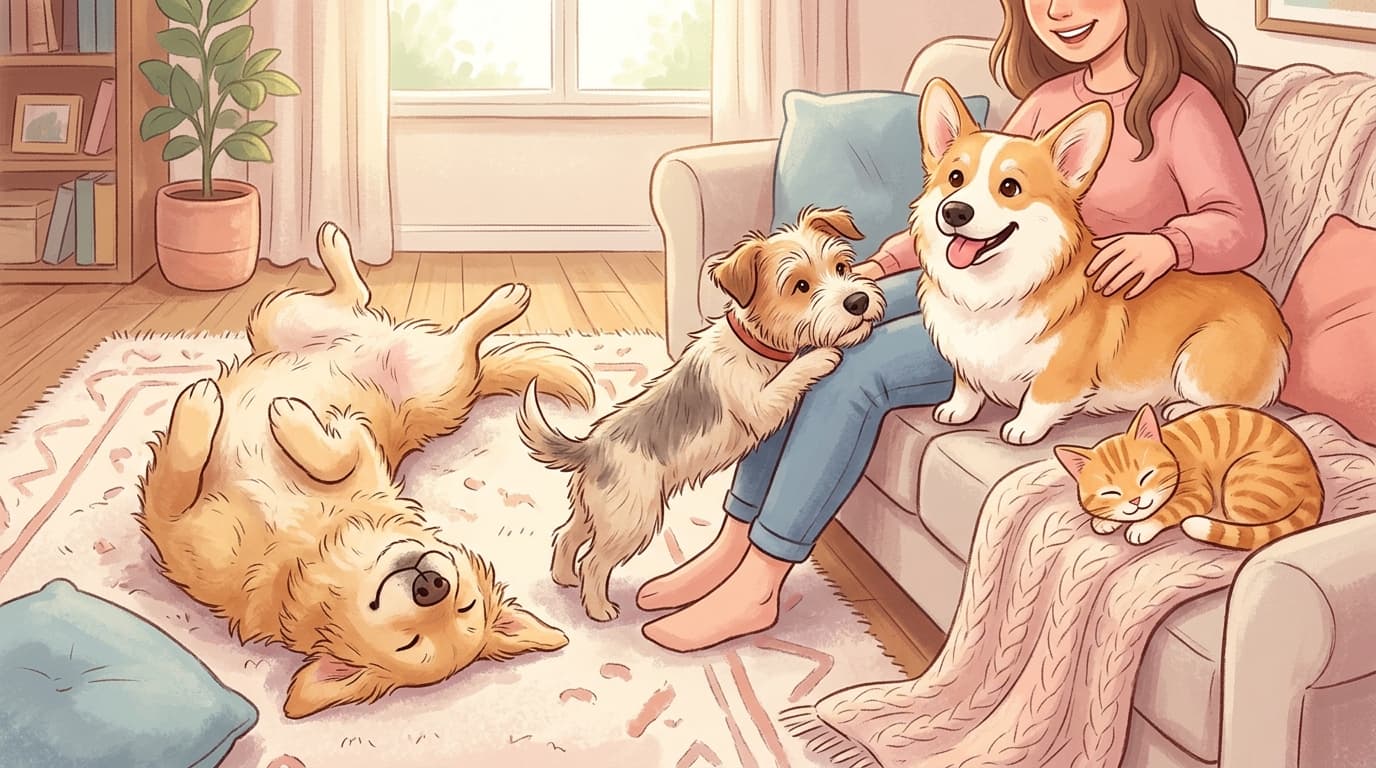
Most dog owners think they’re fluent in “dog,” but the truth is we miss a lot of what our pets try to tell us every day. The good news is that a few common behaviors—especially dog licking—are basically your dog speaking in bold letters.
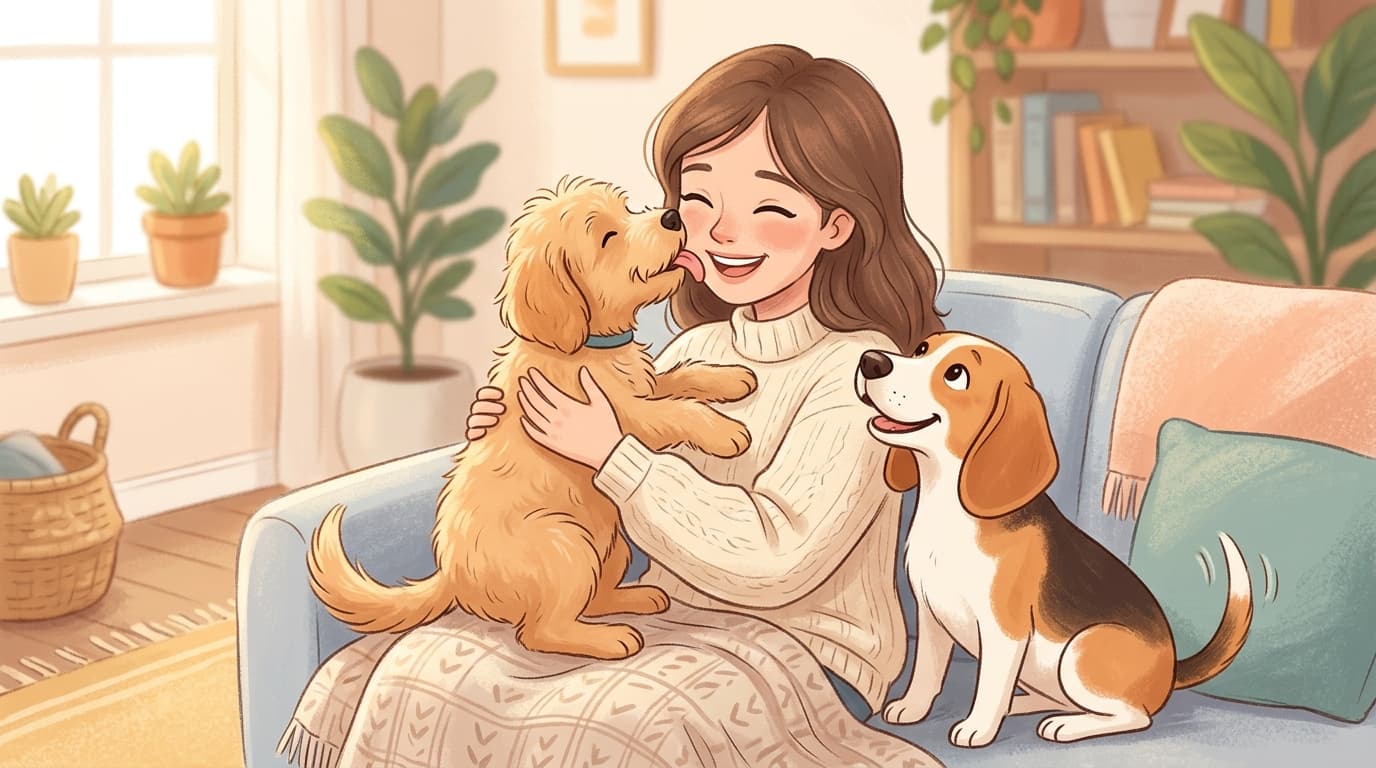
Dog licking gets brushed off as “kisses,” and sure—there’s warmth in it. But licking is also an ancient bonding behavior called allogrooming, which is how social animals build and maintain relationships through mutual grooming.
When your dog licks you, they’re doing more than being sweet:
- They’re reinforcing family bonds. Licking is one of the first ways puppies experience safety and care, long before they understand the world.
- They’re building a shared “family scent.” Dogs experience life through smell, and licking helps mix scents in a way that signals “same group, same unit.”
- They may be “resetting” you after you’ve been out in the world. If your dog goes straight for your face when you get home, it can be a way of reclaiming you from all the unfamiliar scents you picked up outside.
And one detail most pet owners don’t realize: targeting matters. If your dog repeatedly licks one specific spot on your body with unusual focus, it might be nothing… or it might be your dog reacting to a scent change in that area. Dogs can detect subtle shifts we can’t.
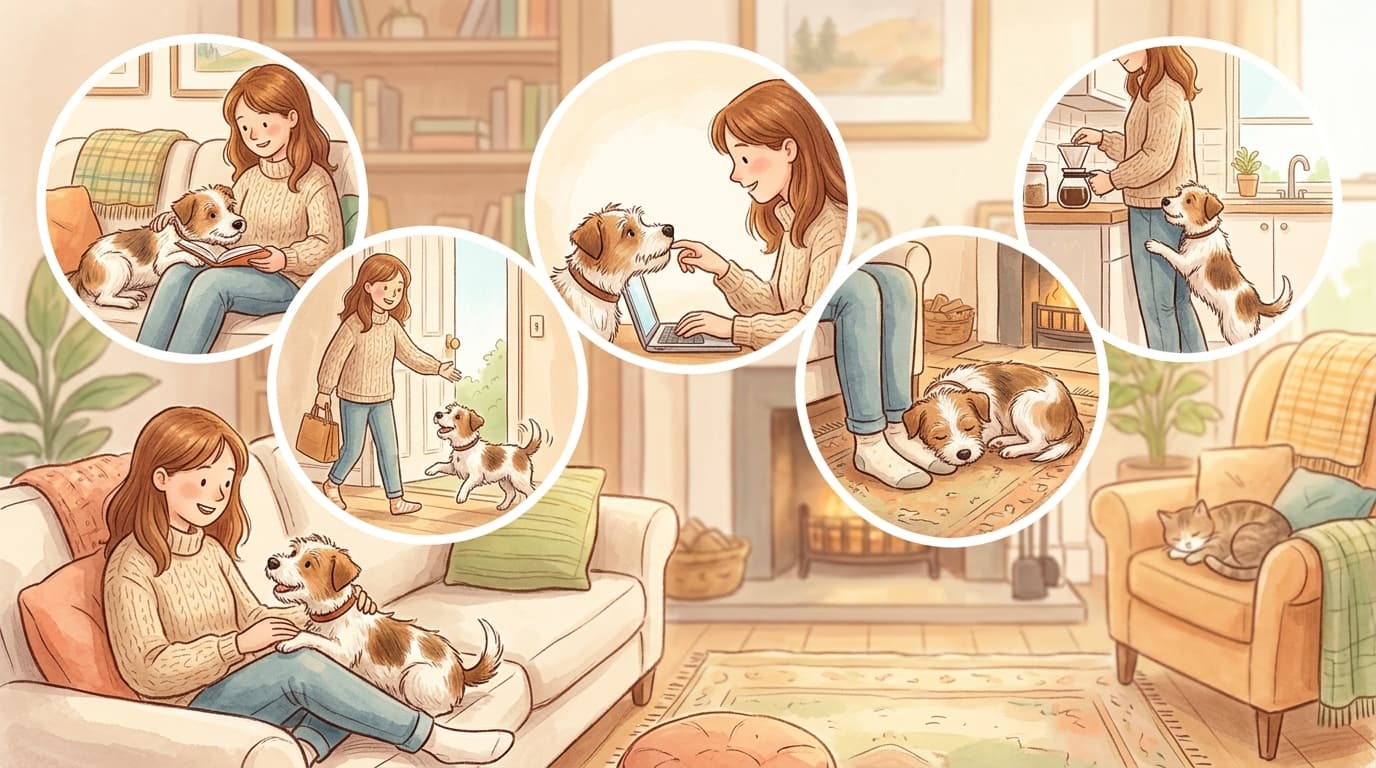
If you’ve ever noticed your dog parking themselves on your feet or leaning hard into your ankles, it’s easy to assume they’re trying to be cozy.
But your feet carry an intense concentration of you—your personal scent, tracked and refreshed with every step you take. For a dog, pressing into your feet can be like wrapping themselves in the strongest, most comforting version of your presence.
It’s also often a social statement: your dog is choosing closeness with you as their “safe base,” especially when something in the environment feels uncertain.
It’s unsettling: your dog is asleep, you move them or bump the bed, and they let out a quick growl—then immediately soften, wag, or nuzzle like they’re sorry.
That moment is often sleep-startle, where the brain is still coming online and reacts defensively before recognition catches up. The key difference is what happens next: once your dog processes your scent and presence, their body language shifts back to warmth.
What helps most is simple: use your voice first, give them a second to wake fully, and avoid punishing the reflex. That quick correction can teach a dog that being vulnerable near you (like sleeping) is unsafe.
Food has been down for 10 minutes. Your dog sits there… staring at you like you forgot the instructions.
Often, this isn’t pickiness or “being dramatic.” In social canids, eating can be a vulnerable activity—heads down, attention narrowed. Some dogs feel safer eating when their person is nearby because your presence signals security.
If your dog only eats when you’re present, you can gently build confidence by practicing tiny, low-pressure separations during mealtimes (step away briefly, come back, slowly increase the time). It’s not about forcing independence—it’s about teaching their nervous system that eating can still be safe even if you’re not standing guard.
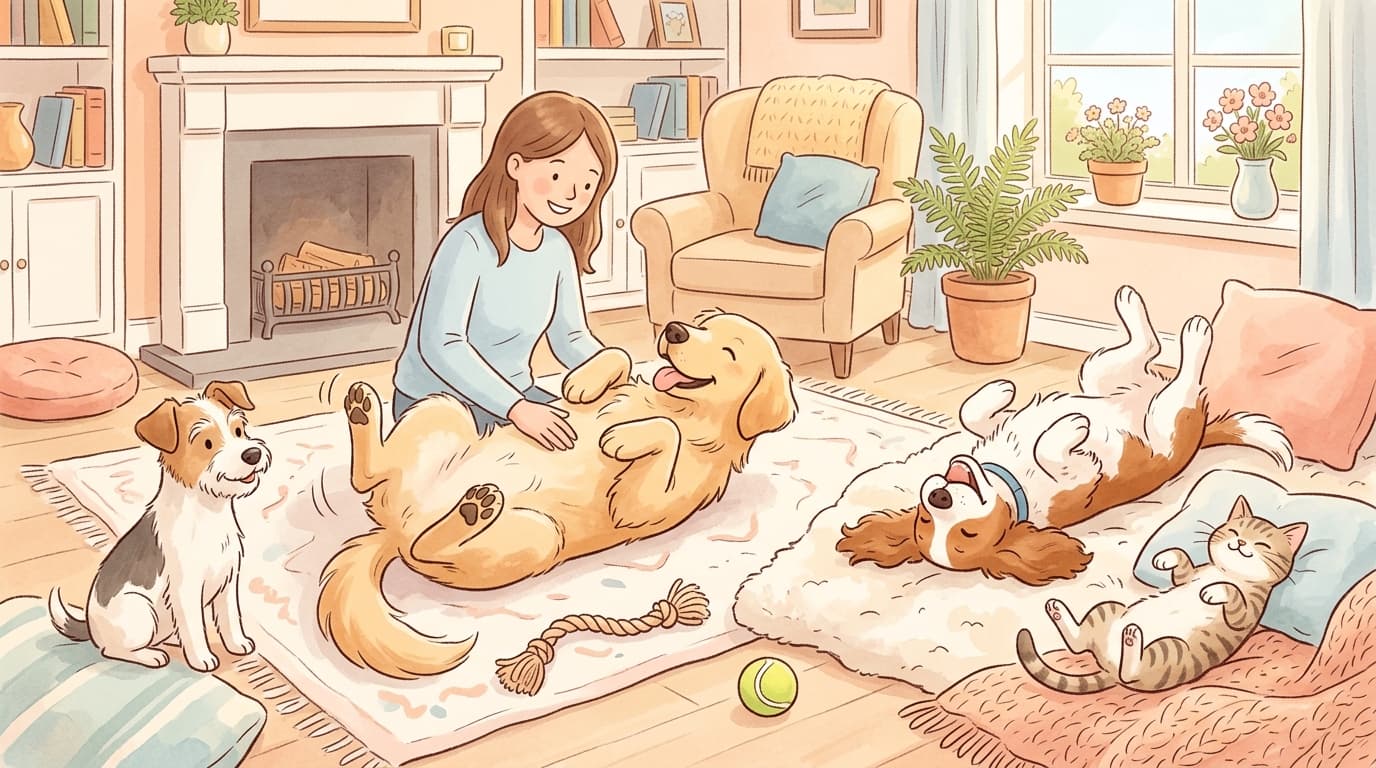
Mid-wrestle, your dog is growling, bouncing, acting like a little gremlin—and then they sneeze.
That sneeze can be a play signal, basically your dog saying, “We’re still playing.” It helps keep high-energy moments from tipping into real tension, especially when play looks intense (because play growls and serious growls can sound pretty similar).
Try giving a small, natural sneeze back during play and watch your dog’s reaction. Many dogs respond with a visible “yep, we’re good” reset.
A lot of people quietly believe their dog is just responding to the commotion. But research suggests dogs can respond to human distress with something that looks a lot like empathic concern.
Your dog isn’t decoding the storyline of your bad day. They’re responding to the full-body change: breathing shifts, heart rate changes, and the chemistry of tears and stress cues becomes obvious to a nose built for detection.
Some dogs press into you and go still. Some whine. Some lick your face. Some bring a toy or random object like a shoe—because offering “resources” is one way dogs try to help when they don’t know what else to do.
This one gets misunderstood constantly.
Your dog walks in, ignores your hand, and sits with their back pressed against your leg—facing away like you’re not even there. It can feel like rejection.
In dog body language, it’s often the opposite: turning their back is vulnerability. It can mean your dog trusts you enough to expose the side they can’t easily monitor.
And if they’re facing outward—toward the room, the hallway, the door—your dog may also be doing quiet “watch duty,” keeping an eye on the environment while staying physically connected to you.
The suitcase comes out and your dog is instantly on top of it like a furry paperweight.
Dogs are pattern experts. Luggage isn’t just an object—it’s a reliable predictor of a painful event: you leaving. Sitting on it can be your dog’s straightforward strategy to stop the sequence before it starts.
You might also notice them pressing into your clothes as you fold them or sniffing shoes intensely. Scent is comfort. Your dog may be trying to “hold onto” you (and send a bit of themselves with you) the only way they know how.
Sit with your dog close enough to touch. No phone, no training agenda. Just 60 seconds of soft, relaxed eye contact—the gentle kind you’d give someone you love—plus a calm scratch behind the ears if your dog enjoys it.
That quiet mutual gaze can trigger the same bonding loop associated with closeness behaviors like licking. You’re speaking your dog’s language back to them without doing anything complicated.
Dog licking is one of the oldest “I’m connected to you” behaviors your dog has—and it’s only one piece of a much bigger conversation your dog is having with you every day. Once you start reading these signals correctly, a lot of confusing moments stop feeling random and start feeling like trust, comfort, and attachment in action.