Why Dogs Lick You: 8 Real Meanings Behind Those “Kisses”
Your dog’s licking isn’t just affection. Learn 8 real reasons dogs lick you—from bonding and scent “audits” to stress and alerts.
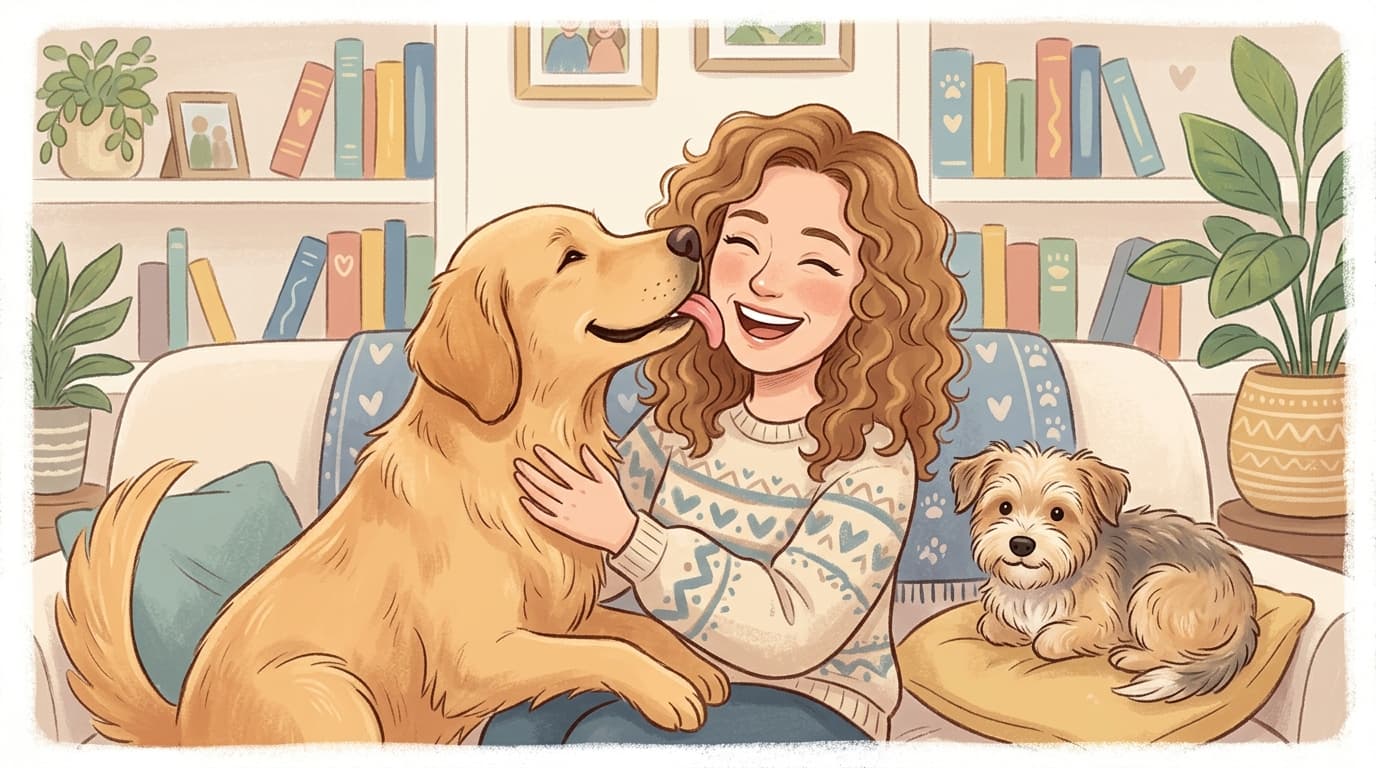
Your dog licked you again—your face, your hands, maybe that one spot on your arm they always seem to find. It’s easy to label it as “kisses,” but licking is one of your dog’s most loaded forms of communication.
Depending on where they lick, how intensely they do it, and what just happened, your dog could be greeting you, checking your mood, trying to calm themselves down, or even flagging something unusual.
1) Licking starts as your dog’s first “safe” signal
Before puppies can see or hear clearly, they learn the world through touch and scent. One of the earliest sensations they experience is their mother grooming them—steady, warm licks that clean, stimulate, and soothe.
That early association sticks: licking equals comfort, safety, and connection. So when your adult dog licks you, they’re often reaching for the oldest calming language they know—one that predates training, routines, and even your life together.
2) Face licking: reclaiming you after you’ve been “out there”
If your dog goes straight for your face the second you walk in the door, it’s not only excitement. Your face and breath carry strong traces of where you’ve been—other people, other animals, the outside world.
A face lick can be your dog’s way of reestablishing the “us” feeling. They’re sampling your scent story and, in a very dog way, swapping those outside smells for the familiar smell of home (aka them). If you’ve ever noticed your dog getting extra intense after you’ve been somewhere crowded, this is often why.
3) Hand licking: the daily “where have you been?” audit
Your hands are basically your biography. They touch door handles, food, steering wheels, other pets, packages, and a hundred mystery surfaces you don’t even remember.
So when your dog fixates on licking your hands, it can be pure investigation. They’re gathering information—what you ate, what you touched, who you interacted with. It’s like your dog is reading your day in chemical form.
4) Dogs can taste your emotions (yes, really)
Most pet owners don’t realize how much your dog picks up from tiny changes in your body. Stress, fear, and sadness don’t just live in your head—they shift your chemistry. Hormones like cortisol and adrenaline can change what your skin gives off.
Dogs can detect those changes, and licking is one way they collect that information. If your dog quietly comes over and gently licks your wrist or knee when you’re having a rough day, that’s often not random affection—it’s a response to what they’re sensing from you.
5) The “medical alert” lick: repeated focus on one spot
This is the licking pattern that deserves your attention: your dog repeatedly licking the same specific spot on your body, day after day, with unusual intensity.
Dogs have been documented noticing subtle physical changes in humans—sometimes well before people realize something is wrong. Persistent, focused licking has been associated in reports with everything from unusual skin changes to shifts that happen during blood sugar swings. The key is the pattern: out-of-character, targeted, and consistent.
6) The appeasement lick: your dog trying to calm tension
Not every lick is a “kiss.” Sometimes it’s a peace offering.
If you’ve raised your voice, moved quickly, or leaned over your dog and they respond with quick licks while looking a bit small (ears back, avoiding eye contact, low posture), they may be trying to de-escalate. In dog social language, this kind of licking can mean: “I’m not a threat. Can we be okay again?”
Recognizing this matters, because pushing harder in that moment can make your dog more unsure—not more obedient.
7) Excessive licking can be anxiety, not affection
There’s a version of licking that feels loving on the surface but is actually a coping mechanism: long, repetitive, almost trance-like licking with no clear trigger.
Some dogs lick people, furniture, or their own paws to self-soothe. The repetitive motion can help them settle internally, similar to how humans might pace, tap, or bite their nails when stressed.
If your dog’s licking seems nonstop, hard to interrupt, or shows up alongside other anxious habits, it may be less about bonding and more about regulation. In those cases, calm structure and redirection tend to help more than excited praise.
8) Mutual grooming: the ancient bond-builder
Underneath a lot of affectionate licking is something older than commands and squeaky toys: social grooming. In many social mammals, grooming each other is how bonds are built and maintained—not just how they’re displayed.
When your dog settles next to you and methodically licks your arm, it can be their way of placing you in their inner circle. It’s intimate, familiar, and deeply social. That tiny moment is part of a relationship ritual dogs have been doing with their families for thousands of years.
The takeaway
The next time your dog licks you, don’t just ask, “Aww, kisses?” Notice the details: where, when, and what was happening right before. Those little clues can tell you whether your dog is bonding, investigating, apologizing, self-soothing—or trying to get your attention for a real reason.
Continue reading

7 Dog Body Language Signals Most Owners Miss (And What Your Dog Is Really Saying)
From play bows to doorway guarding, learn the dog body language signals that reveal trust, comfort, and connection.

Why Your Cat Climbs on You: It’s Not “Just Love” (And What They’re Really Saying)
From lap-sitting to cheek rubs, your cat’s “cute” habits are secret messages about safety, scent, and trust.

Dog Body Language Signs of Love: 7 Little Moments That Mean “You’re My Person”
From the play bow at the door to sleeping pressed against you, these dog body language signs quietly prove how much your dog loves you.