Why Your Cat Thinks You Didn’t “Feed” Them (And How to Fix Mealtime Fast)
Your cat doesn’t see you as a food-giver. Learn the hunting-based mealtime routine that builds trust, reduces fussiness, and boosts happiness.
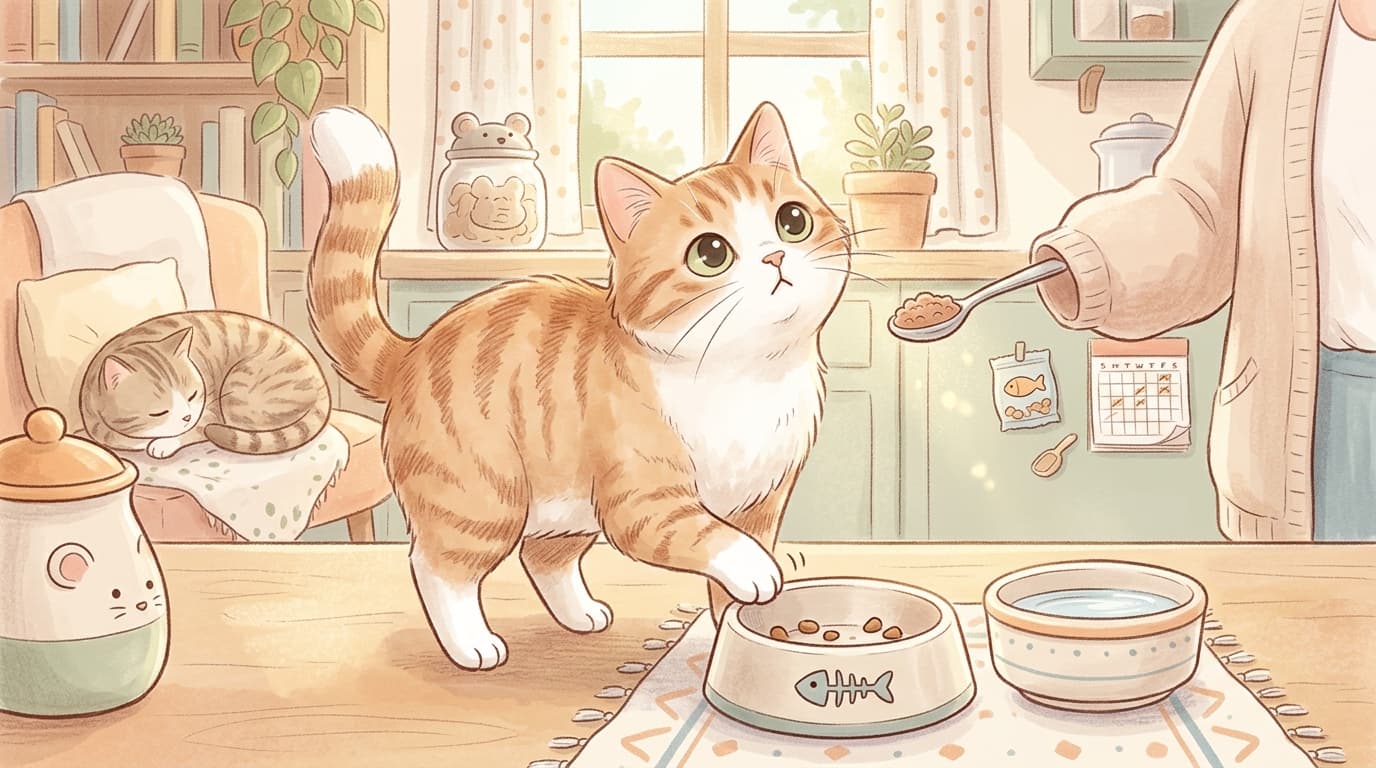
You pour the kibble, set down the bowl, and feel like you’ve done something loving. Meanwhile, your cat may be reading the whole scene in a completely different way—one that has nothing to do with “being fed” and everything to do with survival.
Your cat isn’t thinking “my human is being nice”
Cats didn’t evolve to rely on handouts. Their brains are still running a hunter’s operating system that’s been basically unchanged for thousands of years. In that program, food isn’t a gift—it’s a result.
So when you walk toward the kitchen, your cat isn’t necessarily thinking you’re doing a sweet little caretaking task. Their instincts kick in and translate what’s happening into something that makes sense in cat logic: someone in the household is successfully retrieving food and bringing it back to the safe den.
In other words, your cat may see you less as a “provider” and more as a capable teammate who goes out into the unknown and returns with the goods.
The hidden “contract” behind feeding time
Most cat owners don’t realize mealtime can either strengthen the relationship or quietly chip away at it.
In a cat’s world, a good partner is competent. A predictable routine, a sense of effort, and a safe place to eat all communicate that competence. But if food feels too easy, too random, or too uncomfortable, your cat can start acting… off.
That’s one reason some cats become demanding, pushy, or even snappy around food. They’re not plotting to be difficult. They’re reacting to a situation that doesn’t match what their instincts expect.
If your cat begs while food is still in the bowl, it might be the bowl
If you’ve ever had your cat cry for food, only for you to look down and see kibble still sitting there, it’s tempting to label them “picky” or “spoiled.”
But there’s a very real sensory issue that can make a cat avoid food that’s right in front of them: whisker stress (often called whisker fatigue).
A cat’s whiskers aren’t just cute accessories. They’re highly sensitive sensors tied closely to how your cat processes the environment. When a bowl is deep or narrow, every bite can force the whiskers to press against the sides. That constant stimulation can become overwhelming fast—like trying to eat while someone repeatedly taps your eyelashes.
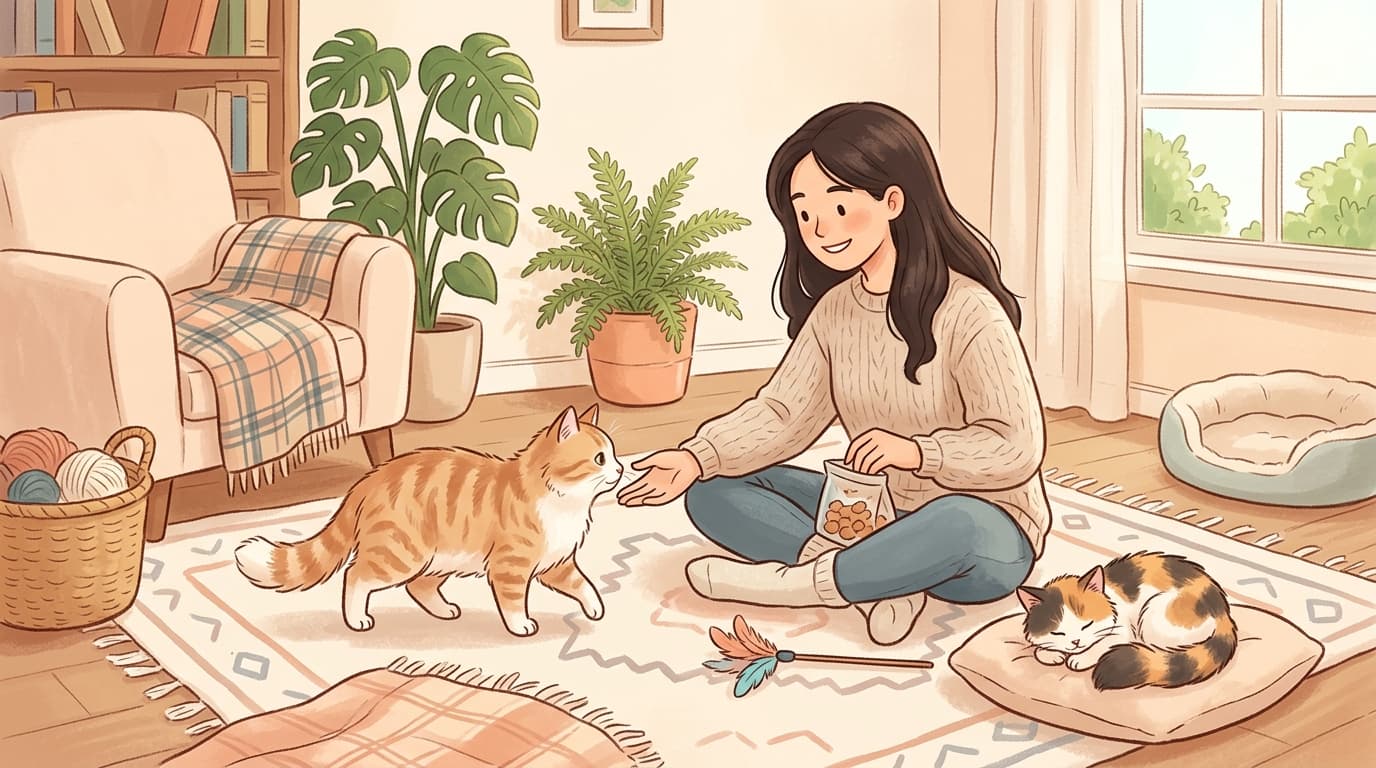
Signs your cat’s bowl may be the problem:
- They eat the middle and leave food around the edges
- They keep walking away and coming back
- They seem hungry but act irritated at the bowl
Why deep bowls can also feel unsafe
There’s another layer here that’s more instinctive than picky: cats prefer to eat with awareness of their surroundings. In nature, they don’t love sticking their face into a “hole” where they can’t easily scan around.
A deep, tight bowl can make your cat feel boxed in during one of their most vulnerable moments—eating. That can turn a normal meal into a tense experience, even if the food itself is fine.
Quick fix: try a wide, shallow plate or low-sided dish so whiskers aren’t pressed and your cat can feel more in control.
The free-feeding trap: why an always-full bowl can backfire
Leaving dry food out all day feels generous. You’re making sure your cat never goes hungry.
But your cat’s brain is built for a specific loop:
- Stalk
- Chase
- Pounce
- Catch
- Eat
- Groom/rest
If the “hunt” part never happens, the loop doesn’t complete—and the reward chemistry doesn’t hit the same way. In the wild, the act of catching prey triggers a big internal payoff. That sense of success matters.
An always-available buffet can flatten your cat’s day into one long, bland stretch where nothing needs to happen to get results. Over time, some cats respond with boredom, lethargy, weight gain, or weird behavior that looks like restlessness without a clear cause.
And here’s a detail most people miss: cats experience time and change through events and scents in their territory. A bowl that’s never “done” can make the environment feel strangely stagnant.
The 5-minute pre-meal routine that changes everything
You don’t need to turn your living room into a jungle or spend an hour entertaining your cat. You just need to restore the missing steps in the sequence.
About five minutes before a meal, do a short play session that mimics prey:
- Use an interactive wand toy (or anything your cat will chase)
- Make the movement unpredictable—small darts, pauses, sudden direction changes
- Let your cat win at the end (a successful catch matters)
Then immediately serve the meal:
- Put the food in a shallow dish/plate
- Place it in a spot that feels calm and open (not cramped, not next to loud appliances)
This simple pattern connects the “catch” feeling to eating. Many cats become calmer, more satisfied, and less naggy because the day finally makes sense to their instincts.
What your cat is really doing when they eat near you
Once the routine feels right, eating becomes more than calories. It becomes a signal that the household is working.
And if you’ve ever noticed your cat getting extra cuddly after a meal, purring louder, or doing a proud little strut, you’re not imagining it. For a lot of cats, that post-meal mood is what satisfaction looks like.
The takeaway
Your cat doesn’t experience feeding time as “you giving food for free.” They experience it as a survival ritual—and you have a role in it. Adjust the bowl, stop relying on an always-full buffet, and add five minutes of “hunt” before meals, and you’ll often see a happier, more settled cat in the same home you already share.
Continue reading

Does Your Cat Really Love You? 8 Quiet Signs of Trust Most People Miss
From slow tail-tip curls to choosing your seat, these 8 subtle behaviors can reveal how deeply your cat trusts you.

Why Your Cat Climbs on You: It’s Not “Just Love” (And What They’re Really Saying)
From lap-sitting to cheek rubs, your cat’s “cute” habits are secret messages about safety, scent, and trust.

Why Your Cat Walks on You at Night (And What They’re Really Trying to Tell You)
If your cat steps on your chest at night, it’s not random. Here are the real reasons—and how to respond without encouraging 5 a.m. wakeups.