Why Your Dog Chooses One Favorite Person (It’s Not Just Treats)
Dogs pick a favorite person for predictability, safety, and bonding chemistry—not just snacks. Here’s what research suggests is happening.
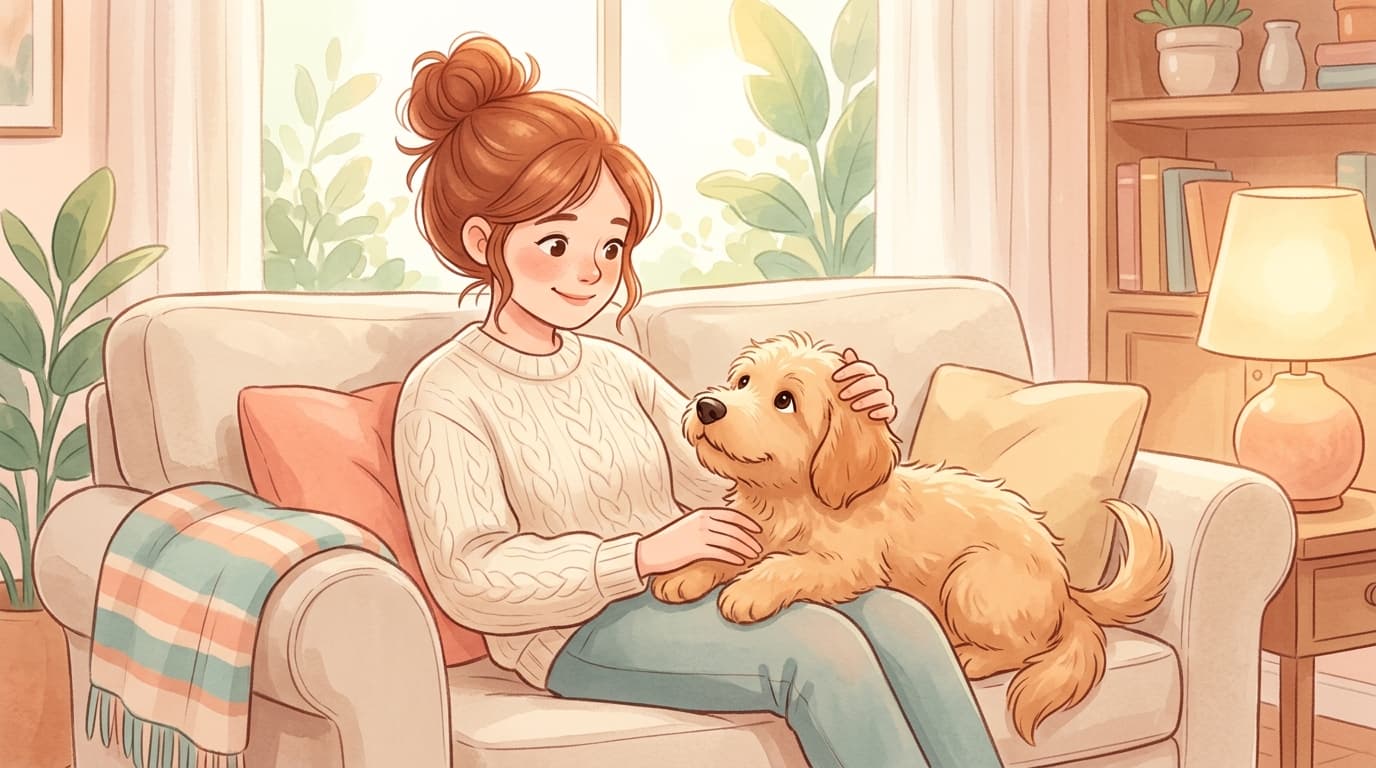
Your dog can be in a room full of friendly people and still make a beeline for one person. Then they exhale, settle, and act like the world finally makes sense.
That “favorite person” feeling is real—and research suggests it’s less about who spoils them most and more about who makes them feel safest.
Your dog picks the person they can “read” most clearly
A lot of owners assume favoritism is about who gives the most treats, plays the most, or met the dog first. But dogs aren’t only chasing fun—they’re constantly scanning for predictability.
Think of your dog’s brain as a pattern-detection machine that’s been fine-tuned for human life over thousands of years. Some people are simply easier for a dog to decode. If your tone, body language, routines, and reactions are consistent, your dog can build a reliable “internal model” of you.
And to a dog’s threat-assessment system, reliable usually equals safe.
Safe doesn’t just mean “nice.” Safe means your dog can stop monitoring the room for surprises. It means they can relax, explore, and be fully present instead of staying on alert.
Why predictability turns into trust (and even shapes who else they trust)
One fascinating thread in attachment research is that a strong bond doesn’t only affect how your dog treats you—it can affect how they treat other people.
In studies looking at canine attachment and social trust, dogs with a strong primary bond didn’t simply prefer their person. They used that relationship like a hub. When dogs observed strangers acting cooperatively toward their owner, they were more likely to feel confident around those strangers afterward.
In other words: your dog’s “social map” can radiate outward from their favorite person.
If you’ve ever noticed your dog warming up to someone faster because you clearly like and trust that person, you’ve seen a version of this in real life.
The early weeks matter… but adult dogs still bond deeply
Puppyhood has a powerful window where social experiences shape what feels normal and safe. Researchers often describe a critical socialization period in early life (roughly the first few months), where the brain is extra flexible and rapidly building its expectations about the world.
When puppies miss out on positive human contact during that early window, it can make human relationships much harder later—not just “shy,” but genuinely difficult.
But this is the part many pet owners don’t realize: adult dogs can still form real, measurable attachment bonds.
Dogs adopted as adults—including dogs who’ve been rehomed—can develop the same kind of “primary person” connection. It may take more deliberate consistency (more repetitions, more predictability, more time), but the bond can be just as strong.
The “secure base effect”: why your presence changes your dog’s behavior
There’s a classic attachment concept called the secure base: the idea that a trusted caregiver’s presence helps an individual feel safe enough to explore.
Dogs show something strikingly similar.
In a clever problem-solving setup, dogs were given puzzles in an unfamiliar room under different conditions:
- their owner present (quietly, not helping)
- a friendly stranger present
- no one present
Dogs persisted longer and tried more strategies when their owner was simply in the room. The friendly stranger didn’t create the same boost—results looked much closer to the “no one there” condition.
That’s a big deal because it suggests your dog isn’t just comforted by any calm human. The effect is specific to the person they’re bonded to.
So when your dog follows you from room to room, it may not be “clinginess” in the dramatic sense. It can be your dog keeping their biological safety anchor nearby.
The bonding chemistry: how eye contact can strengthen attachment
There’s also a chemical side to this.
In a well-known study on dogs and humans, researchers measured oxytocin (a hormone involved in social bonding) before and after normal, unscripted time together. Dogs who spent more time in mutual gaze with their owners showed increased oxytocin—and their owners did too.
It wasn’t one-way. The dog’s gaze affected the human, and the human’s gaze affected the dog, creating a feedback loop.
Even more interesting: when the same protocol was tested with human-socialized, hand-raised wolves, the mutual-gaze pattern and oxytocin rise didn’t show up in the same way. That points to something dogs developed through domestication—an evolved tendency to bond with humans using signals that feel surprisingly close to parent-infant bonding chemistry.
What brain scans suggest: your dog may find “you” rewarding all by yourself
Most of us assume dogs value people because people deliver food, walks, toys, and good stuff.
But brain-imaging research with awake, trained dogs has hinted at something deeper: reward-related regions of the brain can respond strongly to owner-linked cues (like scent or signals associated with their person), sometimes even more than food-linked cues.
That supports what many owners already feel in their bones—your dog doesn’t only like what you provide. Your presence can be the reward.
A simple 90-second habit that can reinforce the bond
If you want a practical way to lean into the dog-human bonding system, try this for a week:
- Get at your dog’s level in a calm space (no commands, no treats in hand).
- Wait for your dog to look at you naturally.
- When they make eye contact, hold a soft, relaxed gaze for about 30 seconds.
- Do it once a day.
The goal isn’t to “stare your dog down.” It’s to create a quiet, predictable moment of connection that your dog chooses—exactly the kind of interaction that tends to build trust over time.
The real reason your dog has a favorite person
Your dog isn’t running a popularity contest. They’re choosing the person who feels clearest, safest, and most emotionally regulating in a noisy world.
So if your dog walks past everyone else to get to you, take it for what it is: you’ve become their secure base—the person their nervous system understands best, and the one they can finally relax around.
Continue reading

7 Dog Body Language Signals Most Owners Miss (And What Your Dog Is Really Saying)
From play bows to doorway guarding, learn the dog body language signals that reveal trust, comfort, and connection.

Dog Body Language Signs of Love: 7 Little Moments That Mean “You’re My Person”
From the play bow at the door to sleeping pressed against you, these dog body language signs quietly prove how much your dog loves you.

Male Dogs vs Female Dogs: 5 Real Differences You’ll Notice at Home and on Walks
From pee-mail to leash pulling and rough play, here are 5 everyday ways male dogs tend to differ from females.