Skip to content
Why Your Dog Licks You Every Day (And What It Really Means)

Why Your Dog Licks You Every Day (And What It Really Means)

6 min read

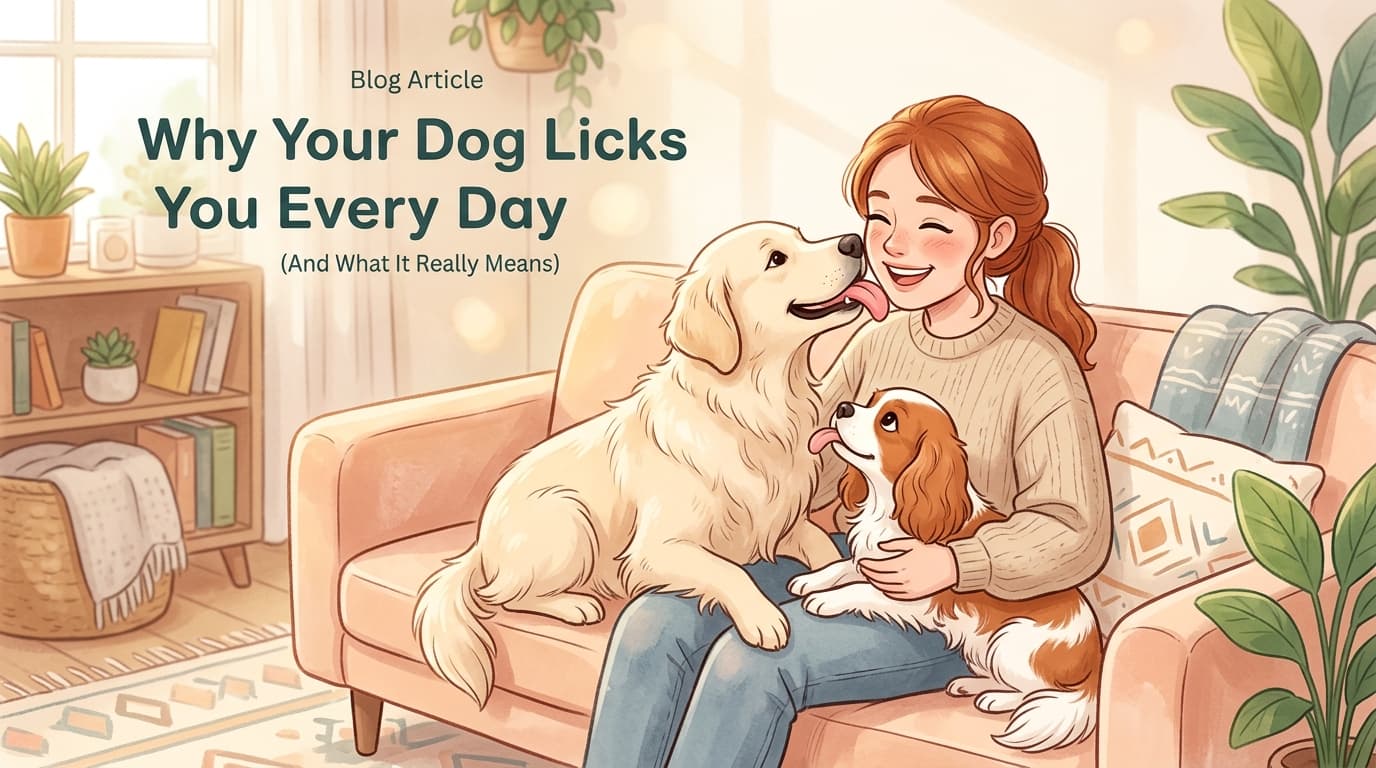
Most people assume dog licking is about taste—salt on your skin, leftover food smells, that kind of thing. But if your dog licks you every day, you’re usually seeing a much older, deeper kind of connection playing out right on your hands.

That daily lick is often part comfort, part bonding, and part “you’re my person” in a language dogs have used since puppyhood.

What dog licking really means in your home

From the time puppies are tiny, licking is tied to care and closeness. It’s how a mother dog cleans, warms, and settles her pups. So when your dog licks your hands or face, it can be a social grooming behavior—basically, you’re being treated like family.

Licking can also calm your dog down. The act itself can help them self-soothe, which is why some dogs get extra “licky” during quiet moments, after you’ve been gone, or when the house feels tense. And yes, your dog is also gathering information: your scent changes with stress, activity, and mood, and dogs are very tuned in to that.

If you’ve ever noticed your dog lick you and then visibly relax—soft eyes, slower breathing, maybe a little sigh—that’s a pretty good clue it’s not about snacks at all.

The pack greeting: why your dog loses it when you come home

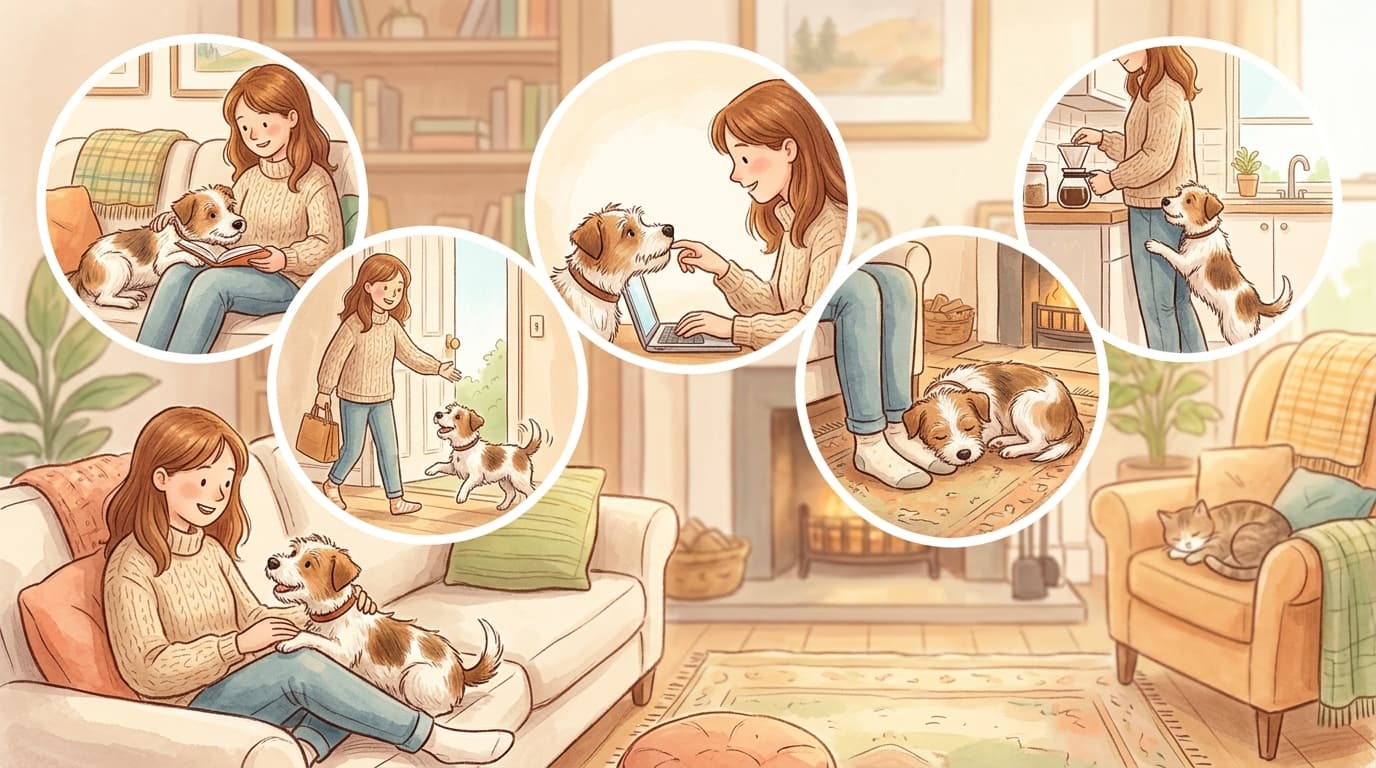
You know that moment you walk in and your dog turns into a furry tornado? Jumping, wiggling, high-pitched noises, the whole welcome-home parade.

It’s easy to label it as “excitement,” but it’s also a bonding ritual. Social canines greet each other with physical closeness and sound to re-connect. Your return is a big deal in your dog’s world—not because you might drop a treat, but because the “group” feels complete again.

The “sleep close” habit: your dog’s idea of safety

Plenty of dogs ignore a perfectly good bed to press against your legs on the couch or curl up near you at night. That choice is meaningful.

Sleep is vulnerable time for animals. When your dog chooses to rest against you (or within arm’s reach), it often signals trust and a sense of protection—like you’re the safe spot. Many owners don’t realize how much dogs crave that quiet, shared calm.

The soft stare: eye contact that isn’t a challenge

In many animal interactions, direct eye contact can be tense. But dogs have rewritten that rule with humans.

If your dog looks at you with relaxed eyes—sometimes with a slow blink or a dreamy expression—that’s usually affection and connection, not a demand. It’s the canine version of lingering near someone you love just because it feels good.

The “gross gift”: why your dog brings you toys (or socks)

A muddy tennis ball dropped in your lap can feel… questionable. But in dog logic, offering a prized item is a trust move.

Toys are valuable resources. When your dog brings you their favorite one, it can be an invitation to share joy and attention, or simply a way of including you in what matters to them.

The living shield: when your dog steps between you and something

Ever notice your dog position their body between you and a stranger, a loud noise, or anything that feels “off”? Even without growling, that alert stance can be protective.

Dogs pick up on subtle changes in you—posture, tension, energy. When they block, they may be responding to your stress as much as the environment itself.

Belly-up isn’t just “rub me”—it’s trust

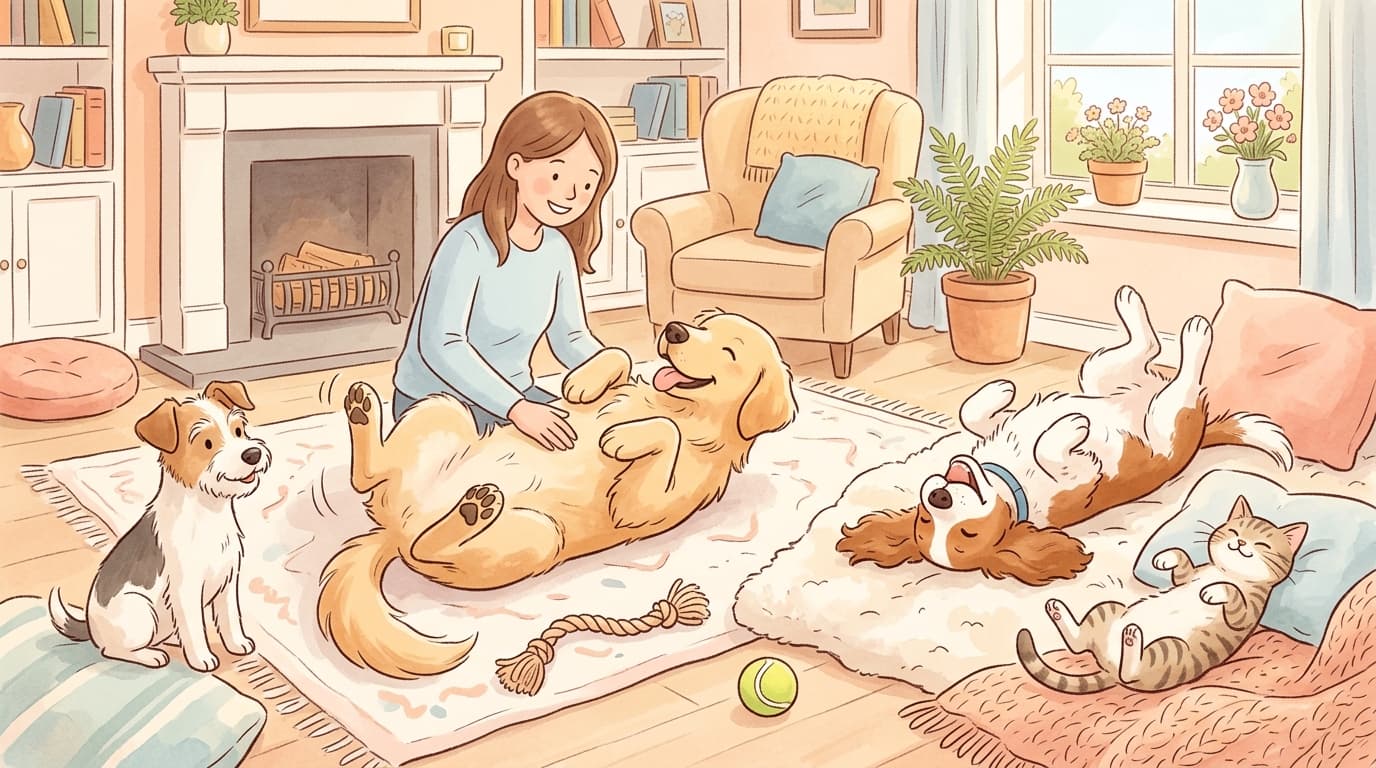
A dog showing their belly can be playful, sure. But it’s also a vulnerable posture.

When your dog flops over and exposes their underside, it often signals comfort and trust. Sometimes they want a rub. Sometimes they just want to exist near you in a position that says, “I feel safe here.”

The shadow dog: why your dog follows you everywhere

Kitchen? They’re there. Bathroom? They’re on security detail outside the door. Move two inches on the couch? They readjust like it’s their job.

This “velcro” behavior often isn’t neediness as much as it is togetherness. Dogs are social. For many of them, the best place in the house is wherever you are.

Your dog as an emotional barometer

Some days you don’t even have to cry for your dog to know you’re not okay. They’ll come over, rest their head on you, lean in, and just… stay.

Dogs notice changes in scent and micro-expressions, and many respond by offering steady physical presence. No solutions. No speeches. Just companionship that somehow makes the room feel less heavy.

The love nibble: gentle teeth that mean “you’re mine”

Those tiny, careful nibbles during play can freak new owners out. But when it’s soft and controlled—no pressure, no intent to hurt—it’s usually affectionate play behavior.

It can be a trust signal: your dog is showing they can use their mouth gently around you. It’s intimate in a weirdly sweet way.

The lean: a full-body “I’m with you”

When your dog leans their weight into your legs, they’re not always asking for anything. Often they’re anchoring themselves to you.

Physical contact is a big love language for dogs. That lean can show comfort, closeness, and sometimes a desire for reassurance.

The gift of forgiveness (and why it hits so hard)

You’ve probably had a moment you regret—raising your voice, stepping on a paw, being late with dinner. And then your dog comes back five minutes later like it never happened.

Dogs tend to live in the “right now.” Their quick return to warmth isn’t stupidity; it’s a kind of emotional resilience that many humans find humbling.

The head tilt: your dog is actually listening

That adorable head tilt isn’t just for show. Dogs shift their head to catch sound better and read what you’re doing.

They may not understand your full story about your day, but they’re often working hard to interpret tone, emotion, and any familiar words that matter to them.

The little “talk-backs”: sighs, woo-woos, and happy noises

Some dogs develop soft vocal habits with their people—gentle sounds, contented moans, big sighs when they settle.

These can be signs of comfort and communication. If your dog melts against you and lets out a deep sigh, it often reads like, “All good. I’m home.”

A simple way to respond to these love signals

If your dog licks you every day, try pausing for a second before wiping your hand on your jeans. Notice what else is happening: relaxed eyes, leaning, bringing a toy, following you, settling close.

Those small behaviors add up to one big message—your dog isn’t just living in your house. They’re attached to you.

Meta description: Daily dog licking isn’t about salt or snacks. It’s bonding, comfort, and pack love—plus 14 other signs your dog adores you.
Continue reading