Why Your Dog Picked You as Their Favorite Person (It’s Not the Treats)
Your dog chose you for safety, consistency, and chemistry. Here’s what research says about favorite humans, oxytocin, and the secure base effect.
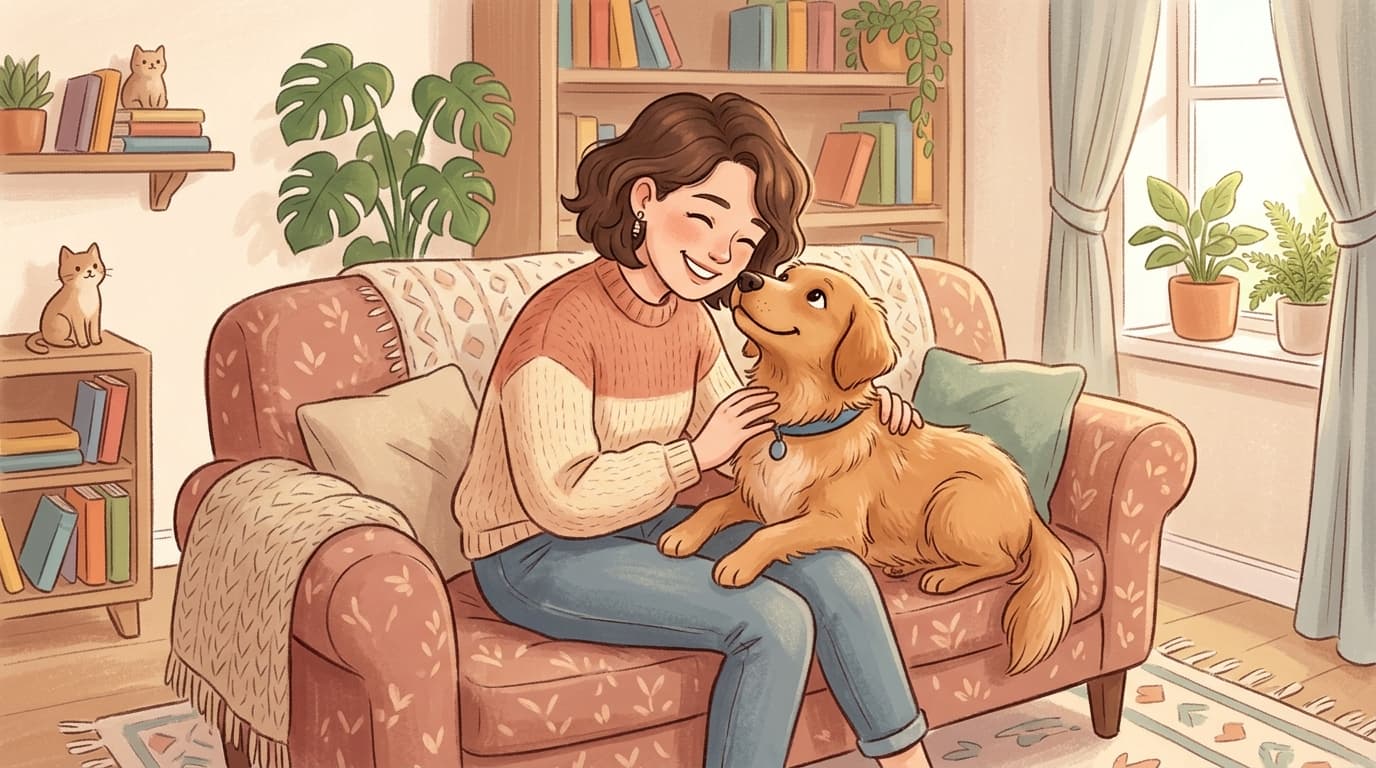
You’re standing in a room full of people, and your dog threads through every leg and chair like they’re on a mission—straight to you. It can feel flattering, confusing, and a little mysterious all at once. But the real reason your dog picked you as their favorite person has much more to do with safety and clarity than snacks.
Your dog isn’t “grading” you—they’re reading you
Most pet owners don’t realize how much of their dog’s day is spent decoding humans. Dogs track tone, posture, timing, and patterns with the focus of a professional observer. So your dog’s “favorite person” usually isn’t the loudest, funniest, or most exciting human in the house.
It’s the person who makes the most sense.
In other words: your dog chooses the human who feels most predictable and emotionally legible. Not perfect—just consistent. If you’ve ever noticed your dog relaxing faster around you than around anyone else, that’s not an accident. Your steadiness is information, and dogs love information.
The early social window (and why it matters even if you adopted later)
There’s a short period in puppyhood—roughly from about 3 weeks to around 12 weeks—when a puppy’s brain is especially primed for social bonding. During that time, regular warm contact with humans doesn’t just create familiarity; it helps form the basic “template” for how safe human relationships are supposed to feel.
Researchers have found that puppies who miss that early, consistent human contact can struggle to form typical human bonds later on. That’s one reason early social experiences can echo through a dog’s whole life.
But here’s the part that matters if your dog came to you as a rescue or an adult: a later bond isn’t second-best.
If your dog met you at two, five, or ten years old and still latched onto you, that connection wasn’t just puppy wiring doing what puppy wiring does. It was a choice built with a more cautious brain—one that had already learned something about the world. And they chose you anyway.
The “secure base effect”: why your presence changes your dog’s confidence
One of the clearest explanations for why your dog picked you as their favorite person comes from something called the secure base effect.
In a study setup, dogs were placed in a new environment with a difficult puzzle (a treat container designed to be challenging). When their owner was quietly present—no coaching, no cheering, just sitting nearby—dogs worked harder. They tried longer. They persisted.
When the owner left and a friendly stranger sat in the same spot with the same neutral body language, the dogs didn’t panic… but they also didn’t push through the challenge in the same way. Motivation dropped. Effort faded.
That difference is the secure base effect in action: your presence helps turn down the internal alarm system so your dog can spend more time in curiosity instead of caution.
So if your dog follows you from room to room, it’s not always clinginess. Sometimes it’s your dog keeping their “safe setting” within reach.
The oxytocin loop: the quiet chemistry behind that long look
You know that soft moment when your dog looks into your eyes—not the “I want something” stare, but the calm, steady one?
There’s research suggesting that mutual gaze between dogs and their humans can increase oxytocin levels in both. Oxytocin is often called the bonding hormone; it’s involved in deep social attachment in mammals.
What’s especially fascinating is that this effect appears to be uniquely strong in dogs compared to even human-socialized wolves. In other words, dogs didn’t just learn to connect with us—they evolved alongside us in ways that made this kind of cross-species bonding more likely.
So when your dog locks eyes with you for a beat longer than necessary, it may be doing more than checking in. That moment can literally reinforce the bond on both sides.
Dogs are built to understand us (in ways wolves generally aren’t)
Another clue to why your dog picked you as their favorite person: dogs are unusually tuned in to human communication.
Even without formal training, many dogs can follow a human pointing gesture to find something hidden, which requires a kind of social attention—an understanding that your movement is meant to communicate.
That natural “human-signal fluency” is part of what makes a dog feel so emotionally close. Your dog isn’t just living near you; they’re constantly interpreting you.
And the person they interpret most easily—the one whose cues feel clearest—is often the one they choose.
Your dog’s brain may treat you like a reward
In awake-dog brain imaging research, dogs were trained to calmly stay still for scans (no sedation) so scientists could see what lit up in real time.
When dogs heard signals associated with their owner (like the owner’s voice or a familiar cue), regions tied to anticipation and reward activated—similar to what happens with food.
The striking part: for many dogs, the owner-associated signal produced an even stronger reward response than the food-associated one.
So yes, your dog likes treats. But your dog can also experience you as the good thing they’re waiting for.
Praise can beat snacks: what dogs often choose when given the option
In simple choice tests, many dogs will pick their person’s praise over a food reward more often than you’d expect. That doesn’t mean your dog doesn’t love eating. It means your attention—your approval, your warmth, your noticing—can carry serious weight.
This is usually what “favorite person” really means:
- The person your dog orients to first
- The person whose reaction matters most
- The person whose presence makes the world feel workable
A simple 90-second ritual to deepen the bond tonight
If you want to strengthen the exact dynamic that makes you your dog’s favorite person, try this once today:
- Sit down at your dog’s level in a spot they naturally approach.
- Don’t call them over. Don’t cue a behavior. Don’t grab a treat.
- Let them come to you on their own timeline.
- When they make eye contact, hold a soft, relaxed gaze for about 30 seconds.
Keep your face gentle. Let it be calm and unhurried.
If you’ve ever noticed your dog’s expression change when they realize you’re not asking for anything—just being with them—this is that moment on purpose.
The takeaway: your dog chose the person who feels like home
Your dog didn’t pick you because you’re flawless. They picked you because you’re understandable, steady, and safe to build a world around. Whether you’ve been there since puppyhood or you earned their trust later, being your dog’s favorite person is less about “doing more” and more about being the one who helps them feel most like themselves.
Pay attention to the moments they seek you out for no reason at all. That’s the bond doing what it was made to do.
Continue reading

7 Dog Body Language Signals Most Owners Miss (And What Your Dog Is Really Saying)
From play bows to doorway guarding, learn the dog body language signals that reveal trust, comfort, and connection.

Dog Body Language Signs of Love: 7 Little Moments That Mean “You’re My Person”
From the play bow at the door to sleeping pressed against you, these dog body language signs quietly prove how much your dog loves you.

Male Dogs vs Female Dogs: 5 Real Differences You’ll Notice at Home and on Walks
From pee-mail to leash pulling and rough play, here are 5 everyday ways male dogs tend to differ from females.