Why Your Dog Stares at You: The 8 Things They’re Quietly Checking
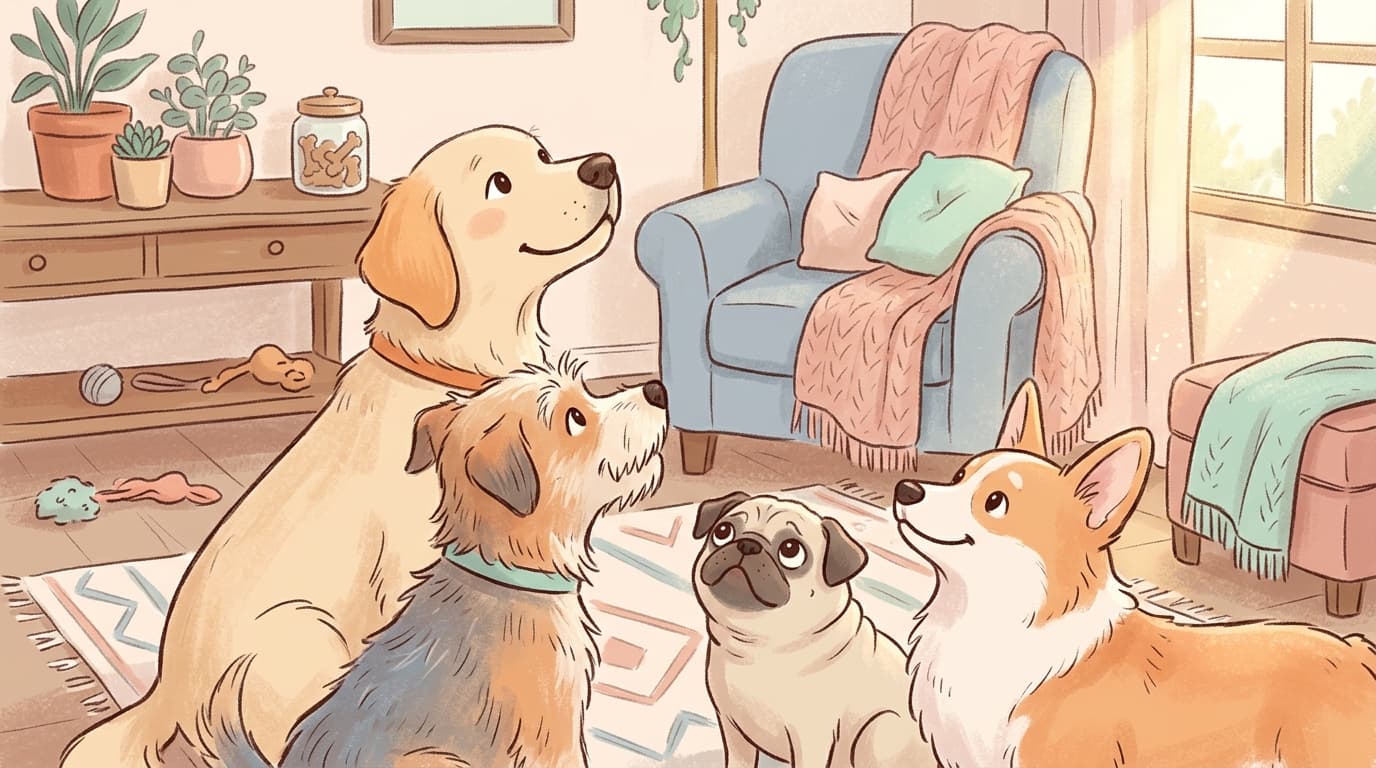
That intense stare your dog gives you while you’re eating, typing, or just existing on the couch can feel a little… personal. But most of the time, it’s not pushy or weird—your dog is collecting information. In a way, they’re checking how safe, predictable, and emotionally “available” you are right now.
1) Your dog’s 3-second safety check
In the first few seconds of eye contact, your dog is basically scanning you for “Are we good?” They pay attention to tiny tells: how quickly you blink, whether your face looks tight, and even subtle shifts that signal tension.
If you’ve ever noticed your dog looking at you more on chaotic days, that’s not in your head. Dogs who live around stressed humans tend to check in more often (one finding suggested about 40% more). They’re trying to figure out whether the environment is about to change—because for a dog, your mood often predicts what happens next.
Breathing matters a lot here. Dogs watch your chest movement and rhythm, and research has suggested they can spot patterns linked to anxiety with surprisingly high accuracy—even from across the room.
2) How your dog reads your mood (and remembers it)
Your dog doesn’t just react to the moment. They seem to keep a running “mood history” on you—like a mental scorecard of how the last few days have felt.
Dogs are very tuned in to micro-expressions: tiny facial movements that flash for a fraction of a second. They can tell the difference between your focused face and your frustrated face, even if you think you’re being neutral.
And here’s the part most pet owners don’t realize: dogs may adjust their own eye contact based on your recent stress level. If you’ve been tense for a couple of days, some dogs back off and look at you less—almost like they’re giving you space. If you’ve been consistently calm, they tend to linger in eye contact longer during friendly interactions.
3) The prediction game: your dog is guessing what you’ll do next
That couch stare isn’t always emotional. Sometimes it’s strategic.
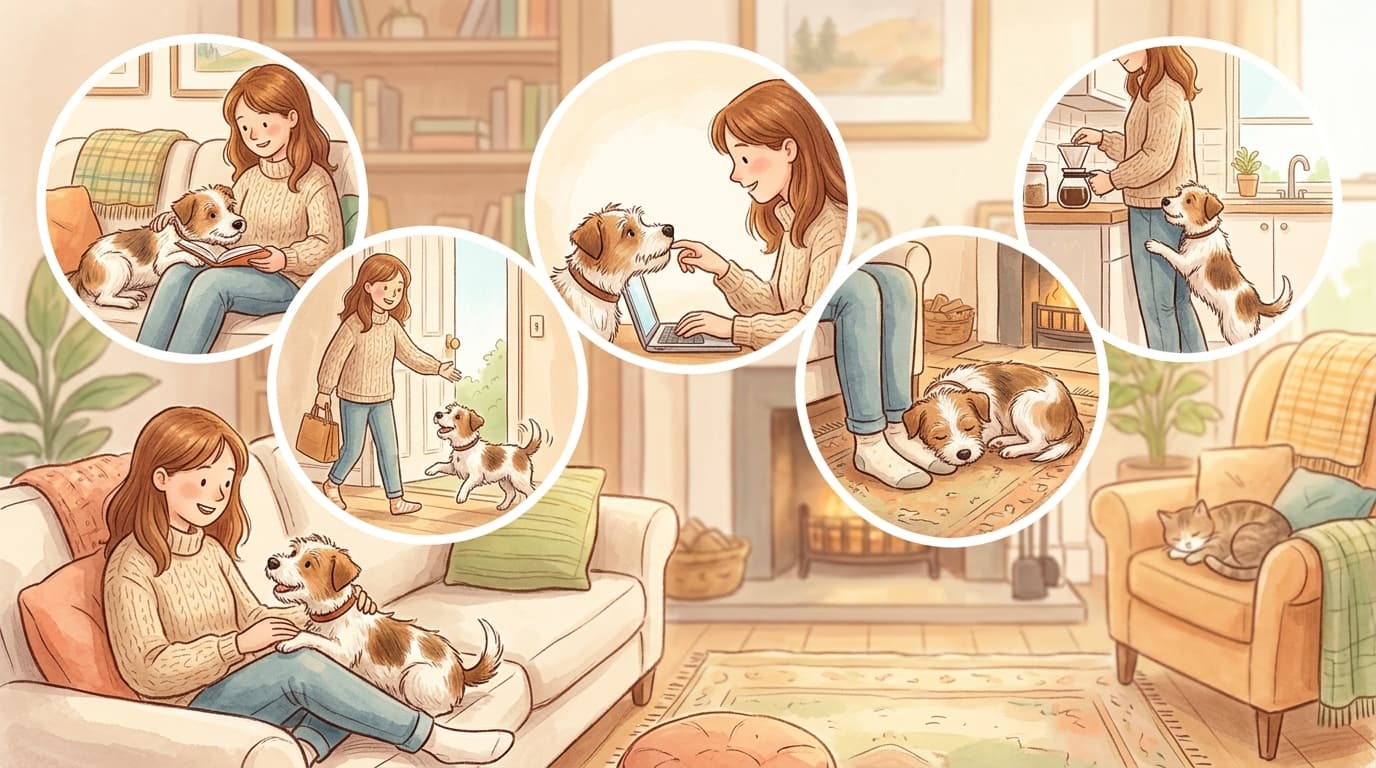
Dogs are incredible at learning your routines—down to the details. They watch the angle of your body, where your hands are, and even which way your feet are pointing. Researchers have found dogs can pick up on the earliest moments of you standing up and correctly guess where you’re headed in the house a large percentage of the time.
They’re not only noticing big movements, either. Dogs catch the “pre-movement” you don’t know you’re making: the tiny weight shift before you head to the kitchen, the slight shoulder change before you grab the leash.
4) The “permission test” at mealtimes (it’s not just begging)
When your dog stares while you eat, it can feel like pure hunger—and sure, food is part of it. But there’s another layer: consistency.
Dogs use food situations to test whether your rules are stable and predictable. Studies using eye-tracking have shown dogs spend much of that mealtime stare watching your hands more than the food. They’re learning your pattern:
- Do you give in after a certain amount of time?
- Do you share only sometimes?
- Do you respond differently when they stare vs. when they look away?
If your responses are “maybe,” your dog may become a professional endurance athlete. Some dogs learn to hold eye contact for extremely long stretches because inconsistency teaches them that waiting might pay off.
And it’s not only about snacks. Dogs run similar tests around toys and play: are you starting the game, do they need to initiate, and what signals actually work with you? Clear, consistent responses are linked with lower anxiety in unfamiliar situations.
5) The love thermometer: soft eye contact and emotional availability
Not all staring is a challenge. Soft, relaxed eye contact—especially when it lasts several seconds—can be a bonding behavior. It’s associated with feel-good chemistry in the brain that supports attachment.
But dogs also seem to notice when you’re emotionally “checked out.” One fascinating finding: when owners were distracted (like looking at a phone), tiny changes in facial temperature were detectable with heat cameras, and dogs made eye contact less often afterward. Translation: your dog may be asking, “Is connecting worth trying right now?”
If you’ve ever had your dog stare at you in the middle of the night, it can be part of this emotional check too. Dogs that sleep near you often sync up with your rhythms. When you’re restless, they may become more alert—and that quiet look can be them deciding whether you need comfort or space.
6) The daily leadership test (yes, your dog checks your “calmness”)
Your dog uses staring to figure out whether you’re steady and attentive—basically, whether you’re safe to follow.
Where they stare from can even change the meaning. A dog watching you from a doorway often does it during transitions, like you moving to another room. That’s a moment of uncertainty: new space, new sounds, new possibilities. A calm, purposeful human helps a dog feel more secure.
Timing matters, too. Research described a “sweet spot” response window: if you take too long to notice your dog, you can seem inattentive; if you react instantly, you can seem keyed-up. Responding within a relaxed 1–3 seconds was linked with more confident behavior.
7) The long, spaced-out stare that’s actually “memory work”
You know the one: your dog stares for 20–30 seconds like they’re looking through you.
Some recent brain-scan findings suggest these longer staring moments may be tied to how dogs sort and store emotional information—almost like a quiet organizing mode. The idea is that your dog may be filing away “snapshots” of you: how you react to stress, how you solve problems, how quickly you recover after a hard day.
And the payoff is wild: dogs that spend more time closely observing their humans can start to mirror their owner’s problem-solving style in new situations.
8) The nighttime evaluation: what your dog learns while you sleep
When your dog watches you sleeping, it isn’t always protective or creepy—it can be a vulnerability check. Sleeping is when you’re least performative. Your dog gets a read on your true baseline.
Dogs can pick up on breathing patterns during sleep and may use that information to predict your next-day mood. Some will act gentler in the morning; others will keep more distance, as if they’re adjusting their behavior based on your emotional forecast.
There’s even evidence that dogs who do more nighttime watching can get better at reading human emotions in general, not just yours—like their social “emotional intelligence” spills over into interactions with strangers.
How to use your dog’s stare to build trust (without overthinking it)
Your dog isn’t trying to judge you like a teacher grading homework. They’re trying to feel safe and connected. If you stay calm, respond consistently, and offer soft attention when it makes sense, that stare becomes less of a pressure moment and more of a quiet conversation.
Continue reading

How to Leave Your Dog Home Alone Without Triggering Separation Anxiety
Use these 9 simple routines to keep your dog calm, busy, and secure when you leave the house.

Everyday Habits That Hurt Your Dog’s Feelings (and What to Do Instead)
Small daily habits can quietly stress your dog. Learn what hurts your dog’s feelings—and the simple swaps that rebuild trust.

Female Dogs Aren’t Just “Smaller Males”: 8 Key Differences Every Dog Owner Should Know
Female dogs often learn faster, bond differently, and hide pain better. Here are 8 real-life differences to understand your girl.