How to Leave Your Dog Home Alone Without Triggering a Panic Spiral
Simple, science-backed leaving routines that reduce stress: skip emotional goodbyes, use grounding touch, and match rituals to short vs long absences.
Your dog can look totally fine while you grab your keys—quiet, relaxed, even a little tail wag. But for many dogs, the “leaving” stress response starts long before the door closes, and a few well-meaning habits can crank that stress up fast.
The good news: small changes to how you leave your dog alone can make departures feel boring instead of heartbreaking.
Your dog starts worrying before you even leave
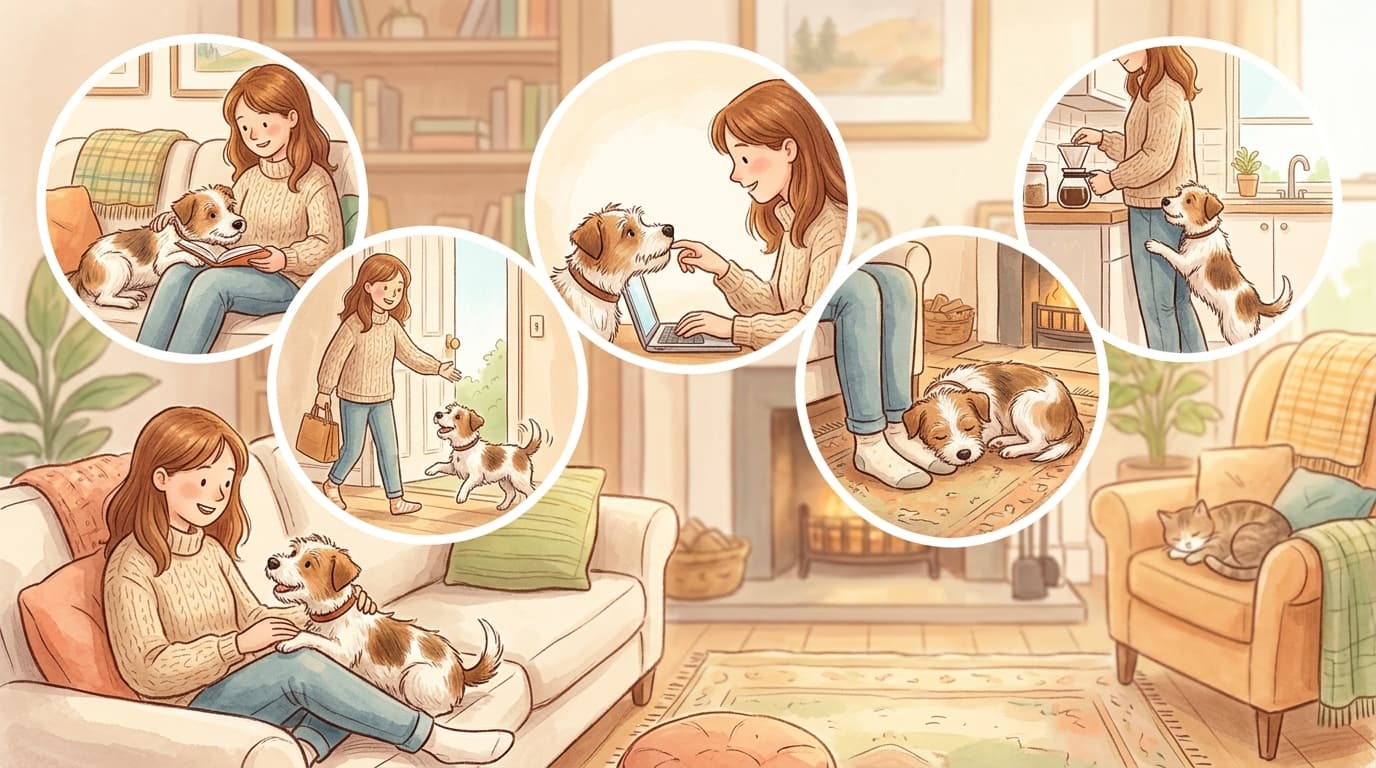
Most pet owners think the stressful part is the moment the door shuts. For a lot of dogs, it starts earlier—sometimes up to 20 minutes earlier—because your routine becomes a predictable countdown.
Dogs are incredible at pattern detection. The coffee machine finishing, different footsteps in shoes, the zipper of a bag, the jingle of keys… these are all “signals” that separation is coming. Keys are a big one for many dogs, and they can spike stress before you’ve even stepped outside.
What to do instead:
- Break up your pre-departure pattern. Pick up keys at random times during the day without leaving.
- Do some “fake outs” where you put on shoes, then sit back down.
- Keep your final 10–20 minutes before leaving as low-drama and routine-free as possible.
Skip the emotional goodbye (it can backfire)
If you’ve ever crouched down, made eye contact, and given your dog a heartfelt speech—you're not alone. Most pet owners don’t realize that a tender, emotional goodbye can act like a warning siren.
That extra intensity (the special voice, the lingering pets, the “I’ll be back soon!” energy) can prime your dog to feel like something awful is about to happen. In other words, you’re accidentally making departures feel significant.
Try this: keep exits calm and plain. No big announcement. No lingering. Just leave like it’s normal—because you want your dog’s brain to file it under “normal.”
Don’t hype your dog up right before you disappear
A quick game of fetch, excited belly rubs, or a burst of playful attention right before you go can create a rough emotional swing: high arousal… then sudden isolation.