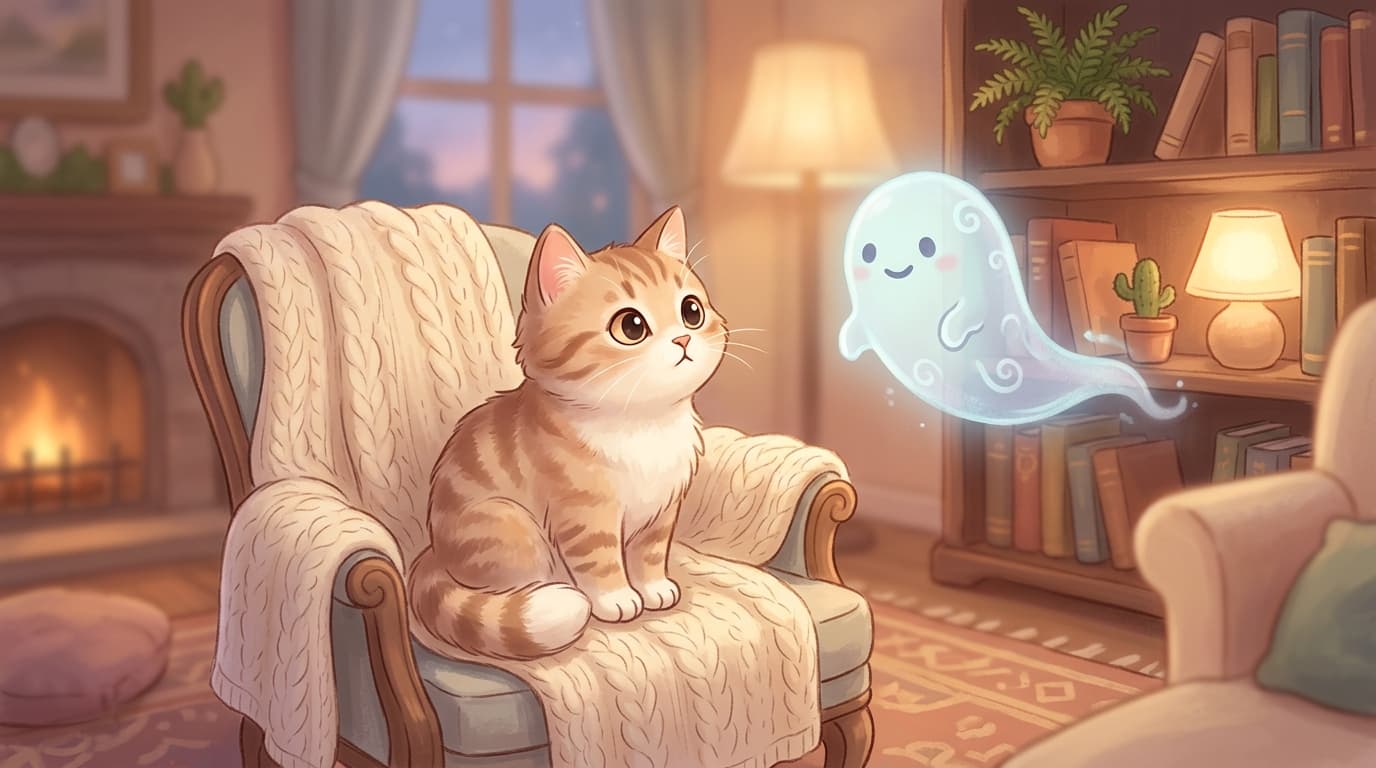
11 Signs Your Cat Is Smarter Than You Think (Yes, Even When They Ignore You)
From “training” you to reading your mood, these 11 signs reveal your cat’s intelligence in everyday life.

Your cat isn’t “doing nothing” nearly as often as it looks. Behind the sleepy eyes and perfectly-timed indifference, there’s usually a lot of thinking going on. If you’ve ever felt like your cat is quietly running the household… you might be onto something.
1) Your cat trains you (and you barely notice)
If you find yourself refilling the food bowl just because your cat sat beside it and stared, that’s not an accident—it’s strategy. Many cats learn which tiny actions reliably move you: a single meow at the right moment, a pointed look, a paw placed on your face at dawn.
What’s especially clever is how personalized it gets. The tactic that works on you might not work on your partner or roommate, and your cat often figures that out through trial and error. Over time, they build a custom “button panel” for each human in the house.
2) They know your routine better than you do
Your cat may look asleep all day, but they’re excellent at pattern-spotting. Small cues—keys picked up, a chair shifting, your tone changing during a phone call—can signal what’s coming next.
Many cats learn when you typically wake up, eat, leave, and return. That’s why your cat can be waiting near the door before you even touch the handle. It’s not magic. It’s careful observation stacked up over weeks and months.
3) They understand that hidden things still exist
Hide a toy under a blanket and your cat often goes after it anyway. That’s because many cats grasp the idea that an object doesn’t vanish just because it’s out of sight.
This also explains the classic “staring at the closed door” moment. In your cat’s mind, you didn’t disappear—you’re simply temporarily unreachable. Waiting isn’t clinginess; it’s feline logic.
4) They recognize your voice… and choose whether it’s worth responding
Most pet owners don’t realize this: a cat can know you’re calling and still decide not to move. Research suggests cats can recognize their owner’s voice, but their response is often based on a quick internal calculation.
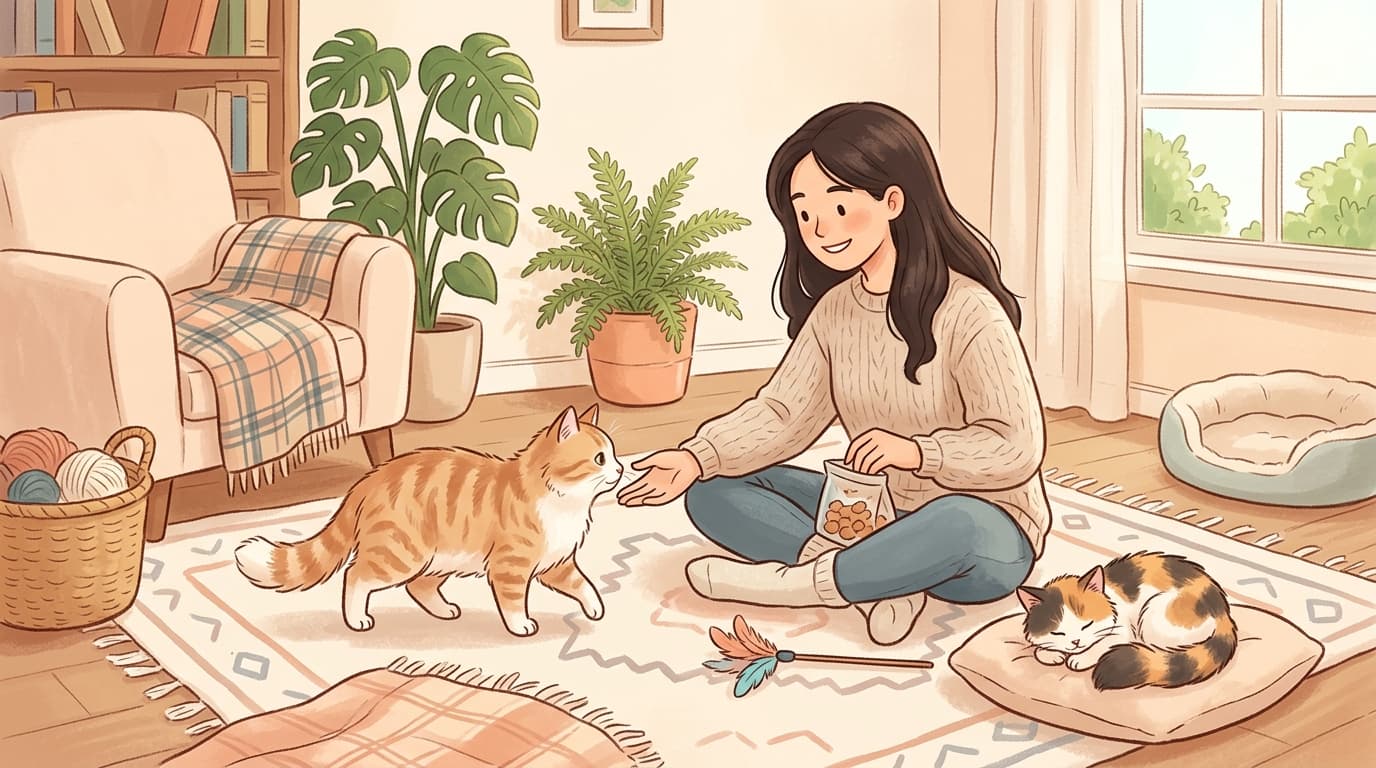
Is there food involved? Play? Affection? Something interesting? If the payoff isn’t clear, many cats stay put and keep watching. That isn’t “not caring.” That’s decision-making.
5) They learn by watching you—and remember it
Ever opened a cabinet once, and days later your cat is somehow trying the same door like they’ve been doing it for years? Cats can learn through observation and store what they see.
They don’t always perform immediately or show off in front of you. Some watch, file it away, and later attempt it when the timing suits them. And they often remember context too—what happened after the door opened, what you reached for, what the routine looked like.
6) They solve problems with surprising persistence
Cats get labeled as “lazy,” but motivation changes everything. A toy stuck under the couch, a treat inside a container, a bird visible through glass—these can turn your cat into a focused problem-solver.
You’ll see them test angles, probe with paws, change tactics, fail, recalibrate, and try again. Some even return hours (or days) later to continue working the same challenge. That’s not stubbornness; it’s methodical persistence.
7) They read your emotional state
That strange moment when your cat appears out of nowhere and sits quietly beside you—especially when you’re sad, stressed, or not feeling well—often has a reason.
Cats can pick up on changes in your posture, facial expression, voice, and even scent. They may not label it “anxiety” the way you do, but they notice that something is different. And many respond by staying close, calm, and present without making a big scene.
8) They use different sounds on purpose
Adult cats don’t typically meow at other cats the way they meow at humans. Over time, many cats develop a surprisingly specific set of vocalizations aimed at you.
A short, demanding sound for food. A softer trill for greeting. A long, low cry when something feels wrong. A rapid chirp aimed at movement outside the window. They learn what gets a reaction from you and adjust their “vocabulary” accordingly.
9) They have sophisticated preferences—and enforce them
Your cat’s strong opinions aren’t always just pickiness. Many cats form preferences based on memory, sensory experience, and emotional association.
They may reject a new food repeatedly, avoid a new blanket, or react strongly to a new person in the home. That consistency can reflect a complex inner world: your cat is making informed choices and communicating them clearly.
10) They communicate with precision without making a sound
Slow blinks. A tail held upright. A deliberate head-butt. A long, direct stare. Cats have a full nonverbal toolkit, and the smart ones use it intentionally.
Even more impressive: they often learn which signals work best on you. If slow blinking makes you soften, they’ll do it more. If sitting on your keyboard gets instant attention, they’ll remember that too. It’s a feedback loop—signal, response, adjustment—that looks a lot like social intelligence.
11) They carry a detailed 3D map of your home
Watch your cat move through the house in near-darkness with barely a pause. That’s not just good night vision. Many cats build a detailed mental map of their territory—entry points, escape routes, high perches, hiding spots, and the usual positions of objects.
They often notice changes quickly, sometimes before you do. If your cat freezes and stares at a “nothing” corner or insists on taking a specific route at a specific time, they may be processing sensory details and spatial information you’re simply not tuned into.
The takeaway: your cat is probably thinking more than you realize
If your cat shows even a few of these signs, there’s a good chance you’re living with a quiet little strategist. Pay attention to the patterns—especially the ways your cat adapts to you—and you’ll start seeing their intelligence in everyday moments. And honestly, that makes sharing a home with them even better.
Continue reading

How Cats Decide Who to Trust (and How to Earn It Gently)
Cats don’t give trust by default. Learn the signals they watch—control, body language, routine, scent, and patience—to build a stronger bond.

5 Everyday Things Your Cat Hates (and How to Stop Accidental Tantrums)
From the “wrong” petting spots to noisy rooms and sudden changes, these everyday habits can stress your cat and trigger swats.

Do Cats See Ghosts? Why Your Cat Stares at “Nothing”
Cats may not see ghosts, but their night vision and super-hearing can make them react to things you can’t detect.