A 5-Minute Pre-Departure Routine to Ease Dog Separation Anxiety
Use this simple pre-departure routine to reduce dog separation anxiety with calmer cues, scent, sound, light, and a quiet exit.
That sad whimper you hear as you head out the door isn’t “drama” or your dog being extra clingy. For many dogs, separation anxiety is a real stress spiral that starts before you’ve even left—often triggered by tiny parts of your morning routine you don’t think twice about.
The good news: you can change what your dog expects from departures in just a few minutes a day, using a handful of simple cues that tell their nervous system, “This is normal. You’re safe.”
Dog separation anxiety starts before you leave
Dogs are ridiculously good at spotting patterns. If you’ve ever noticed your dog perk up the moment you grab your keys or slip on your “work shoes,” you’ve seen it in action.
Over time, everyday objects (keys, shoes, bag, coat) can become emotional alarm bells. Your dog isn’t reacting to the door closing—they’re reacting to the prediction that isolation is coming.
Neutralize the “departure triggers”
A few times throughout the week (especially when you’re not actually leaving), casually pick up your keys, put on your coat, or grab your bag… and then do something boring.
- Jingle your keys and sit on the couch
- Put on your shoes and make coffee
- Pick up your bag and fold laundry
The goal is to make those cues meaningless again, so your dog’s stress doesn’t start climbing before you even reach the door.
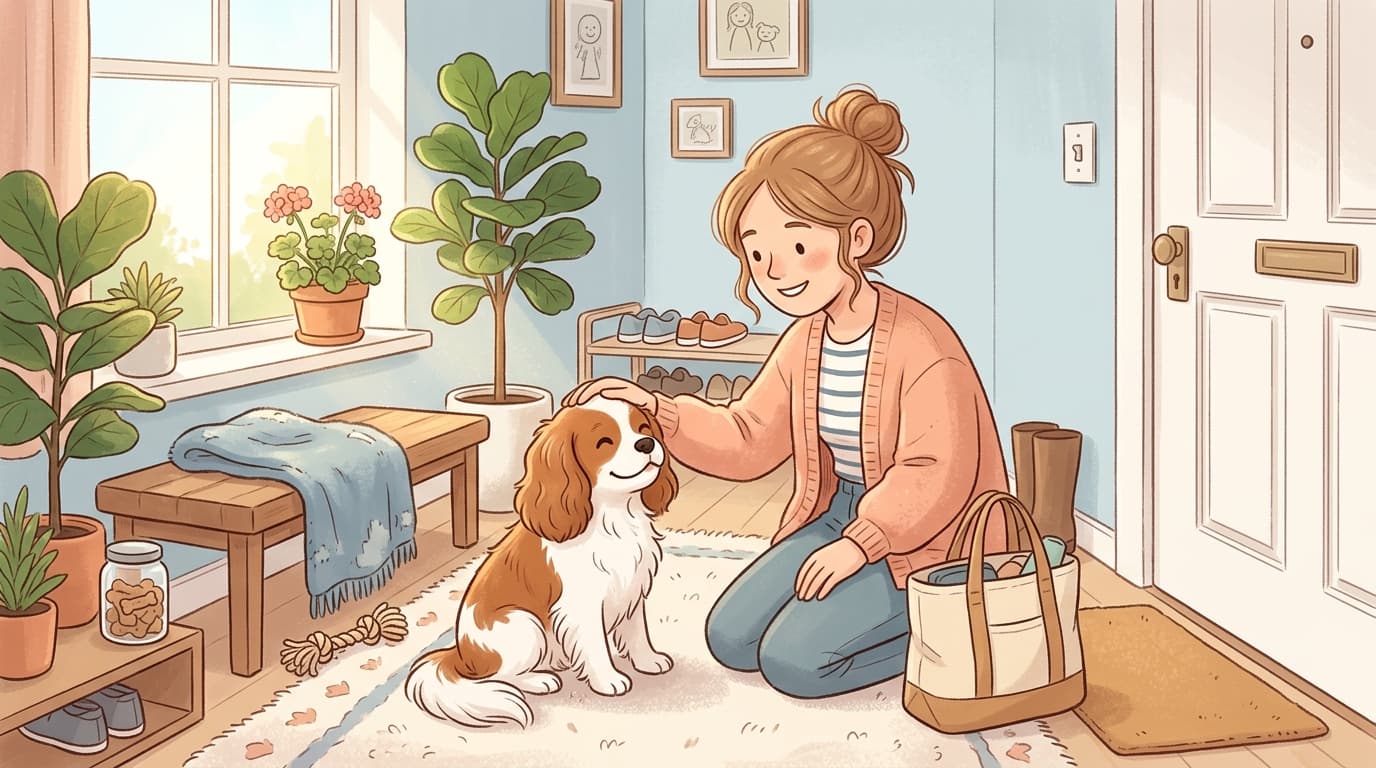
Get on your dog’s level to lower the pressure
Most pet owners don’t realize how intense “rushing energy” feels to a dog. When you’re zipping around the house, towering over them, checking your phone, hunting for your wallet—your dog can read that as tension in the environment.
Before you start your leaving routine, slow down for a moment and physically lower yourself.
- Sit on the floor
- Let your dog approach you (don’t hype them up)
- Offer calm, gentle contact if they want it
This isn’t about a long cuddle session. It’s about signaling steadiness—like you’re telling your dog, without words, that nothing scary is happening.
Use a “scent bridge” so your dog still feels you nearby
Dogs experience the world through scent the way we experience it through sight. When you leave, your dog doesn’t just miss your company—they miss the strongest sensory proof that you exist in the space.
A simple fix is to leave behind a strongly scented item where your dog rests.
Good options:
- A T-shirt you’ve slept in
- A towel you’ve just used
- A blanket you regularly lounge with
Place it in their bed area or crate so they can settle with it. For many dogs, this acts like a comfort anchor—something familiar they can return to when the house feels “too empty.”
Create a calming soundscape (silence can feel loud)
A totally quiet house can make every outside noise feel bigger: a delivery drop, a neighbor’s car door, a distant dog barking. And while leaving the TV on sounds helpful, sudden volume changes and sharp sounds can startle an already-worried dog.
Aim for steady, low-intensity background sound:
- Soft classical music
- Gentle nature sounds
- A fan or other consistent “hum”
That consistent audio acts like a buffer, making random noises less jarring.
Give your dog a job: activate the working brain
A bored brain doesn’t relax—it looks for an outlet. That’s where chewing, barking, pacing, and “creative redecorating” can come from.
Right before you leave, set up a food-based enrichment activity so your dog has something absorbing to do.
Ideas:
- A puzzle feeder
- A stuffed (or frozen) rubber toy
- Treats rolled into a towel for sniffing and searching
- A simple “hide the kibble” mini scavenger hunt
Sniffing and foraging are naturally regulating for dogs. If you time it well, your dog starts associating your departure with a rewarding mission, not a meltdown.
Keep the room feeling normal with light
Many people leave and immediately turn the home into a dark cave—lights off, blinds closed, curtains drawn. For some dogs, especially anxious ones, that sudden darkness can make the house feel strange and isolating.
Try keeping the environment looking like “normal daytime life”:
- Leave blinds slightly open for natural light
- If your home is dim, leave a warm lamp on
You’re not trying to spotlight the room. You’re trying to avoid that abrupt shift into an eerie, shut-down atmosphere.
Use one calm “goodbye phrase” every time
Dogs may not understand full sentences, but they absolutely understand tone and emotional energy. A worried, apologetic goodbye can accidentally confirm to your dog that something is wrong.
Pick one short phrase and use it consistently in a calm, low, relaxed voice:
- “See you later.”
- “I’ll be back.”
- “Watch the house.”
Say it the same way every time. Predictability is comforting—and comfort is the enemy of dog separation anxiety.
The quiet exit: the step that makes or breaks the whole routine
If you do everything right and then linger at the door—hesitating, looking back, dragging out the goodbye—you can spike your dog’s stress at the exact worst moment.
Once the environment is set (scent item down, sound on, enrichment ready, phrase said), leave cleanly:
- Walk out
- Close the door
- No lingering
- No emotional “one more goodbye”
The goal is to make departures boring. Boring is safe.
A calmer dog starts with a calmer pattern
If you’ve ever felt guilty leaving your dog home alone, you’re not alone. But the kindest thing you can do is build a consistent pre-departure routine that teaches your dog what to expect—and that they can handle it.
Give it a week of steady practice. Your dog doesn’t need a perfect morning. They just need one that feels predictable, safe, and familiar.
Continue reading

7 Dog Body Language Signals Most Owners Miss (And What Your Dog Is Really Saying)
From play bows to doorway guarding, learn the dog body language signals that reveal trust, comfort, and connection.

Why Your Cat Climbs on You: It’s Not “Just Love” (And What They’re Really Saying)
From lap-sitting to cheek rubs, your cat’s “cute” habits are secret messages about safety, scent, and trust.

Dog Body Language Signs of Love: 7 Little Moments That Mean “You’re My Person”
From the play bow at the door to sleeping pressed against you, these dog body language signs quietly prove how much your dog loves you.