Dog Dreams Explained: What Your Dog Likely Replays in Their Sleep
Dogs really do dream—often about their day. Learn the signs of REM sleep, what they might dream about, and why you shouldn’t wake them.
If you’ve ever watched your dog snoozing and suddenly kicking their legs or letting out a tiny whine, you’ve witnessed something pretty amazing. Dogs don’t just sleep—they dream, and science backs it up.
Do dogs dream? Yes—and it looks a lot like ours
Researchers who’ve tracked brain activity in sleeping dogs have found patterns that match what we see in dreaming humans. The biggest clue is REM sleep (rapid eye movement sleep), a stage where the brain is active and dreams are most likely to happen.
During REM, your dog isn’t just “resting.” Their brain is busy processing the day.
What do dogs dream about?
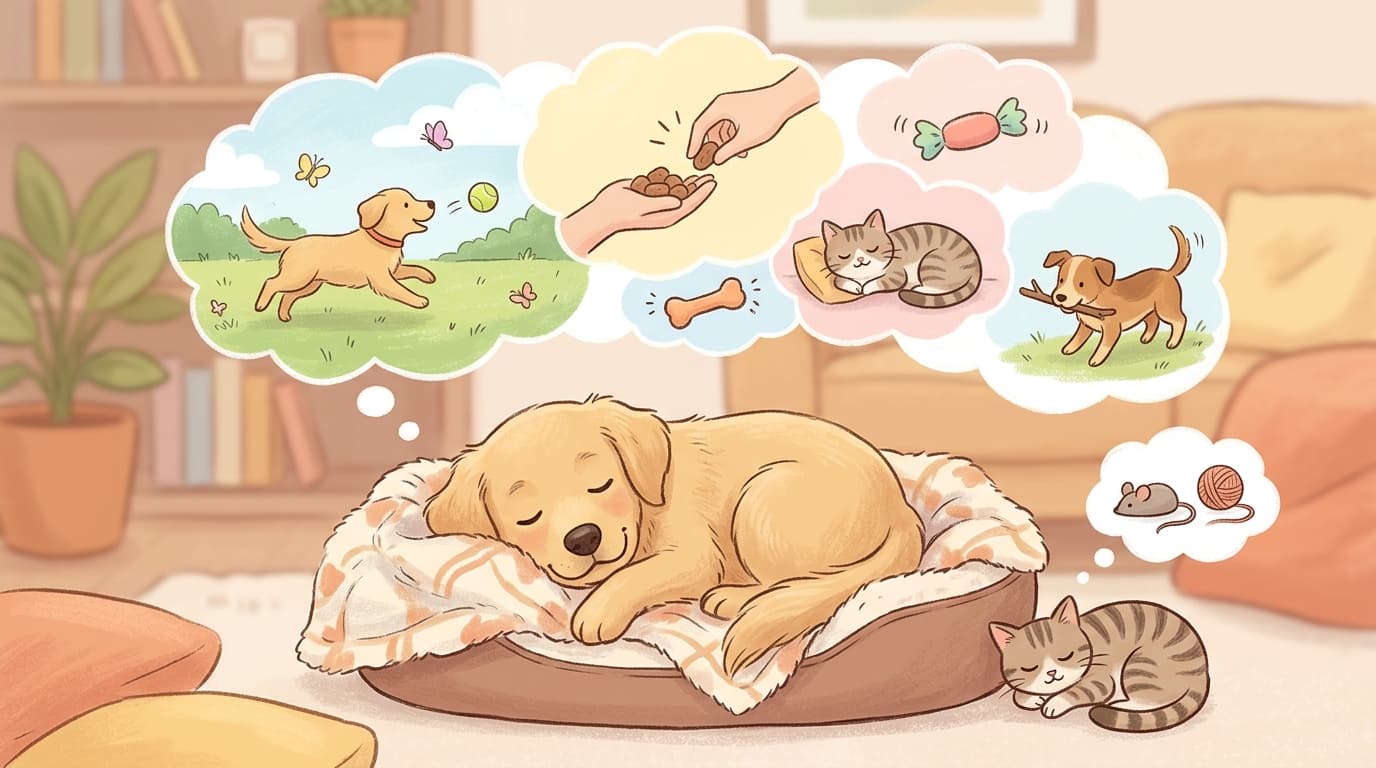
Based on what we know about REM sleep and memory, dog dreams seem to be built from real life—especially the things that mattered to them that day. Think of it like your dog’s brain hitting “replay” on the highlights.
Many dogs likely dream about:
- Running and playing (fetch, zoomies, tug)
- Chewing a favorite toy
- Interacting with other dogs (sniffing, chasing, wrestling)
- Chasing something exciting (a squirrel, a ball, a “pretend prey” moment)
Most pet owners don’t realize that this isn’t random twitching—your dog may be revisiting their normal routines and adventures while they sleep.
Signs your dog is dreaming (and in REM sleep)
Not every little movement means a dream, but there are a few classic signals that strongly suggest your dog is in REM.
Look for:
- Muscle twitches or small body contractions
- Paw movements, like they’re running in place
- Ear flicks
- Facial spasms (around the lips or whisker area)
- Rapid eye movement under closed eyelids (the clearest sign)
If you look closely and see those eyes darting around behind the lids, your dog is very likely in the dream-heavy part of sleep.