Where Your Cat Sleeps Says a Lot About Love (7 Favorite Spots Decoded)
From your feet to your pillow, your cat’s sleeping spot is a quiet love letter. Here’s what 7 common choices really mean.
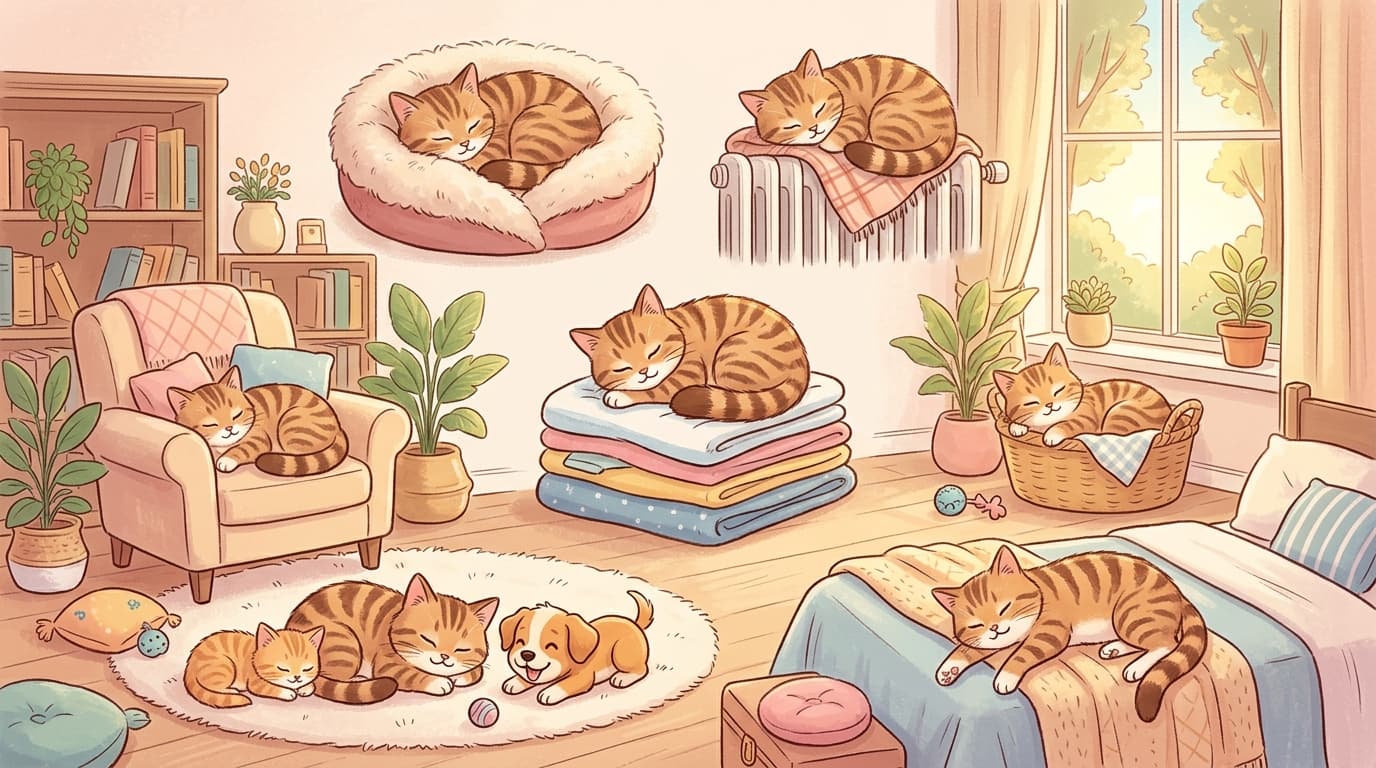
Waking up with a cat tail across your face (or a surprising “dead weight” on your legs) feels random—until you realize your cat is choosing that spot on purpose. Where your cat sleeps is basically their love GPS, pointing straight at how safe they feel with you.
Below are seven common sleeping spots and what each one tends to say about your bond.
1) Where your cat sleeps: at the foot of the bed
If your cat parks themself at the foot of your bed like a fuzzy ornament, it’s easy to assume they’re being distant. A lot of the time, it’s the opposite.
That position is a classic “sentinel” choice. Cats are naturally alert, and in group settings they’ll often place themselves where they can monitor the space while others rest. The foot of the bed gives your cat a good view of the room (and often the doorway), which means they’ve decided you’re worth guarding.
If you’ve ever noticed your cat looking absurdly serious down there, like a tiny nightclub bouncer, you’re not imagining it.
2) Curled into the bend of your knee
This is the custom-made cuddle nook. Your cat wedges into that warm curve behind your knee because it feels like the safest little pocket in the world.
It also taps into an old comfort pattern: as kittens, cats pile together for warmth and security. Many cats keep that “body memory,” and it shows up when they’re with someone they deeply trust.
This is the spot that makes you delay getting up—even when you really need to—because moving your leg might end the moment.
3) On your chest or stomach
Few things feel as sweet as a cat carefully stepping up, doing a couple of little circles, and settling right over your heart. That weight can be weirdly soothing, and the purr vibrating through your shirt is its own kind of calm.
One reason cats like this spot is rhythm. Cats are drawn to the steady rise and fall of breathing and the gentle heartbeat sensation—it’s grounding. In early life, kittens rest against their mother’s chest to feel that “everything is okay” vibration, and some cats carry that preference into adulthood.
And yes, purring is often in the 25–50 Hz range, which has been linked in studies to relaxation for humans. Translation: you become a living mattress, and you don’t even mind.