5 Everyday Habits That Can Stress Your Cat (And What to Do Instead)
Small daily habits—like yelling, no play, and dry-only food—can quietly stress your cat. Fix them with simple swaps.
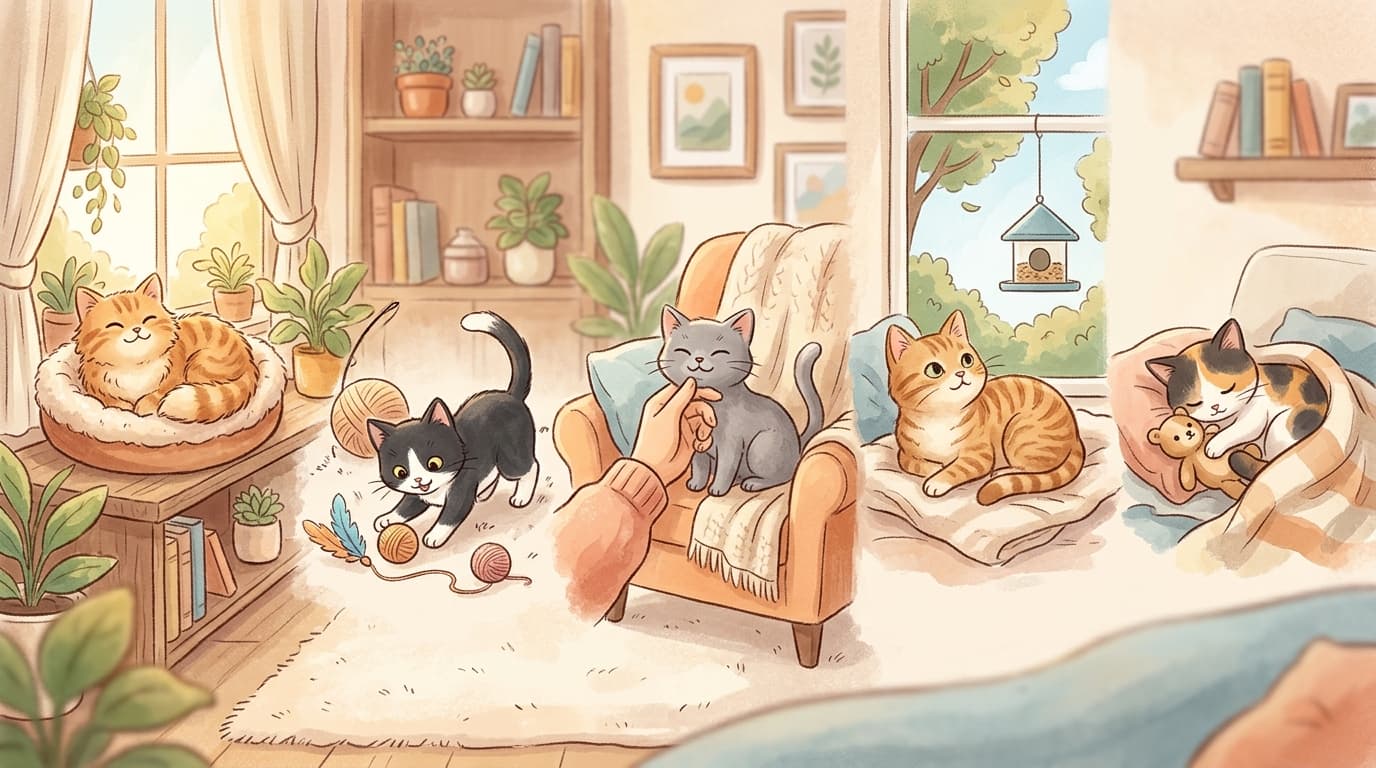
Most cat problems don’t start with big, obvious neglect. They start with tiny daily moments—things you might even do out of love—that slowly push your cat into stress, boredom, or discomfort.
If you’ve ever wondered why your cat seems more distant lately, or why “random” issues like litter box accidents pop up, these five everyday habits are worth a closer look.
1) Yelling at your cat for “bad behavior”
It feels natural: your cat knocks a glass off the table, scratches the new couch, or jumps on the counter again, and you raise your voice. From a human perspective, it’s a clear message.
But your cat doesn’t process it as “I did X, so my person is upset about X.” What lands is the volume, the sharp tone, and the emotional charge in the room. Over time, frequent yelling can teach your cat one main lesson: you’re unpredictable.
Cats under chronic stress often don’t look “dramatic.” They get quieter. You might notice:
- More hiding (under the bed, behind furniture)
- Avoiding the litter box or peeing outside it
- Sudden swats or bites that seem to come out of nowhere
That’s not your cat being spiteful. It’s a nervous system running in survival mode.
Try this instead: make the environment do the teaching. Block access to problem areas, provide a scratching post where your cat already wants to scratch, and reward the behaviors you want to see. Calm, consistent responses work better than loud ones.
2) Never giving your cat real “hunt-style” play
A cat’s brain is built around a hunting sequence: notice, stalk, chase, pounce, catch. Indoor life can remove that entire rhythm—especially if toys only come out once in a while, or play is too predictable.
A cat who sleeps all day and doesn’t “ask” to play can look easygoing. But often, that’s not calm—it’s resignation. Many cats without regular stimulation drift toward weight gain, compulsive behaviors (like over-grooming), and a flat, withdrawn mood.
Try this instead: commit to 10 minutes a day of prey-like play. Use a wand toy or something that:
- Stops suddenly
- Changes direction
- “Hides” and reappears