6 Everyday Habits That Secretly Stress Your Cat (and What to Do Instead)
Common routines—yelling, boring days, dry-only food, wrong petting, bad litter spots, long absences—can quietly stress your cat.
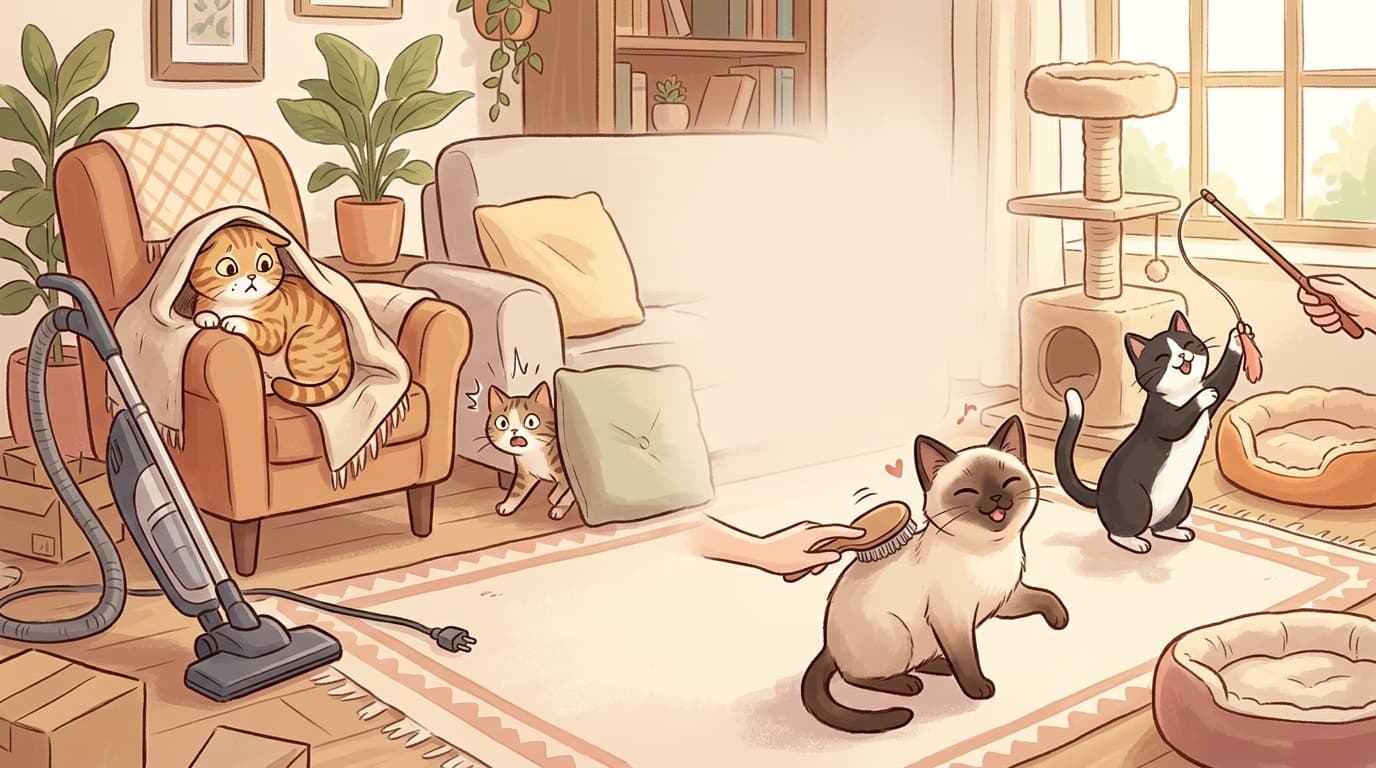
If you love your cat, you’re probably trying to do everything “right.” But some of the most normal, well-meaning routines can quietly chip away at your cat’s trust and raise their stress levels over time.
The tricky part is that cats often suffer in silence. What looks like “calm” can actually be frustration, anxiety, or discomfort.
1) Yelling doesn’t teach your cat—it teaches them you’re unpredictable
Your cat jumps on the counter. Knocks over a glass. Goes to town on the new sofa. Your instinct is to shout their name and hope they connect the dots.
The problem is that most cats don’t link your yelling to the exact behavior you’re trying to stop. What they do learn is that the person they depend on can suddenly become loud and scary. And that can lead to a stressed-out cat who hides more, avoids you, or starts acting out in other ways.
Try this instead: keep your voice firm but calm. A simple “no” in a steady tone can work better than volume. Some people also interrupt the moment with a single clap (not in the cat’s face) and then immediately redirect to something your cat is allowed to do—like a kicker toy, a scratcher, or a wand toy.
2) An “easy” indoor life can turn into boredom and frustration
Most pet owners don’t realize how similar these two can look: a relaxed cat and an under-stimulated cat.
Cats are built to hunt. Not because they’re mean—because their brains are wired for a sequence: watch, stalk, chase, pounce, grab. When that pattern never happens, frustration can build. Over time, a cat who rarely plays can be more prone to weight gain and can even seem “down,” sleeping excessively and showing less interest in life.
If you’ve ever noticed your cat staring into space, zooming around at night, or suddenly picking fights with furniture, boredom may be part of the story.
Try this instead: aim for short, consistent play. Even five minutes a day with a wand toy can make a noticeable difference. Make the toy act like prey: hide it, pause it, let it “escape,” then let your cat catch it sometimes so they feel like they completed the hunt.