Male Cat Behavior: Why Your Boy Cat Acts So Different From Female Cats
Living with a boy cat can feel like having a tiny, confident roommate who thinks your personal space is a shared resource. And if you’ve ever had both a male and a female cat under the same roof, you’ve probably seen it: same home, same love, totally different vibe.
Male cat behavior isn’t “better” or “worse” than female behavior—just different. A lot of it traces back to how his brain was shaped long before he ever ran across your living room.
Male cat behavior starts earlier than most people think
Most pet owners don’t realize your male cat’s personality was being influenced before he even opened his eyes.
During development, testosterone helps shape a male kitten’s brain—especially areas linked to boldness and exploration. That matters because it can affect how readily he approaches new people, how he reacts to changes around the house, and how quickly he decides you’re his favorite place to be.
This also explains something that surprises people after neutering: even if a male cat is neutered very young, those early brain “wiring” patterns don’t simply disappear. His hormones may change, but the foundation of his temperament often stays recognizable.
Why male cats are often the first to greet strangers
If your male cat marches right up to the front door like he pays rent, you’re not imagining it. Observations of free-roaming cats have found males tend to show more risk-taking behavior and less fear in unfamiliar situations than females.
In everyday home life, that can look like:
- Approaching visitors sooner
- Investigating new rooms, objects, or smells with less hesitation
- Being more willing to initiate contact (with you, guests, or even new pets)
Meanwhile, many female cats prefer to watch first, decide later. That’s not coldness—it’s caution. Two different strategies for the same world.
The “special greeting” sounds your male cat saves for you
Male cat behavior can be surprisingly chatty, especially during reunions.
In recordings of cats greeting their owners, male cats tended to vocalize more than females right after their person came home—meows, purrs, and those little chirps/trills that sound like he’s narrating your entrance. What’s interesting is that this didn’t seem to hinge on breed, age, or even whether the male was neutered.
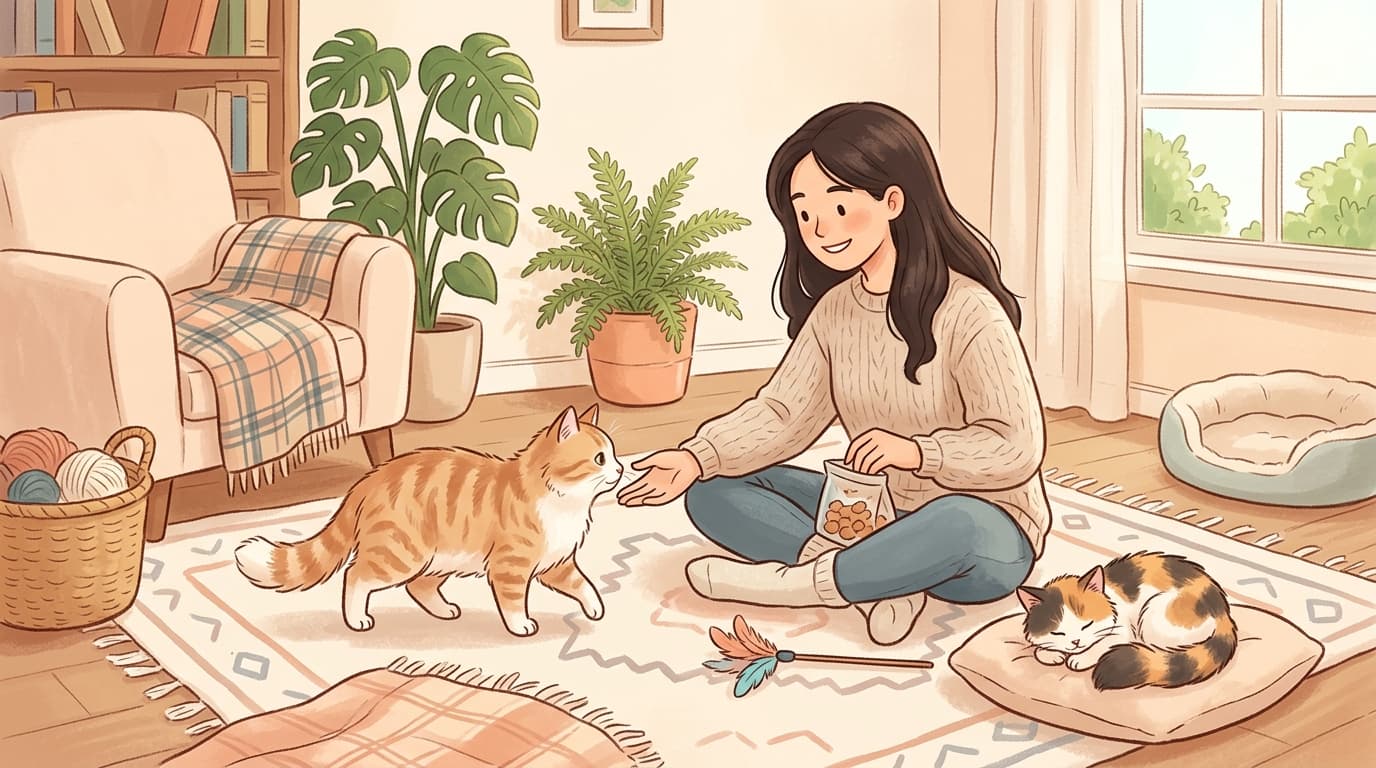
And it wasn’t just about food. Instead of heading straight for the bowl, many cats aimed their commentary directly at the person.
If you’ve ever walked in the door and your boy cat “announced” you with a whole speech, there’s a good chance he’s learned what works: being impossible for you to ignore.
When your male cat rubs on you, it’s not only affection
That full-body lean, the cheek rub on your legs, the dramatic figure-eight around your ankles—yes, it’s friendly. But it’s also communication.
Male cats often have stronger pheromone concentrations in the cheek glands, and rubbing is one way they leave scent behind. In your cat’s mind, his territory isn’t only the couch and the hallway corners. It can include you.
You might notice the rubbing ramps up when something “new” enters the home:
- A guest your cat hasn’t met
- A new piece of furniture
- A delivery box with outside smells
A common pattern is: he checks out the new thing first, then comes back to you and rubs harder than usual—like he’s refreshing the label.
The protective side of male cat behavior (that people misread)
Some male cats do more than scent-mark you. They’ll position themselves between you and unfamiliar visitors, or choose a spot near an entryway as if they’re on watch.
To some owners, this looks like anxiety or aggression. But body language tells the real story. A cat who’s actually feeling confident often has relaxed ears, soft eyes, and a tail carried up rather than puffed or tucked.
In many cases, what you’re seeing is companionship with a protective flavor: your male cat wants to be where you are, especially when the environment feels different.
Why your boy cat seems to take zero precautions during play
People who’ve lived with both sexes often describe female cats as more measured—watching, calculating, reacting fast when something feels off.
Male cats, on the other hand, can be… enthusiastic.
They’re more likely to attempt the questionable jump, slide off the cat tree mid-zoom, or throw themselves into play like gravity is a rumor. This doesn’t mean male cats are less intelligent. They can read your emotions and respond to what’s happening around them just fine.
The difference is often in risk assessment: many males act first and adjust later, while many females prefer to analyze first.
And honestly, if you’ve ever noticed your male cat doing something ridiculous and then looking at you like it was part of the plan, you know exactly what I mean.
Where male cats go when they’re stressed: straight to you
Here’s one of the sweetest patterns tied to male cat behavior.
In a study looking at how cats respond to brief separation and mild stress in an unfamiliar room, most cats showed secure attachment—meaning their owner acted as a source of comfort. But male cats were more likely to seek physical contact when reunited.
Instead of keeping distance and watching, many males approached, rubbed, and stayed close.
So if your boy cat climbs onto you after a loud noise, follows you into the bathroom during a thunderstorm, or suddenly becomes your shadow when something feels “off,” it may not be clinginess. It may be his version of safety: of all the hiding spots he could choose, he chose you.
The takeaway: your male cat isn’t “easy”—he’s wired to connect boldly
If your male cat greets visitors, talks your ear off when you get home, rubs on you like you’re part of the furniture, and sticks close when life gets noisy, you’re seeing a pretty classic male-cat style of bonding. And if your female cat hangs back and observes, that’s classic too.
Pay attention to the pattern your cat chooses—not the one you expect. Once you do, a lot of his “weird” habits start to feel like a very personal kind of loyalty.
Continue reading

What Your Cat Has Been Waiting for All Along: 6 Small Changes That Build Real Trust
Your cat isn’t asking for more toys—just a few daily habits that make them feel safe, understood, and closer to you.

How to Stop Your Cat From Throwing Litter Out of the Box (Fast, Lasting Fixes)
Messy litter box? Fix litter flinging with the right box, litter type, fill depth, placement, and a cleaner routine.

Where Your Cat Sleeps Says a Lot About Love (7 Favorite Spots Decoded)
From your feet to your pillow, your cat’s sleeping spot is a quiet love letter. Here’s what 7 common choices really mean.