What Your Cat Really Feels When You Leave the House (and How to Make It Easier)
Cats notice every leaving cue. Learn what they feel when you go, why reactions vary, and simple ways to help them stay calm.
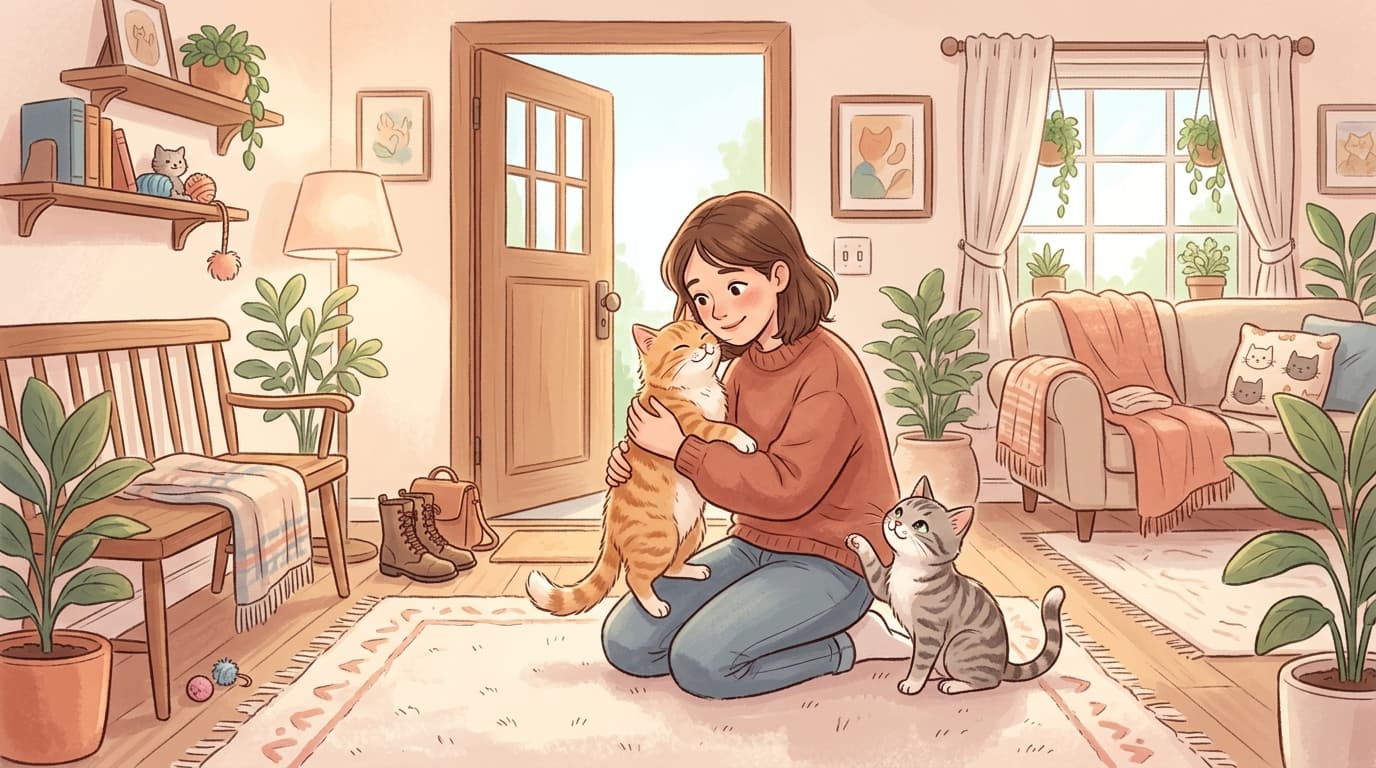
You grabbing your keys might feel like nothing, but to your cat it’s the start of a whole “event.” Many people assume cats don’t care when we leave—yet most cats notice the change instantly, and some feel it more deeply than they let on.
The moment your cat realizes you’re leaving
Cats are pattern-spotters. Long before you touch the doorknob, your cat has likely connected the dots: the jacket rustle, the key jingle, the slightly faster pace, the quick pat-down for your phone or wallet.
If you’ve ever noticed your cat suddenly appear in the hallway, sit and stare, or quietly trail you from room to room, that’s not random. Your cat is reading the “leaving routine” and switching into a more alert mode because something in the normal flow of the home is about to change.
Your cat’s bond with you is real (just not always obvious)
Cats don’t bond like dogs, but that doesn’t mean they don’t bond. For many cats, you’re not just the food person—you’re a steady part of their daily structure. You’re familiar, predictable, and often a source of safety.
Some cats show this loudly: they seek closeness, follow you, and clearly react to separation. Others look independent, but still rely on your presence as a kind of “anchor” in the home. When you leave, that anchor disappears for a while, and your cat has to adjust.
What your cat feels when you leave (it’s not “spite”)
When you walk out the door, your cat isn’t simply losing company. In your cat’s mind, the environment has changed. The routine has been interrupted.
For some cats, that change barely registers after a minute or two—they’ve learned the pattern and settle quickly. For others, it creates a lingering sense of uncertainty. Not dramatic, human-style sadness, but a watchful “something’s different” state that can last longer depending on personality and past experiences.
The chemistry behind it: stress and comfort hormones
Your cat’s body reacts to change, too.