Your Cat’s Secret Clock: Why Time Feels Different in a Feline Home
Cats don’t experience time like we do. Learn how vision, scent, and daily rhythm shape your cat’s “secret clock” at home.
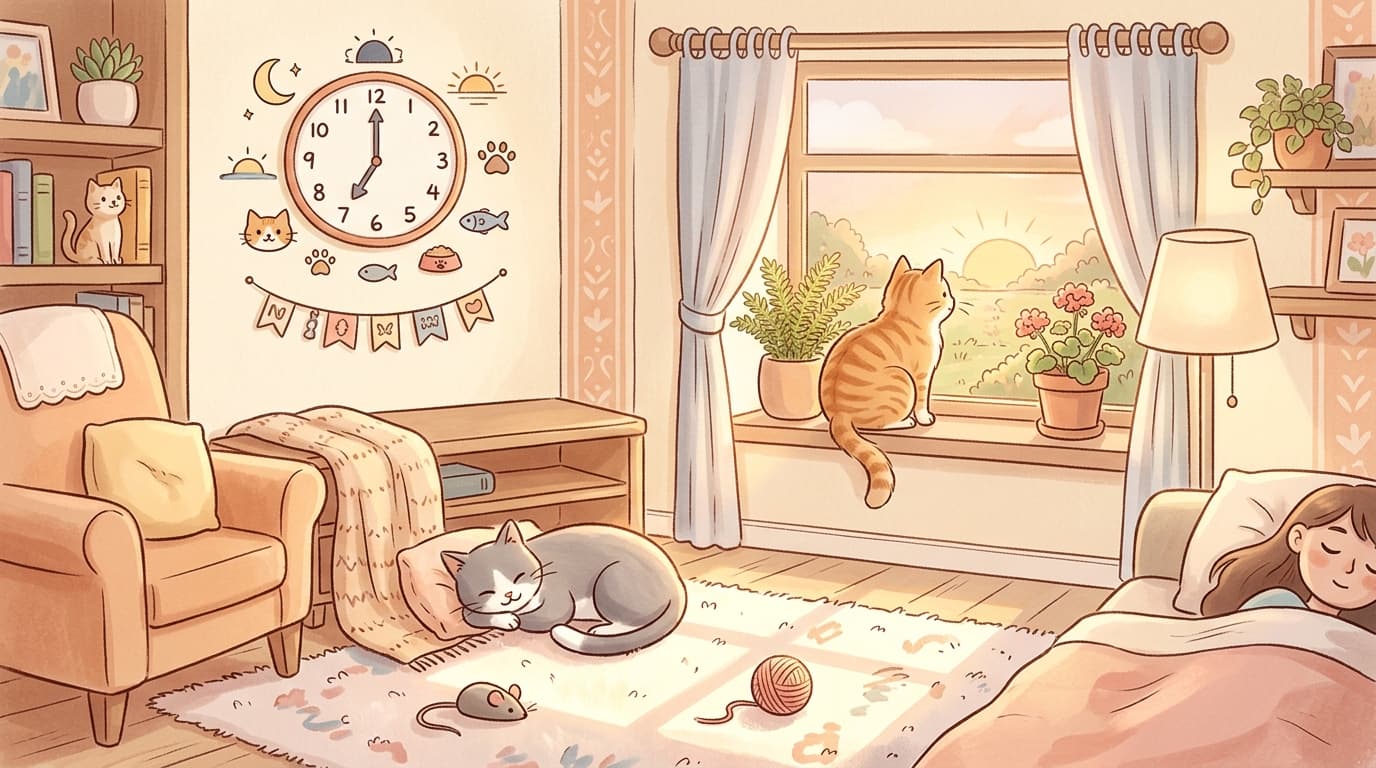
You live by minutes and calendars, but your cat is running on a totally different kind of clock. If you’ve ever noticed your cat waiting by the door right before you arrive—or acting like you’ve been gone forever after a “quick” errand—there’s a reason it feels so dramatic in their world.
The “secret clock” your cat uses (and why it doesn’t match yours)
Your cat isn’t checking the time the way you do. Instead, their sense of time is stitched together from three big things: how fast they process what they see, how the house smells as your scent fades, and an internal hunter’s rhythm that peaks at certain hours.
Put those together and you get a cat who can seem oddly punctual… while also feeling restless, confused, or clingy if your routine changes.
Your cat’s fast vision makes your world feel slower
There’s a concept in perception science often described as “flicker fusion”—basically, how quickly a brain can process changing visual information before it blends into smooth motion. Humans process motion at a relatively lower rate compared to many animals.
Cats, on the other hand, are built for tracking quick movements. Their brains can handle rapid visual updates much faster than ours, which helps them spot tiny shifts—like a bird’s sudden turn or a toy twitching across the floor.
What does that mean in everyday life?
- Fast movement looks more detailed to them.
- Your motions can seem slower and more drawn out.
- A short wait can feel longer because they’re taking in more “moments” packed into the same span of time.
Most pet owners don’t realize this, but it helps explain why a cat can react before you even register what happened—and why your “just 10 minutes” can feel like a long stretch of nothing to them.
The cat “scent calendar”: how your smell becomes a timetable
Now for the part that makes cats seem psychic.
Your cat doesn’t only remember that you left. They track how long it’s been using scent changes in the home. Every time you walk in, you bring a fresh layer of “you” into the space—on your clothes, hair, hands, and in the air around you. Then, after you leave, that scent slowly thins out and shifts as it disperses.