Your Cat’s Secret Clock: Why Time Feels Different in a Feline Home
Cats don’t experience time like we do. Learn how vision, scent, and daily rhythm shape your cat’s “secret clock” at home.
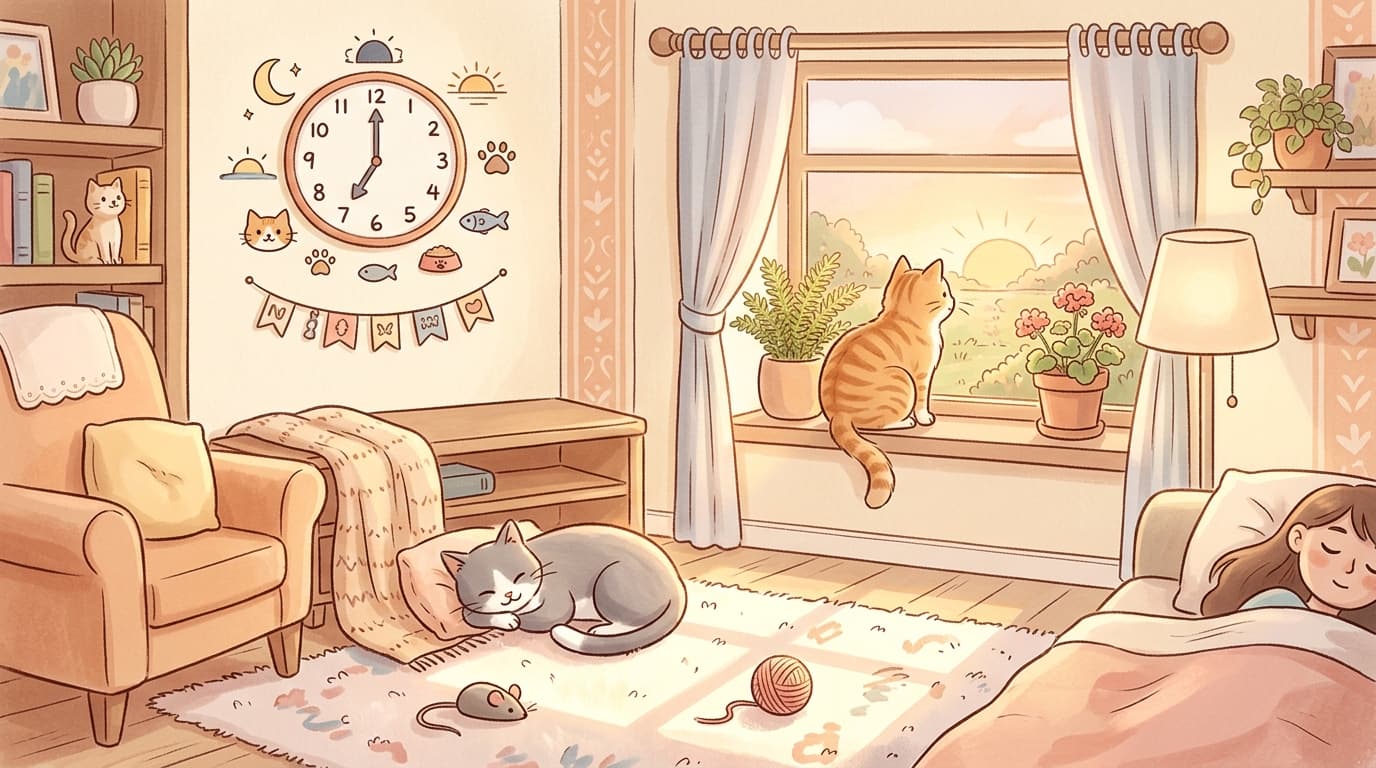
You live by minutes and calendars, but your cat is running on a totally different kind of clock. If you’ve ever noticed your cat waiting by the door right before you arrive—or acting like you’ve been gone forever after a “quick” errand—there’s a reason it feels so dramatic in their world.
The “secret clock” your cat uses (and why it doesn’t match yours)
Your cat isn’t checking the time the way you do. Instead, their sense of time is stitched together from three big things: how fast they process what they see, how the house smells as your scent fades, and an internal hunter’s rhythm that peaks at certain hours.
Put those together and you get a cat who can seem oddly punctual… while also feeling restless, confused, or clingy if your routine changes.
Your cat’s fast vision makes your world feel slower
There’s a concept in perception science often described as “flicker fusion”—basically, how quickly a brain can process changing visual information before it blends into smooth motion. Humans process motion at a relatively lower rate compared to many animals.
Cats, on the other hand, are built for tracking quick movements. Their brains can handle rapid visual updates much faster than ours, which helps them spot tiny shifts—like a bird’s sudden turn or a toy twitching across the floor.
What does that mean in everyday life?
- Fast movement looks more detailed to them.
- Your motions can seem slower and more drawn out.
- A short wait can feel longer because they’re taking in more “moments” packed into the same span of time.
Most pet owners don’t realize this, but it helps explain why a cat can react before you even register what happened—and why your “just 10 minutes” can feel like a long stretch of nothing to them.
The cat “scent calendar”: how your smell becomes a timetable
Now for the part that makes cats seem psychic.
Your cat doesn’t only remember that you left. They track how long it’s been using scent changes in the home. Every time you walk in, you bring a fresh layer of “you” into the space—on your clothes, hair, hands, and in the air around you. Then, after you leave, that scent slowly thins out and shifts as it disperses.
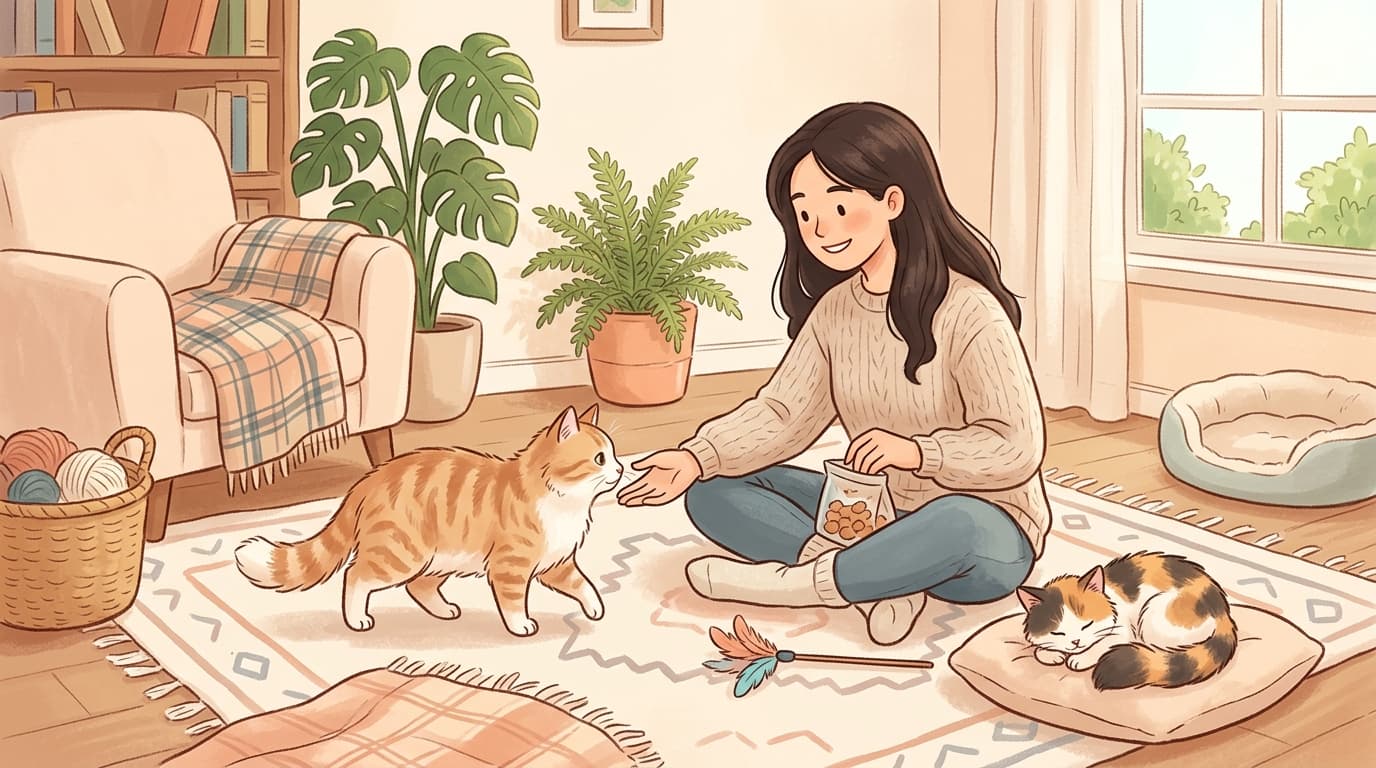
Over time, your cat learns the pattern:
- Strong, fresh scent = you were here recently.
- Fading scent = time is passing.
- A certain “thin” level = you usually return around now.
That’s why some cats start hovering near the door shortly before you come back. They’re not predicting the future—they’re reading the house like a living clock.
Why coming home late can hit your cat harder than you think
If your schedule changes and your scent drops past the level your cat associates with “safe and normal,” it can create a weird gap in their expectations. In their world, the usual anchor that marks the day isn’t behaving correctly.
This is one reason some cats get extra vocal, clingy, or edgy when routines shift. It’s not always “neediness.” Sometimes it’s genuine uncertainty.
The hunter’s body clock: why dawn and dusk matter so much
Cats are naturally most active around dawn and dusk. In the wild, those are prime times for hunting—and that ancient programming still lives in your living room.
So if your cat gets sudden bursts of high-speed chaos (the classic hallway sprint, couch launching, curtain-climbing moment), it’s often tied to that internal rhythm. People call it “the zoomies,” but it can be more than random energy. It can be your cat’s way of discharging built-up tension and resetting.
How artificial light can scramble your cat’s timing
Modern indoor life can confuse that rhythm. Bright household lighting and late-night screen glow can send mixed signals—your home looks like “daytime,” but your cat’s instincts still want those dawn/dusk activity peaks.
When the signals don’t line up, some cats get restless at inconvenient hours, because their internal schedule and their environment are arguing.
How to support your cat’s secret clock with a simple scent routine
You can’t teach your cat to “understand” your calendar—but you can make their time system feel steadier.
1) Create a consistent “departure scent anchor”
Pick one specific item of clothing that smells strongly like you (a scarf, T-shirt, or hoodie works well). Place it in your cat’s safe resting area about 10 minutes before you leave.
That single, consistent object becomes a stable reference point in your cat’s scent world—something that tells them: you’re gone, but the territory still carries you.
2) Do a calm “scent check-in” when you return
Before you scoop your cat up or launch into excited chatter, pause and let them sniff your hands for a few seconds.
Your palms carry fresh, updated information about where you’ve been. For a cat, that quick sniff can be a clean, quiet way to process your return and settle their internal timeline.
The real takeaway: to your cat, you’re not just company—you’re the time anchor
Once you see how your cat measures the day—through fast perception, scent changes, and instinctive rhythms—their behavior starts to look less “random” and more like communication. A little consistency goes a long way.
In your cat’s world, the most meaningful clock isn’t on the wall. It’s the steady, familiar pattern of you coming and going—and the time they get to spend close to you.
Continue reading

How Cats Decide Who to Trust (and How to Earn It Gently)
Cats don’t give trust by default. Learn the signals they watch—control, body language, routine, scent, and patience—to build a stronger bond.

5 Everyday Things Your Cat Hates (and How to Stop Accidental Tantrums)
From the “wrong” petting spots to noisy rooms and sudden changes, these everyday habits can stress your cat and trigger swats.

Do Cats See Ghosts? Why Your Cat Stares at “Nothing”
Cats may not see ghosts, but their night vision and super-hearing can make them react to things you can’t detect.