Why Female Cats Are the Real Powerhouses: The Quiet Science Behind Your Home’s Boss
Female cats often run the social world, hunt smarter, and bond deeper. Here’s why your girl cat may be the true boss of the house.
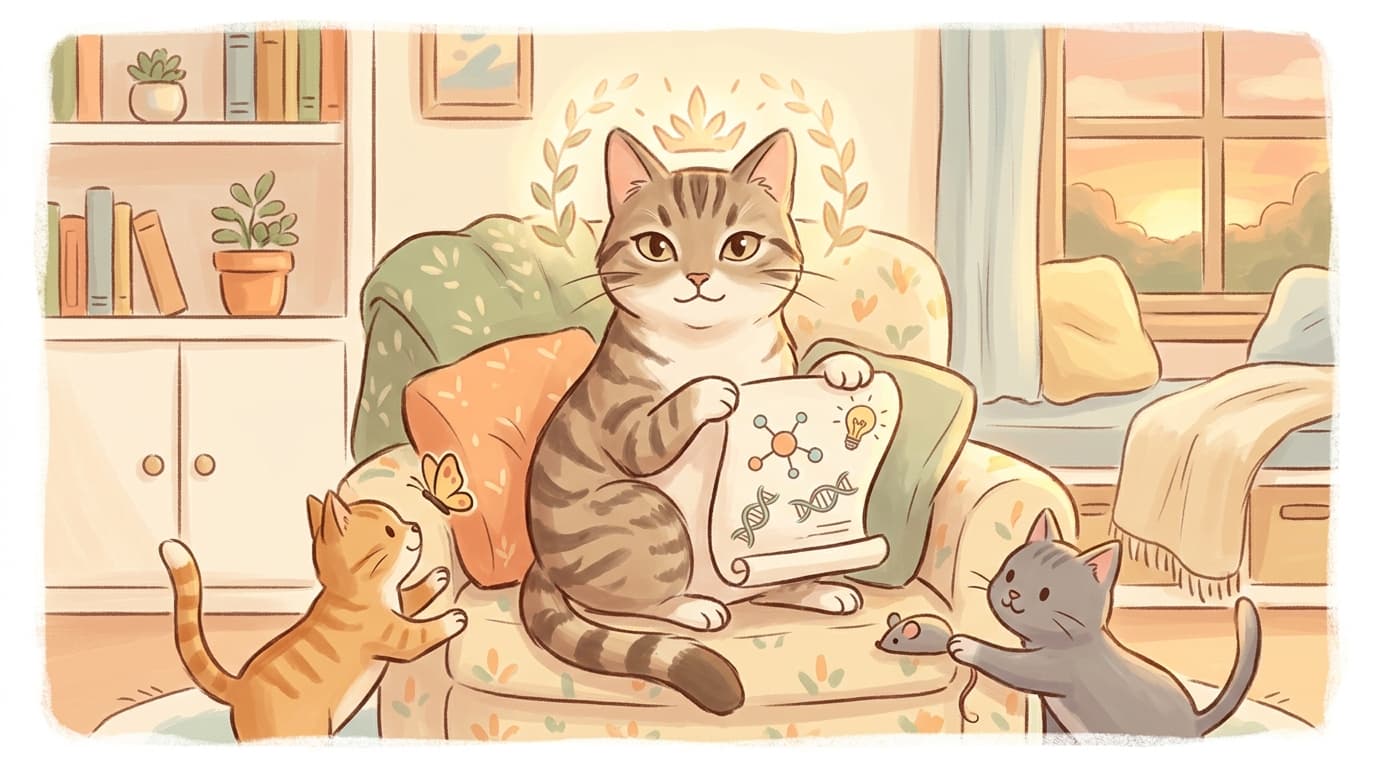
Living with a female cat can feel less like having a pet and more like sharing your home with a sharp-eyed manager who already knows your schedule. She’s not being “bossy” for fun—many of her habits are rooted in how cats evolved to survive and organize their world.
Female cats and the matriarchal side of cat society
A lot of people assume cats are loners with no real social structure. But in free-living colonies, female cats often form the core social group—especially related females—while males tend to drift around the edges.
That pattern explains a lot of what you see at home. Your girl cat is often the one who “runs the building”: monitoring who belongs where, what’s normal, and what’s changed. If you’ve ever felt like she’s silently supervising every room you enter, you’re not imagining it.
The “right paw” detail that hints at strategy
Watch your cat reach into a narrow container for a treat or hook a toy out from under the couch. Many female cats show a preference for using their right paw, while males more often lean left.
Why does that matter to you? Paw preference is linked to how the brain organizes movement and attention. In everyday life, it can look like this: instead of charging in and hoping for the best, your female cat may pause, line up the angle, and then make a precise, controlled move.
Want to try it? Put a treat in a slim jar or a tight box opening and see which paw she uses first—and which one she keeps using.
Female cat biology: the exhausting reality of heat cycles
Female cats carry a biological workload male cats simply don’t. Unspayed females can go through repeated heat cycles, and in cats, ovulation is typically triggered by mating. That means the cycle can keep restarting, which can be physically and behaviorally draining.
Those loud vocalizations and restless pacing aren’t “drama.” They’re the outward signs of a powerful hormonal loop that can leave a cat stressed and frustrated.