Why Your Cat Thinks You Didn’t “Feed” Them (And How to Fix Mealtime Fast)
Your cat doesn’t see you as a food-giver. Learn the hunting-based mealtime routine that builds trust, reduces fussiness, and boosts happiness.
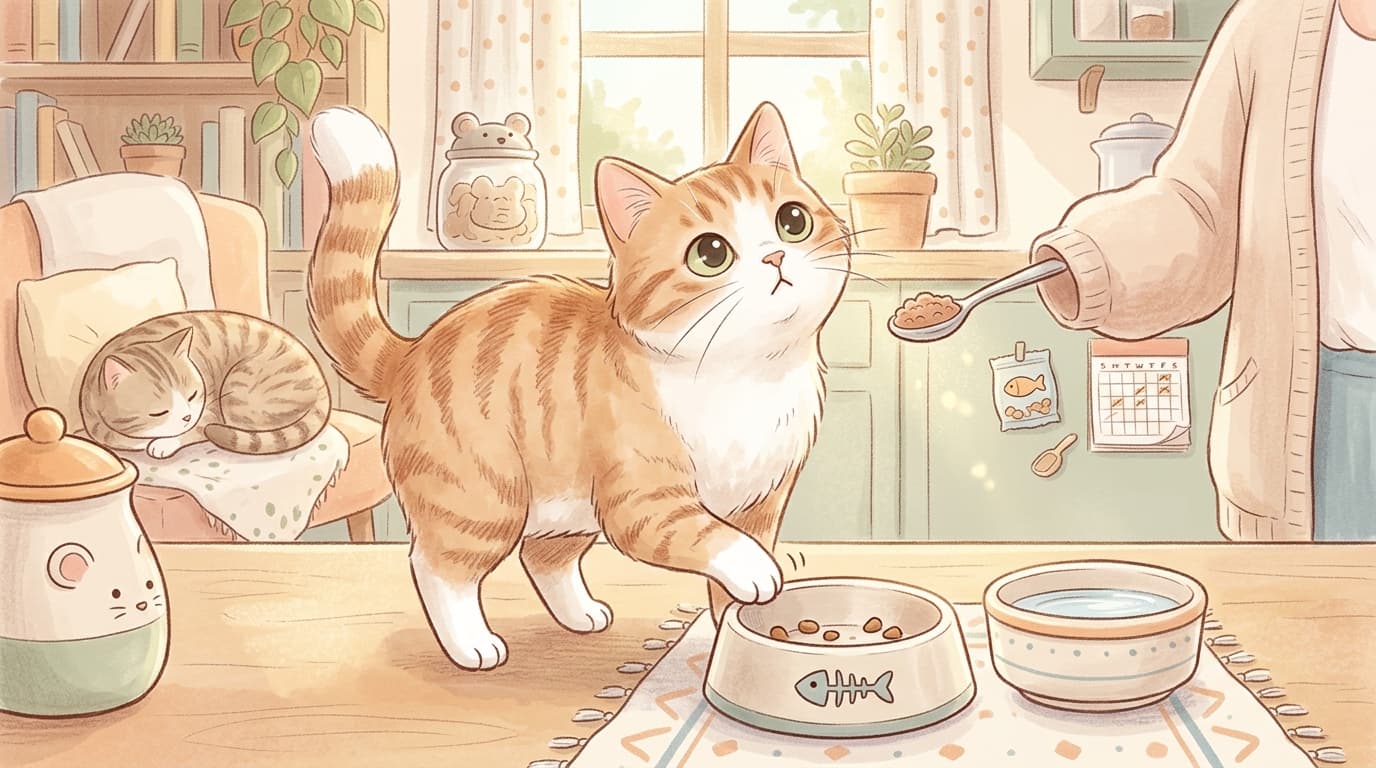
You pour the kibble, set down the bowl, and feel like you’ve done something loving. Meanwhile, your cat may be reading the whole scene in a completely different way—one that has nothing to do with “being fed” and everything to do with survival.
Your cat isn’t thinking “my human is being nice”
Cats didn’t evolve to rely on handouts. Their brains are still running a hunter’s operating system that’s been basically unchanged for thousands of years. In that program, food isn’t a gift—it’s a result.
So when you walk toward the kitchen, your cat isn’t necessarily thinking you’re doing a sweet little caretaking task. Their instincts kick in and translate what’s happening into something that makes sense in cat logic: someone in the household is successfully retrieving food and bringing it back to the safe den.
In other words, your cat may see you less as a “provider” and more as a capable teammate who goes out into the unknown and returns with the goods.
The hidden “contract” behind feeding time
Most cat owners don’t realize mealtime can either strengthen the relationship or quietly chip away at it.
In a cat’s world, a good partner is competent. A predictable routine, a sense of effort, and a safe place to eat all communicate that competence. But if food feels too easy, too random, or too uncomfortable, your cat can start acting… off.
That’s one reason some cats become demanding, pushy, or even snappy around food. They’re not plotting to be difficult. They’re reacting to a situation that doesn’t match what their instincts expect.
If your cat begs while food is still in the bowl, it might be the bowl
If you’ve ever had your cat cry for food, only for you to look down and see kibble still sitting there, it’s tempting to label them “picky” or “spoiled.”
But there’s a very real sensory issue that can make a cat avoid food that’s right in front of them: whisker stress (often called whisker fatigue).
A cat’s whiskers aren’t just cute accessories. They’re highly sensitive sensors tied closely to how your cat processes the environment. When a bowl is deep or narrow, every bite can force the whiskers to press against the sides. That constant stimulation can become overwhelming fast—like trying to eat while someone repeatedly taps your eyelashes.