Your Cat Doesn’t Experience Petting Like You Think (And How to Touch Them the Way They Actually Love)
For cats, “petting” feels like social grooming. Learn where to touch, what to avoid, and how to prevent overstimulation bites.
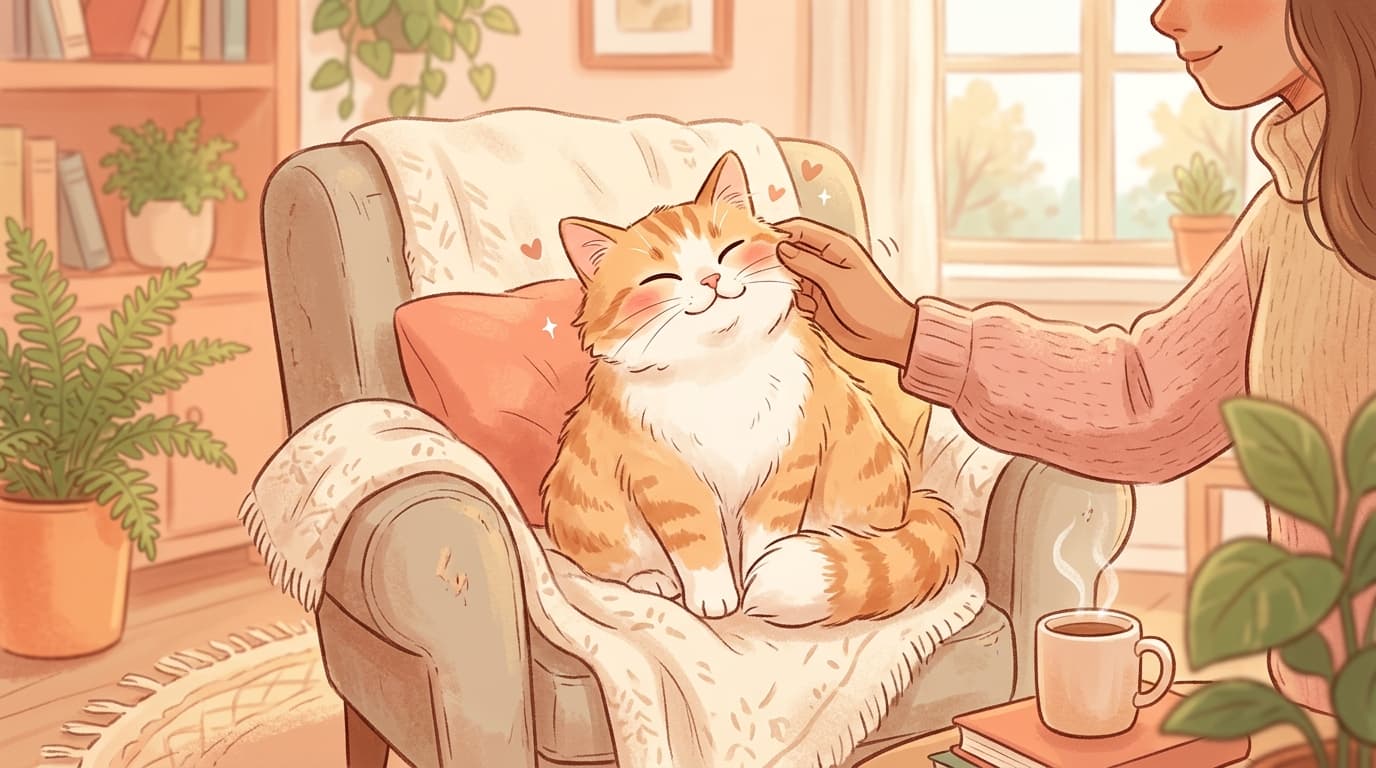
You run your hand over your cat’s head and it feels like pure affection on your side. Cozy, familiar, sweet. But in your cat’s brain, that touch lands in a totally different category—and once you understand it, the way you pet your cat will change for good.
Petting your cat is really “social grooming”
Cats don’t experience your hand the way humans experience a hug. For your cat, the closest emotional match to petting is something much older and more instinctive: grooming.
Think back to what a newborn kitten is like—tiny, fragile, and basically built to rely on mom. In those early weeks, touch isn’t just “nice.” It’s survival. A mother cat’s steady, rhythmic licking helps regulate her kitten’s body, supports basic functions, and sends the clearest message a baby animal can get: you’re safe, you belong.
That early wiring doesn’t disappear when cats grow up. Adult cats who trust each other often groom one another, especially in friendly groups. It’s one of their main ways of saying, “You’re part of my circle.”
So when your cat feels warmth, pressure, and repetition from your hand moving through their fur, their nervous system tends to file it under the same kind of experience: trusted social grooming from someone “safe.”
If you’ve ever noticed your cat melt and close their eyes under your hand, you’re not just petting—you’re speaking a language their body understands.
The best places to pet your cat (and why those spots work)
Not all touch feels the same to a cat. Where you pet your cat matters because different body areas carry different social meaning.
Many cats prefer:
- Cheeks
- Chin
- Top of the head
- Base of the ears
These are areas cats naturally focus on during friendly grooming. They’re also loaded with scent glands. When you rub or scratch these spots, you’re doing two things your cat tends to love: mimicking social grooming and helping spread familiar “safe” scent.
That’s why so many cats lean into chin scratches, push their face into your fingers, and look half-asleep with happiness. To your cat, those touches often read as comfort and trust.