Why Talking to Your Cat Builds Trust (Even If She Doesn’t Understand the Words)
Your cat may not understand words, but your voice signals safety, routine, and emotion. Learn how talking builds a calmer, closer bond.
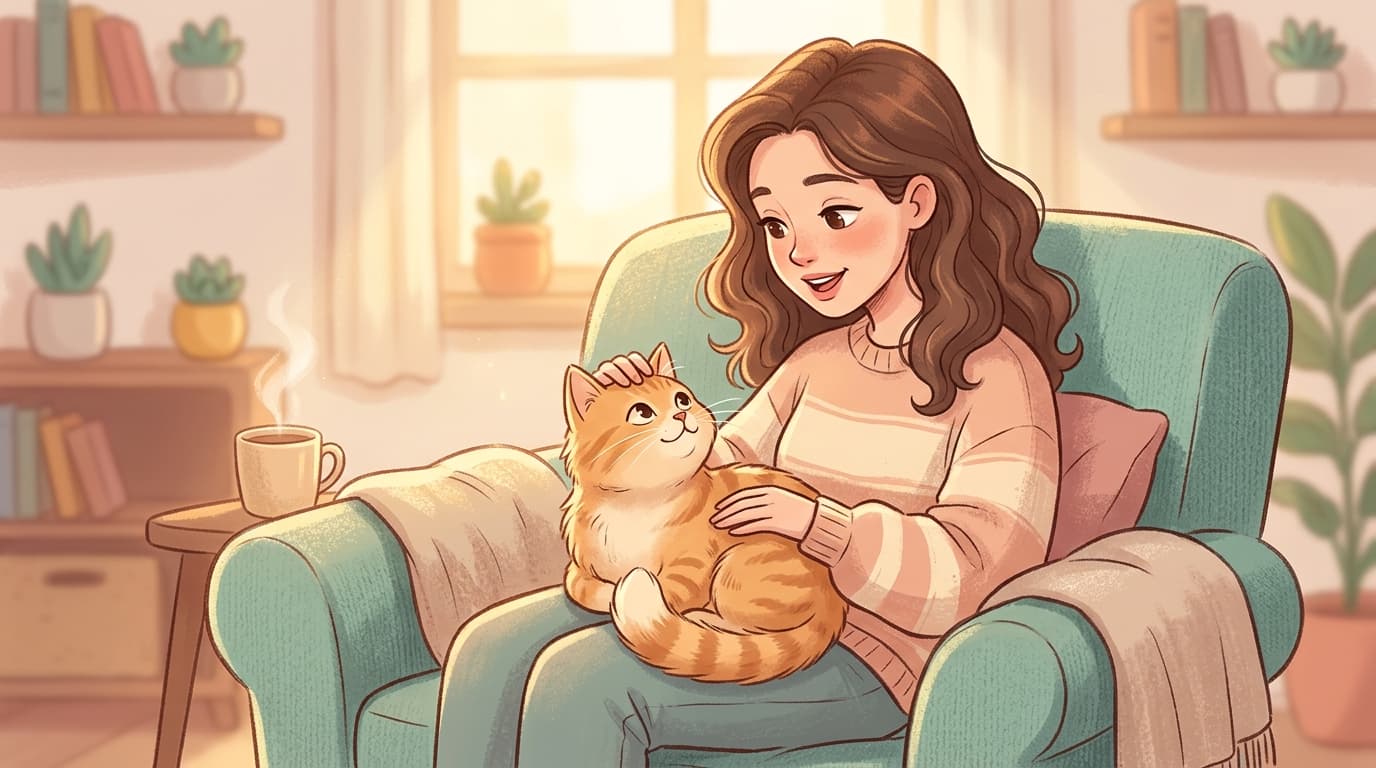
Almost every cat owner does it: you narrate dinner time, comment when your cat parks herself in the doorway, or casually chat as you walk past. It can feel a little silly—because obviously your cat isn’t decoding your sentences like a person would. But your voice still matters to her more than most people realize.
Your cat isn’t listening to words—she’s listening to you
Cats are masters of noticing tiny changes in their environment. Footsteps in the hall. A door clicking open. A drawer sliding. If you’ve ever seen your cat appear the second you touch a certain cabinet, you’ve already met this superpower.
That same attention applies to your voice. Your cat may not understand “How was your day?” but she absolutely picks up on:
- Tone (calm, sharp, excited, irritated)
- Rhythm (slow and steady vs. fast and tense)
- Emotional energy (relaxed, stressed, sad)
To a cat, a quiet, predictable voice feels completely different from a loud or frantic one—and that difference is where real communication starts.
The subtle signs your cat is responding
Not every cat “talks back,” but many cats react in small, easy-to-miss ways. You might notice:
- She walks into the room when you speak
- She gives a short meow or chirp in response
- Her ears turn toward you even if she doesn’t move
- She stays lying down and relaxed during activity that would normally make her sit up and monitor
Some cats seem to ignore almost everything… until their person speaks. Others become little conversationalists. Different personalities, same underlying truth: your voice carries meaning.
Your voice becomes a map of your cat’s day
Cats love what feels predictable. Routine isn’t boring to them—it’s comforting. Over time, your voice can become one of the most dependable “signals” in their world.