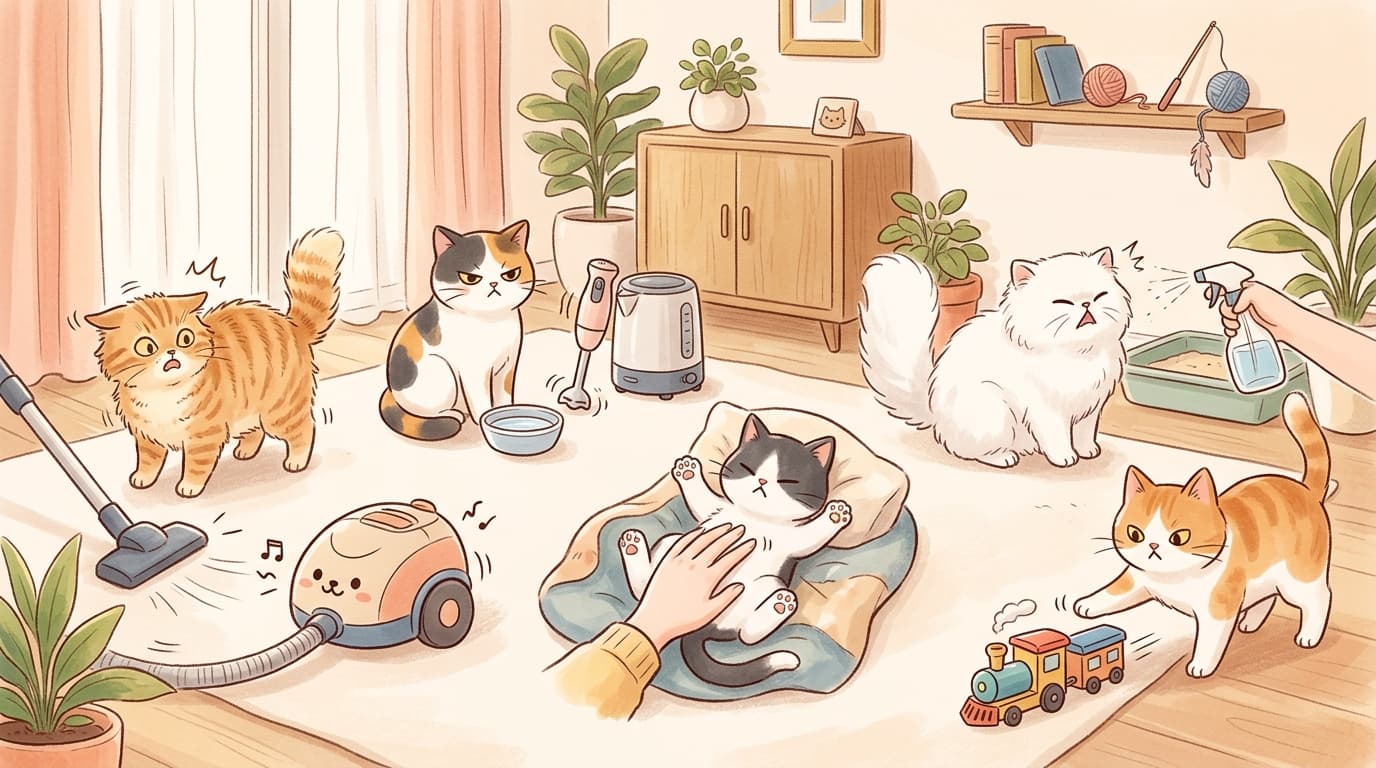
Why Talking to Your Cat Builds Trust (Even If She Doesn’t Understand the Words)
Your cat may not understand words, but your voice signals safety, routine, and emotion. Learn how talking builds a calmer, closer bond.

Almost every cat owner does it: you narrate dinner time, comment when your cat parks herself in the doorway, or casually chat as you walk past. It can feel a little silly—because obviously your cat isn’t decoding your sentences like a person would. But your voice still matters to her more than most people realize.
Your cat isn’t listening to words—she’s listening to you
Cats are masters of noticing tiny changes in their environment. Footsteps in the hall. A door clicking open. A drawer sliding. If you’ve ever seen your cat appear the second you touch a certain cabinet, you’ve already met this superpower.
That same attention applies to your voice. Your cat may not understand “How was your day?” but she absolutely picks up on:
- Tone (calm, sharp, excited, irritated)
- Rhythm (slow and steady vs. fast and tense)
- Emotional energy (relaxed, stressed, sad)
To a cat, a quiet, predictable voice feels completely different from a loud or frantic one—and that difference is where real communication starts.
The subtle signs your cat is responding
Not every cat “talks back,” but many cats react in small, easy-to-miss ways. You might notice:
- She walks into the room when you speak
- She gives a short meow or chirp in response
- Her ears turn toward you even if she doesn’t move
- She stays lying down and relaxed during activity that would normally make her sit up and monitor
Some cats seem to ignore almost everything… until their person speaks. Others become little conversationalists. Different personalities, same underlying truth: your voice carries meaning.
Your voice becomes a map of your cat’s day
Cats love what feels predictable. Routine isn’t boring to them—it’s comforting. Over time, your voice can become one of the most dependable “signals” in their world.
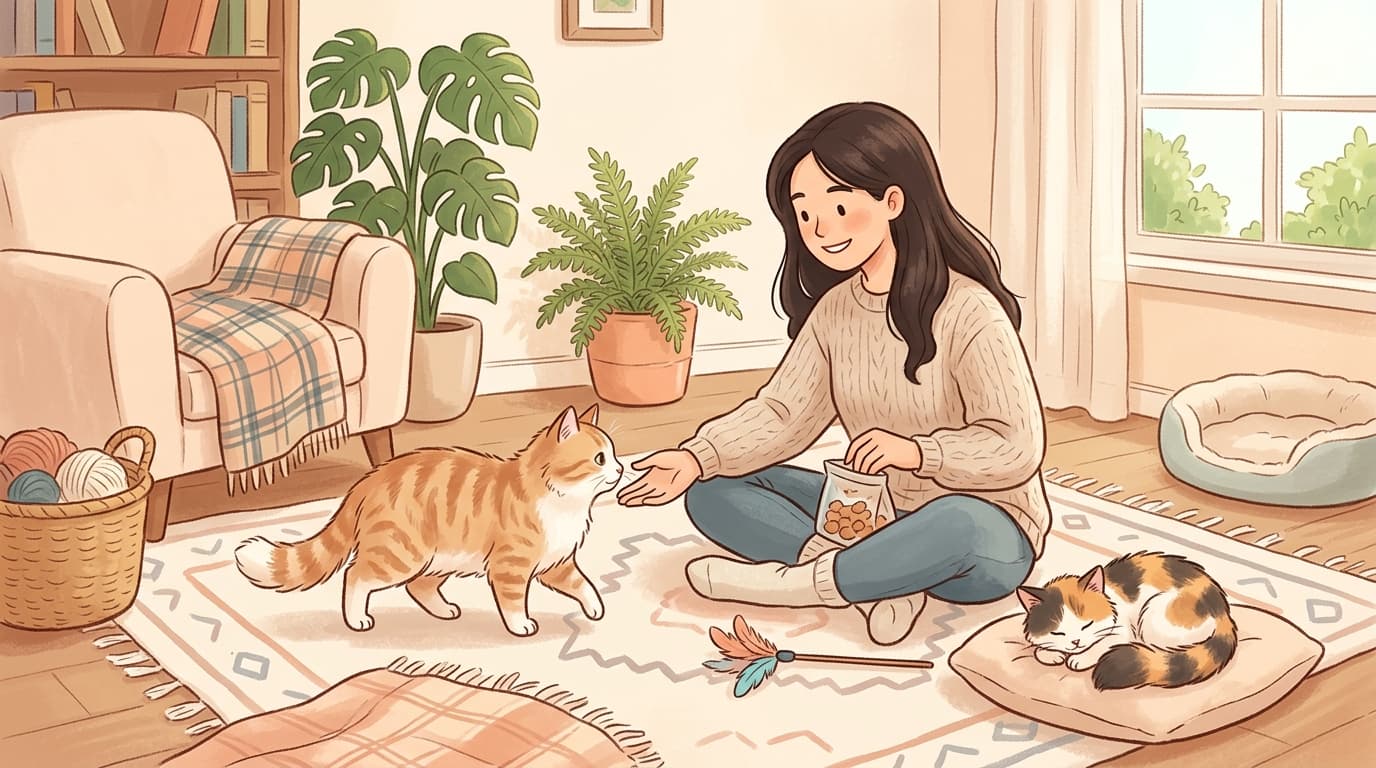
Think about the everyday patterns your cat experiences. You come home, your steps sound a certain way, you say a few familiar things, the home settles, food appears, you sit down. To you, those moments barely register. To your cat, they’re anchors—reliable markers that help her understand what’s happening next.
The more often your cat hears your voice during calm, normal moments, the more she links it with safety and stability.
Why talking can calm a nervous cat
Many cat owners have seen this: a cat looks tense, then you speak softly and she visibly loosens up. Ears forward again. Body less rigid. Sometimes she even walks right over.
That’s not because she understood your message—it’s because she recognized the state you’re in. A relaxed voice tells her, “Nothing is wrong right now.” For cautious cats especially, that familiar sound can be like an audio version of a safe blanket.
Talking helps in stressful situations (carrier, new home, weird noises)
Stressful moments tend to scramble a cat’s sense of control: the carrier comes out, you move to a new place, or unfamiliar sounds pop up. In those situations, your cat is scanning for clues.
A steady, familiar voice can act like a small anchor in the middle of uncertainty. Some cats settle faster in the carrier if their person keeps speaking in the same calm way they do at home. In new environments, that familiar sound can help a cat feel brave enough to explore—or at least come closer rather than shutting down.
Over time, cats may even become more likely to seek contact: approaching more often, initiating closeness, or choosing your lap more frequently.
Cats notice your emotions in your voice
Most pet owners don’t realize how much cats track emotional patterns. Your cat may not know why you’re sad or stressed, but she can hear changes in volume, speed, and tension.
That’s why some cats disappear during loud arguments or chaotic energy in the house. Others do the opposite and stick close, watching intently or hovering nearby.
Either way, your cat is collecting information: “Is this normal? Is this safe? What does this mood usually lead to?” With time, she learns not only your schedule, but your emotional “weather.”
The common mistake: only using your voice for corrections
One of the biggest ways people accidentally weaken voice-trust is speaking to their cat mainly when she’s doing something “wrong.”
If the only time your cat hears a strong, intense tone is when she’s on the counter, scratching something, or chewing a plant, your voice starts to predict stress.
It gets even more confusing if your tone flips suddenly—calm one second, loud the next. Since cats rely heavily on emotional cues, those sharp switches can feel unpredictable.
A simple habit that builds trust: calm, pressure-free talking
What works best is surprisingly basic:
- Speak to your cat regularly in everyday moments
- Keep your tone steady and relaxed
- Use short, gentle phrases
- Don’t always attach your voice to a demand
You’re not trying to teach vocabulary. You’re building a consistent emotional signal your cat can count on. And that kind of trust doesn’t appear overnight—it forms through hundreds of small, calm interactions.
The takeaway
Talking to your cat isn’t pointless—your words may not land, but your voice does. The more your cat hears you as a calm, familiar presence, the more your sound becomes part of her sense of home. And that’s one of the quietest ways a relationship with a cat turns into something genuinely close.
Continue reading

How Cats Decide Who to Trust (and How to Earn It Gently)
Cats don’t give trust by default. Learn the signals they watch—control, body language, routine, scent, and patience—to build a stronger bond.

5 Everyday Things Your Cat Hates (and How to Stop Accidental Tantrums)
From the “wrong” petting spots to noisy rooms and sudden changes, these everyday habits can stress your cat and trigger swats.

Do Cats See Ghosts? Why Your Cat Stares at “Nothing”
Cats may not see ghosts, but their night vision and super-hearing can make them react to things you can’t detect.