Why Cats Knock Things Over: The Real Reasons Behind That Push-and-Scatter Habit
Cats knock things over due to hunting instincts, curiosity, and attention-seeking. Learn what it means and how to curb the habit.
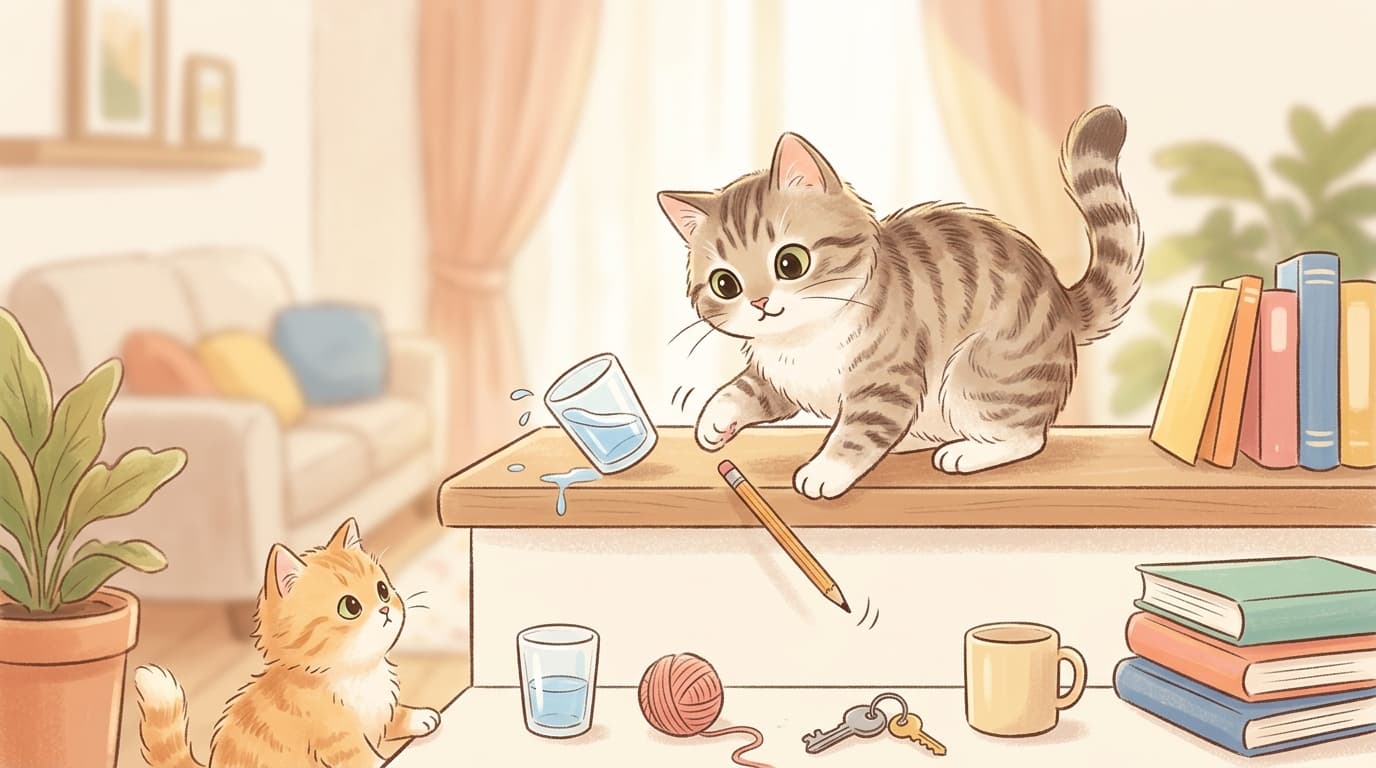
Your cat isn’t redecorating out of spite—they’re following instincts that make perfect sense in a cat brain. The wild part is that a knocked-over glass or a swatted trinket can be your cat’s version of play, research, and communication all at once.
Why cats knock things over (and why it’s so satisfying to them)
Cats interact with the world through their paws the way we use our hands. Knocking something off a surface is a quick way to learn: Does it move? Does it make noise? Does it react? And since cats are wired to notice tiny changes in their environment, that little shove can feel like an event worth repeating.
Most pet owners don’t realize that “push, watch, repeat” is a very normal feline way of gathering information—especially with new objects, wobbly items, or anything perched near an edge.
It’s a hunting instinct in disguise
Even the cuddliest house cat is still a hunter at heart. In the wild, a cat might tap or pin something with their paw to test it before committing—think of it as a safety check and a strategy move.
When your cat nudges your keys, a pen, or a small figurine, they’re doing a similar thing:
- Testing how the “prey” responds
- Watching for movement
- Practicing coordination and timing
If you’ve ever noticed your cat staring intensely at an object before giving it a slow, deliberate shove, that’s not random. That’s focused, hunter-style curiosity.
Curiosity + “feline physics” = chaos on your shelves
Cats love experiments. Some objects roll. Some bounce. Some crash dramatically. From your cat’s perspective, the floor is basically a sound-and-motion laboratory.
A few things make an item extra tempting to knock over:
- It wobbles when touched
- It makes an interesting noise when it falls
- It slides easily across a surface
- It’s small enough to manipulate but not so light that it feels boring
So yes, your cat may be running physics trials in your living room—especially if the results are loud.