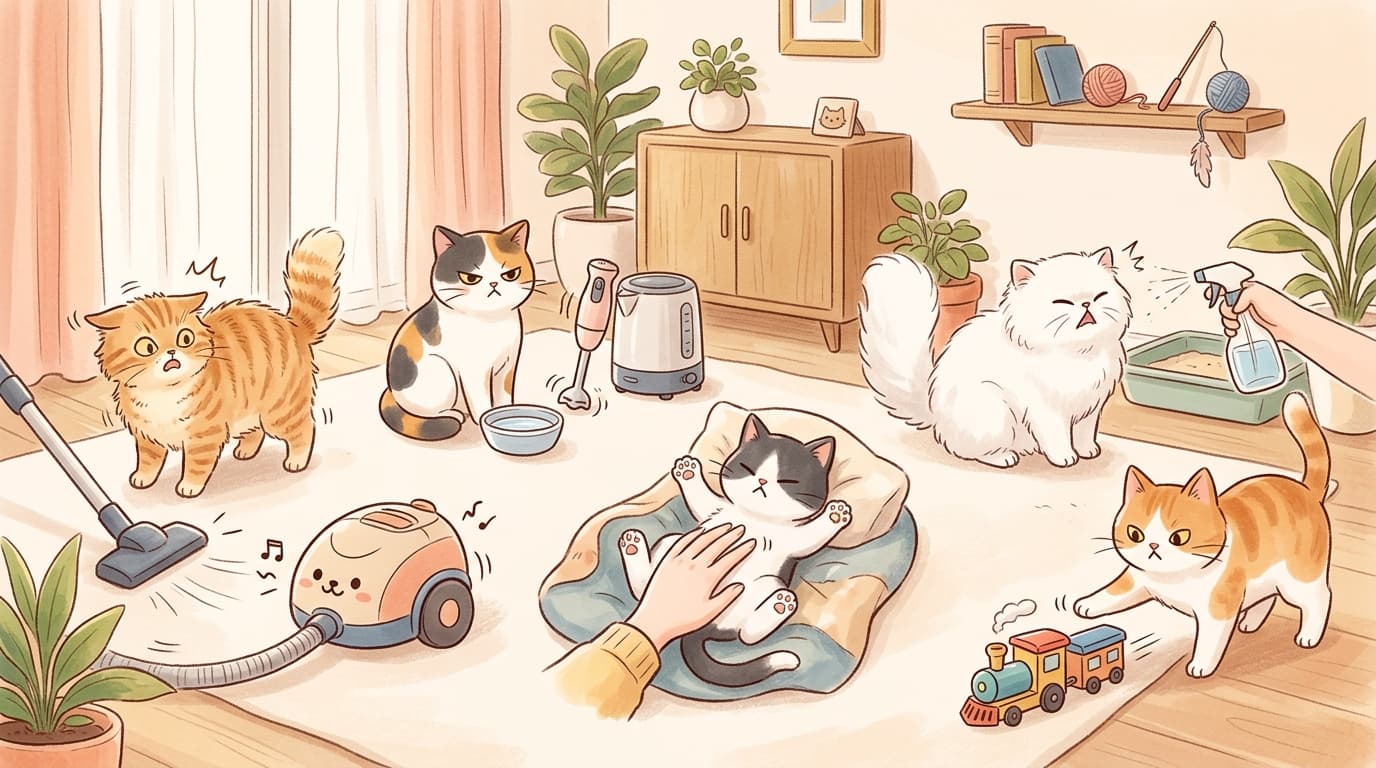
Your Cat Doesn’t Think You’re a Giant Cat—You’re Their Safe, Predictable “Home Base”
Cats don’t see you as a big clumsy cat. To them, you’re a steady source of safety, scent-family, and predictable comfort.
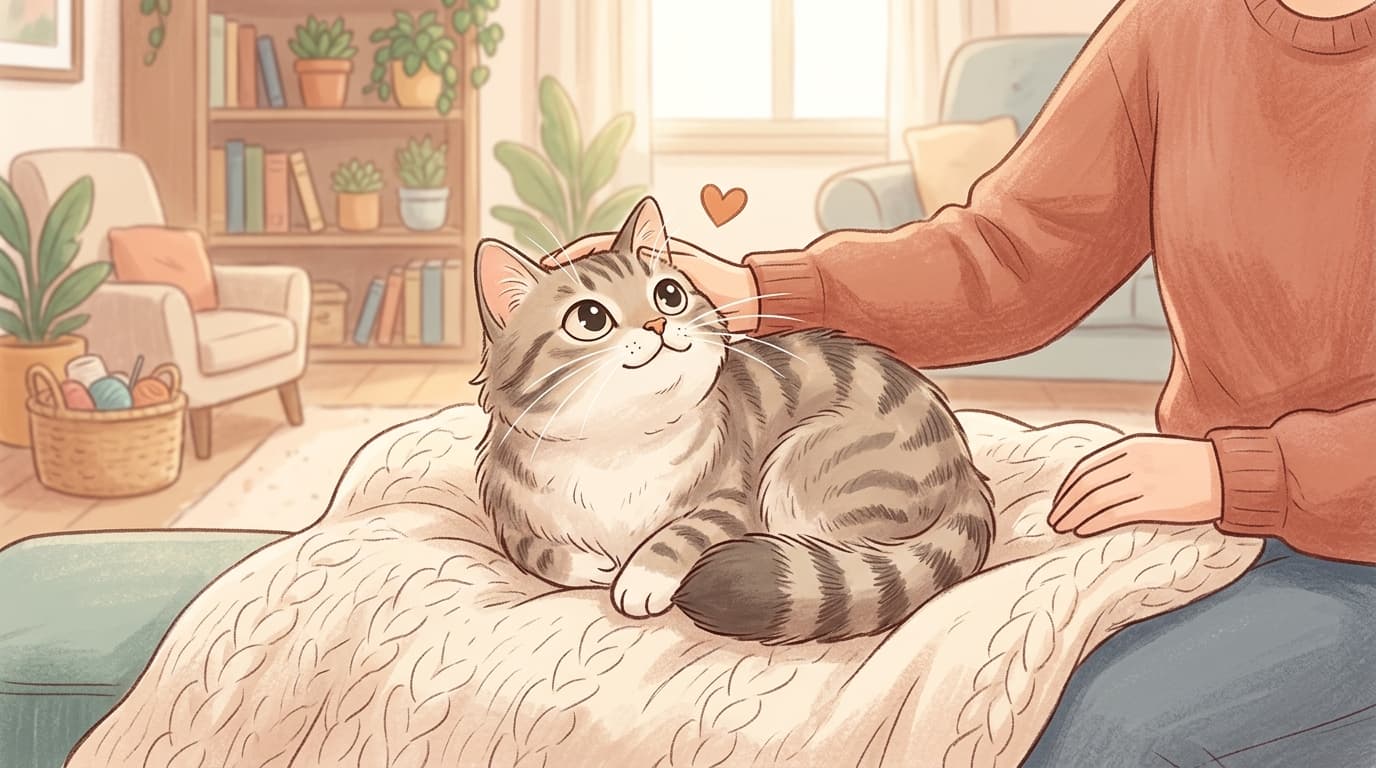
You’ve probably heard the classic claim: your cat thinks you’re just a bigger, clumsier cat. It’s a fun idea—but it doesn’t match how cats actually behave with the people they live with.
What’s more likely is this: in your cat’s mind, you’re in a special category—something that doesn’t really exist in nature for a solitary predator. You’re the steady, non-threatening center of their world.
Why the “giant cat” theory doesn’t add up
Cats are famously territorial. In a cat’s natural social logic, a large unfamiliar cat entering the space is a big deal—often a threat. Size can mean dominance, competition, and conflict over food and territory.
So if your cat truly saw you as “just another cat,” your daily life would look very different. Every time you walked into a room, your cat would be on high alert—watching for signs of aggression, guarding resources, and treating you like a rival.
But that’s not what most cats do at home. Instead, many cats approach with relaxed body language, greet you, rub on you, or even flop down nearby like your presence lowers the volume on the whole world.
Your cat has a “human” category—and it’s not about species
Humans sort the world visually: human, cat, dog, stranger. Cats don’t rely on that kind of label in the same way.
For your cat, identity is heavily driven by what you might call “the scent story.” Smell is personal history, safety, belonging, and familiarity all rolled into one. That’s why your cat can treat you as family even if you don’t look anything like them.
In other words, you’re not being evaluated as a weird-looking cat. You’re being recognized as you—through patterns, routines, and especially scent.
The “static guardian” role: why your predictability is everything
In the wild, a cat’s life revolves around movement: hunting, scanning, avoiding danger, protecting territory. Nothing is guaranteed.
You are the opposite of that. In your cat’s mental map, you’re a stable, predictable anchor—someone who occupies the territory without competing for their food, without forcing dominance games, and without turning daily life into a constant negotiation.
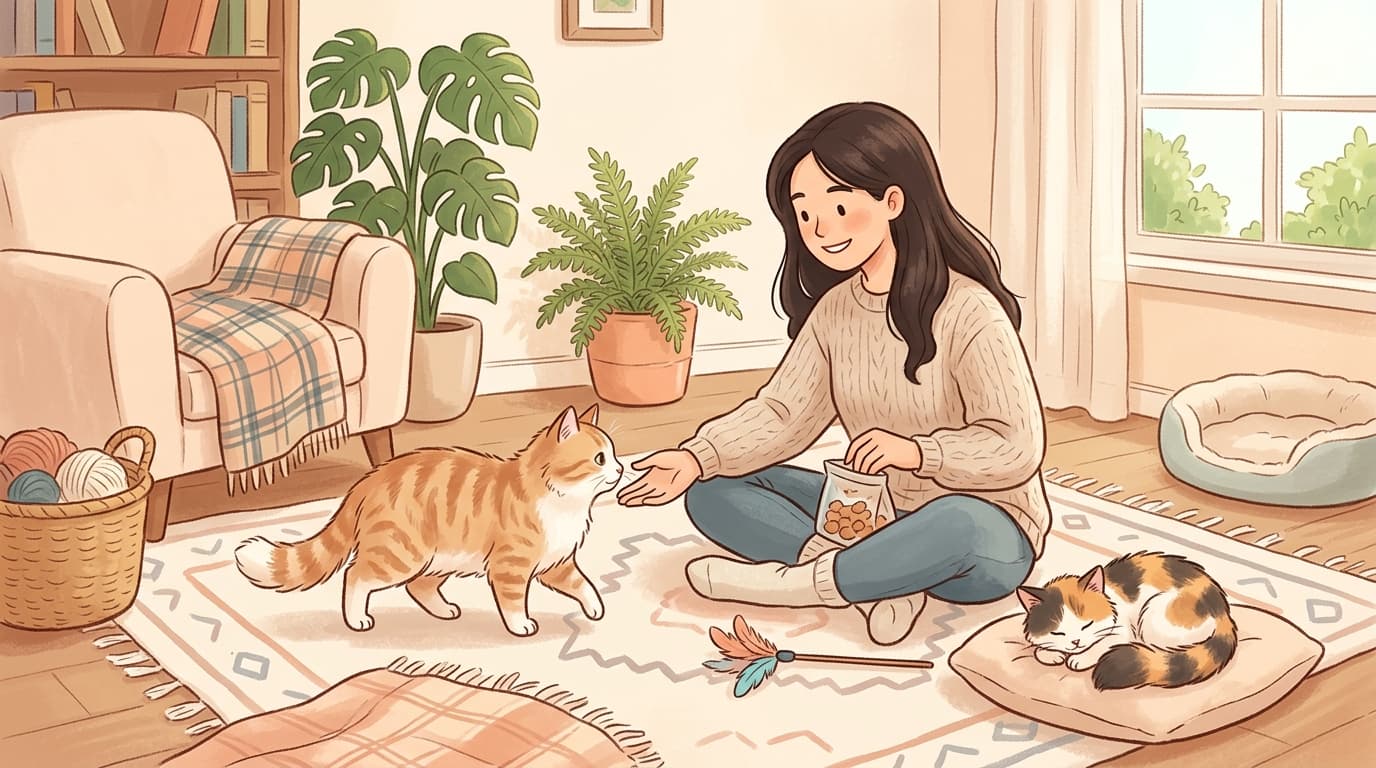
To a cat’s brain, that’s extraordinary.
You become the reliable source of the best things:
- Food that appears without a fight
- A warm, safe home base
- Calm touch that doesn’t escalate into conflict
- A consistent routine they can plan their day around
If you’ve ever noticed your cat suddenly appear the moment you head toward the kitchen—or settle down once you sit in your usual spot—that’s not “giant cat recognition.” That’s your cat tracking their favorite predictable pattern.
Why your cat rubs on you (and what they’re really doing)
When your cat rubs their cheeks on your hand, bumps their forehead into you, or weaves between your legs, it’s affectionate—but it’s also deeply biological.
Cats have scent glands around the cheeks and forehead that leave chemical markers. Each rub is like signing their name.
But here’s the part most pet owners don’t realize: it’s not only about marking you as familiar. It’s also about mixing your scents into a shared “group” identity.
From your cat’s perspective, you’re not simply the owner who lives in the house. You’re part of their scent-family—an extension of the safe inner circle.
Grooming you can be a “reset button” for closeness
Some cats lick your hair, your hand, or your arm—especially after you’ve had a stressful day. It can look like random sweetness, but there’s a logic to it.
Stress changes your body chemistry. Your cat can pick up on that shift through smell and behavior. Grooming can be their way of restoring the familiar “we’re okay, we’re together” signal—like smoothing out a wrinkle in the shared comfort of the home.
To your cat, the boundary between “me” and “my people” isn’t as rigid as we tend to imagine.
What your cat actually recognizes when they look at you
Cats don’t experience your face the way you do in a mirror. Their vision is tuned differently, and at certain distances details can get fuzzy. So your cat isn’t relying on your facial features like a human would.
Instead, recognition often comes from:
- Your walk and movement rhythm
- Your silhouette and posture
- The sound of your steps and voice
- The scent that says “this is my person, this is my place”
So when your cat stares at you from across the room, they may not be admiring your cheekbones. They’re reading the familiar outline of safety and routine.
What it means for your relationship with your cat
If your cat treats you like a calm center—following you, greeting you with a lifted tail, slow blinking, rubbing on you, settling nearby—that’s not because they’re confused about what species you are.
It’s because you’ve earned a rare role in their world: the steady presence that lets their guard drop.
Your cat doesn’t need you to act like a cat. They need you to be consistent, gentle, and predictable—the kind of “home base” that makes it feel safe to relax, sleep deeply, and be vulnerable.
In a life built on instincts, that’s a huge kind of trust.
Continue reading

How Cats Decide Who to Trust (and How to Earn It Gently)
Cats don’t give trust by default. Learn the signals they watch—control, body language, routine, scent, and patience—to build a stronger bond.

5 Everyday Things Your Cat Hates (and How to Stop Accidental Tantrums)
From the “wrong” petting spots to noisy rooms and sudden changes, these everyday habits can stress your cat and trigger swats.

Do Cats See Ghosts? Why Your Cat Stares at “Nothing”
Cats may not see ghosts, but their night vision and super-hearing can make them react to things you can’t detect.