Petting Your Cat Isn’t “Just Affection”: What Your Touch Really Means to Them
Your cat reads petting as scent, identity, and safety—not simple affection. Learn where to pet, what to avoid, and why bites happen.
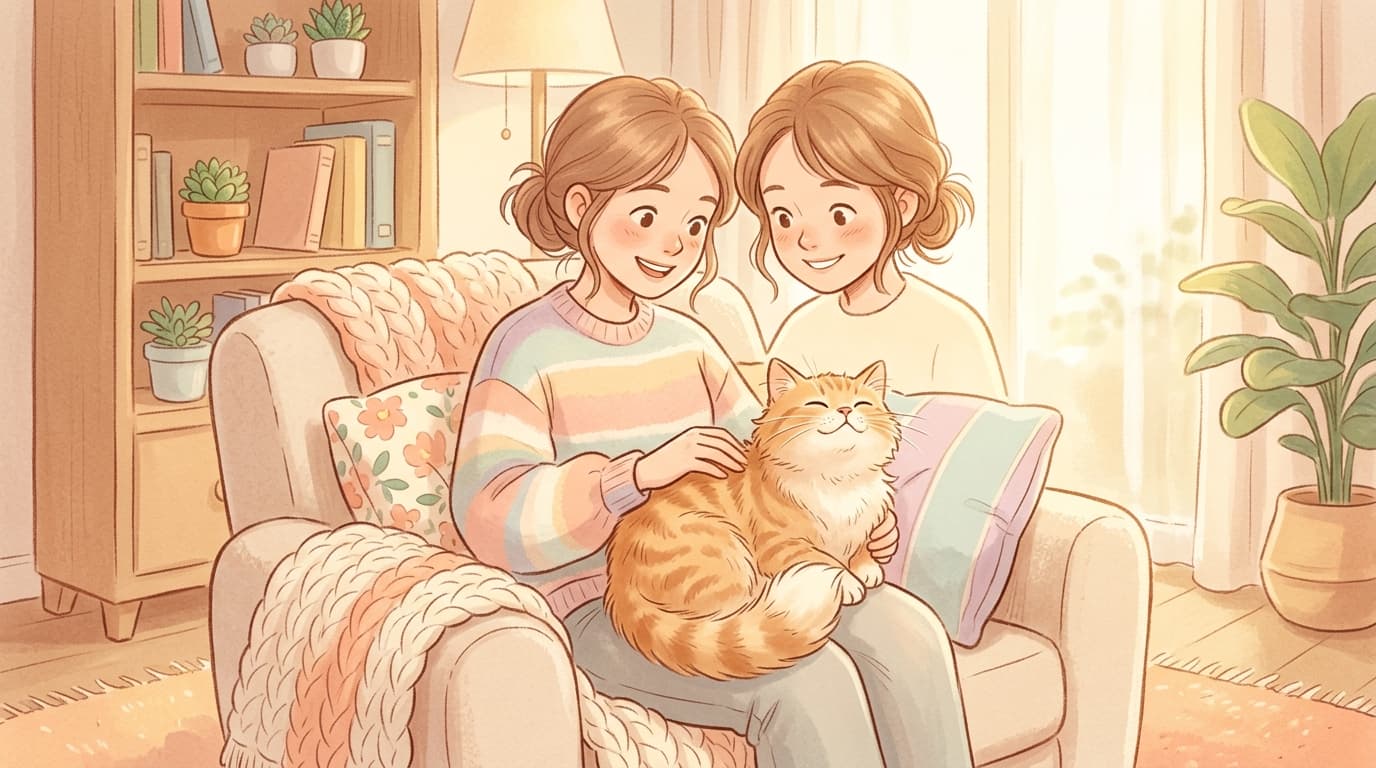
You think you’re giving your cat a simple little show of love: a hand on soft fur, a purr in return. But to your cat, petting is often less like a human “cuddle” and more like a serious social ritual—one that can build trust fast or flip a hidden alarm just as quickly.
Most pet owners don’t realize their touch can communicate identity, belonging, and even “Are you safe to be around?” to a cat.
Petting your cat is a scent-and-identity conversation
Cats don’t experience the world the way we do. For them, smell is a major piece of reality—almost like a security system running in the background.
In cat social life, one of the big ways they create “us” versus “stranger” is through grooming and rubbing. It’s not just hygiene. It’s a way to share a group signature.
So when you pet your cat, your hand isn’t interpreted as a comforting human gesture the way a child might read it. Your cat often processes it more like: contact + scent exchange + social sorting. In plain terms, your hand can function like a big, clumsy grooming tool that helps blend smells.
Why your cat grooms right after you pet them (and it’s not an insult)
If you’ve ever noticed your cat immediately licking themselves after a petting session, it’s easy to take it personally. It can look like they’re “washing you off.”
A more cat-like interpretation is the opposite: they’re distributing what just happened.
By grooming, many cats are spreading the shared scent across their body—helping lock in that familiar “group smell” and carrying it with them. In your cat’s world, this can be a quiet way of reinforcing, “You’re part of my safe circle.”
The sudden bite: when petting turns into sensory overload
That classic moment is so confusing: your cat is purring, leaning in, maybe even head-butting your hand… and then—chomp.
Often, that isn’t random moodiness. It can be overstimulation.
A cat’s body is packed with nerve endings designed to detect tiny movements—prey nearby, a threat too close, something brushing the fur that shouldn’t be there. A few strokes can feel great. But repeated strokes in the same spot can push their nervous system past a comfort threshold.