What Your Cat Thinks a Kiss Means (Hint: It’s Not What You Think)
A cat doesn’t interpret kisses like humans do. Here’s what your face-to-fur “kiss” really communicates—and why some cats pull away.
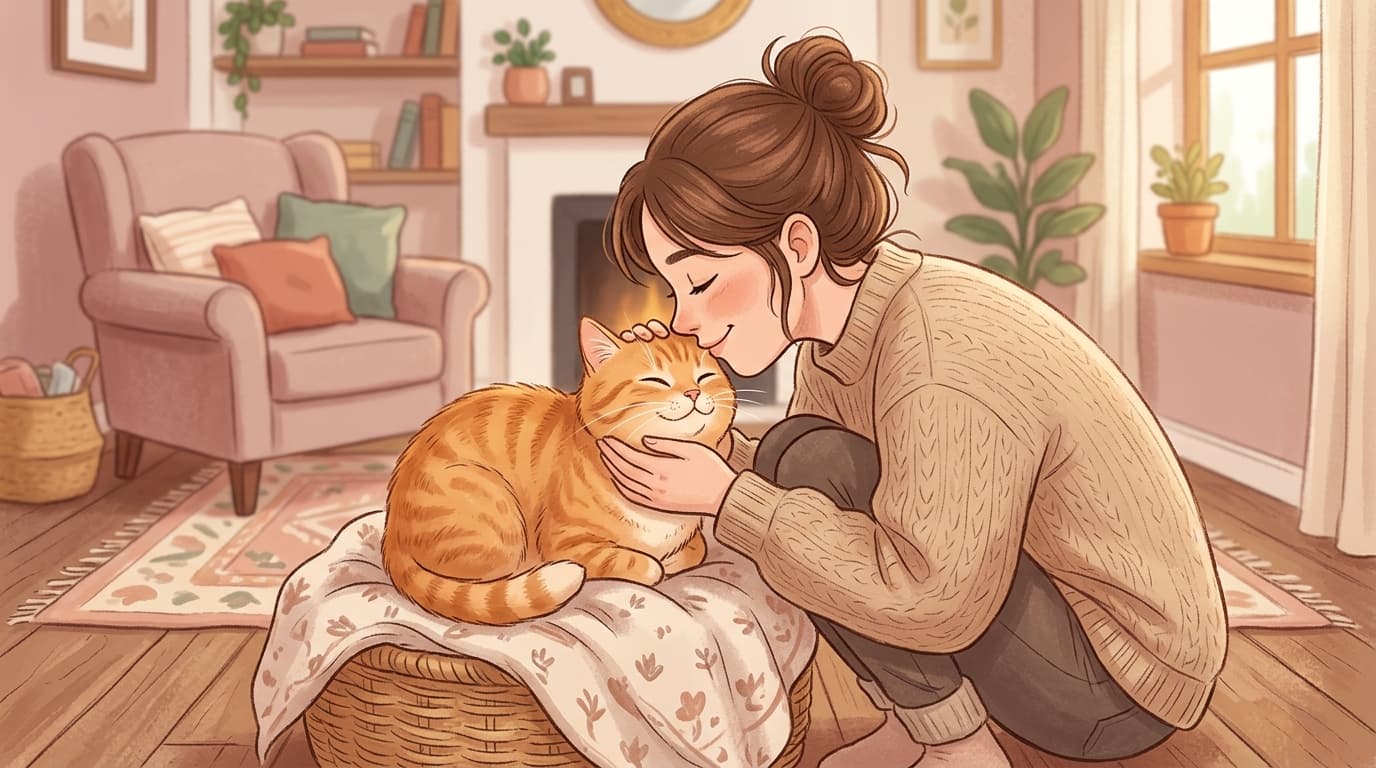
You lean in, close your eyes, and plant a soft kiss on your cat’s head. To you, it’s pure affection—simple, automatic, sweet. To your cat, it’s a whole different kind of moment, built on scent, airflow, body tension, and one big question: “Are you safe right now?”
Your cat doesn’t experience a kiss as “a kiss”
Humans run on sight and sound. Cats do too, but their world is heavily shaped by information you can’t see—smell, tiny shifts in air movement, and the emotional “tone” your body gives off when you get close.
So when your face moves into your cat’s personal space, your cat isn’t thinking, “Aww, my human loves me.” Your cat is gathering data. Fast.
If you’ve ever noticed your cat sniffing near your mouth or nose right after you kiss their head, that’s not random curiosity. It’s your cat checking in on you.
Your breath is loud information in your cat’s world
To you, breathing is background noise. To your cat, your breath is a living signal.
Cats have an impressive sense of smell, and they can process chemical messages in a special way thanks to an extra sensory system in their mouth (often called the Jacobson’s organ). In practical terms, that means your cat can learn a lot from you up close—especially through scent.
Your smell can reflect things like:
- Whether you feel tense or calm
- If you’re tired or “off” compared to your normal routine
- How familiar and safe you feel in that moment
This is why some cats soften their eyes or relax their body after you kiss them. In their mind, your closeness can confirm something they care about deeply: “This is my person, and today they still feel like my person.”
Calm is contagious: the shared rhythm your cat settles into
Cats are built for quick reactions. Even a relaxed cat keeps part of their attention switched on, scanning for changes. Their heart rate is naturally faster than yours, and their nervous system is ready to respond.
But there’s a fascinating thing that can happen between two beings who trust each other: when you stay close in a quiet, gentle way, your bodies can start to influence each other’s stress responses. Your slower breathing and steadier presence can help your cat come down from that constant background alertness.
That’s one reason some cats purr more when your face is close. Purring isn’t always “for you.” Sometimes it’s your cat’s way of steadying themselves—like a self-soothing hum that matches the calm they’re feeling from you.
Most pet owners don’t realize this, but your cat may be using you as an anchor. Not out of neediness—out of trust.
Why your cat suddenly pulls away (even if everything was going well)
You’ve probably had this happen: the first second of affection seems perfect, then your cat turns their head, lifts a paw to your face, flattens their ears slightly, or simply gets up and leaves.
It can feel personal. It usually isn’t.
A kiss brings a lot of stimulation into your cat’s most sensitive zone all at once:
- A large, warm object (your face) moves in close
- Your breath changes the airflow around them
- Your scent becomes intense at close range
- Your movement fills their visual space
- The heat and pressure of contact adds another layer of sensation
For a moment, that can feel great. But if it lasts a little too long, your cat can hit sensory overload.
Your cat’s whiskers are part of the reason
Your cat’s whiskers aren’t just “cute hairs.” They’re highly sensitive sensory tools connected to the nervous system, designed to detect subtle changes in air movement and space.
When you lean in close, you’re entering a whisker-rich, information-heavy area. Your cat may tolerate it happily—until their brain decides it’s too much input and asks for distance.
That gentle paw on your face often means: “I trust you, but I need a break.”
And here’s the beautiful part: cats who trust you most are often the clearest about their boundaries, because they expect you to listen.
Respecting the pull-away builds real trust
When your cat backs off and you let them go without grabbing, holding, or trying to “finish the cuddle,” your cat learns something powerful about you.
They learn you’re predictable. Safe. Gentle. Someone who pays attention.
In a cat’s world, deep trust isn’t built through forced affection. It’s built through respected limits.
What your kiss really communicates to your cat: vulnerability
There’s one more layer that changes how you’ll see this forever.
In the animal world, the face is a vulnerable place—eyes, nose, teeth, and the main sensory equipment needed for survival. Most animals instinctively protect it.
So when you bring your face close to your cat’s face (or head) in a calm, unguarded way, you’re doing something that doesn’t look like predator behavior at all. You’re showing vulnerability.
Your cat may not interpret it as “romantic love,” but they do understand the meaning of a safe, non-threatening closeness. Over time, your face can become associated with security.
That’s why you might see:
- Slow blinking during or after the kiss
- Your cat leaning their forehead toward you
- A gentle nose touch with someone they trust
Those aren’t random habits. They’re your cat letting you into their protected sensory world.
A simple way to make kisses feel better to your cat
If you want your cat to enjoy this kind of affection more often, think “short and calm.”
- Move slowly and let your cat see you coming
- Keep the kiss brief (a quick touch, not a long hover)
- Pause and watch for signals: softened eyes and stillness mean “okay,” turning away means “enough”
- Let your cat choose whether to re-engage
The takeaway
The next time you kiss your cat’s head, remember: your cat isn’t decoding a human kiss. They’re reading you—your scent, your energy, your steadiness—and deciding whether this closeness feels safe.
And if your cat leans in, slow blinks, or gently sets a paw on your face, you’re seeing one of the quietest, biggest compliments a cat can give: trust.
Continue reading

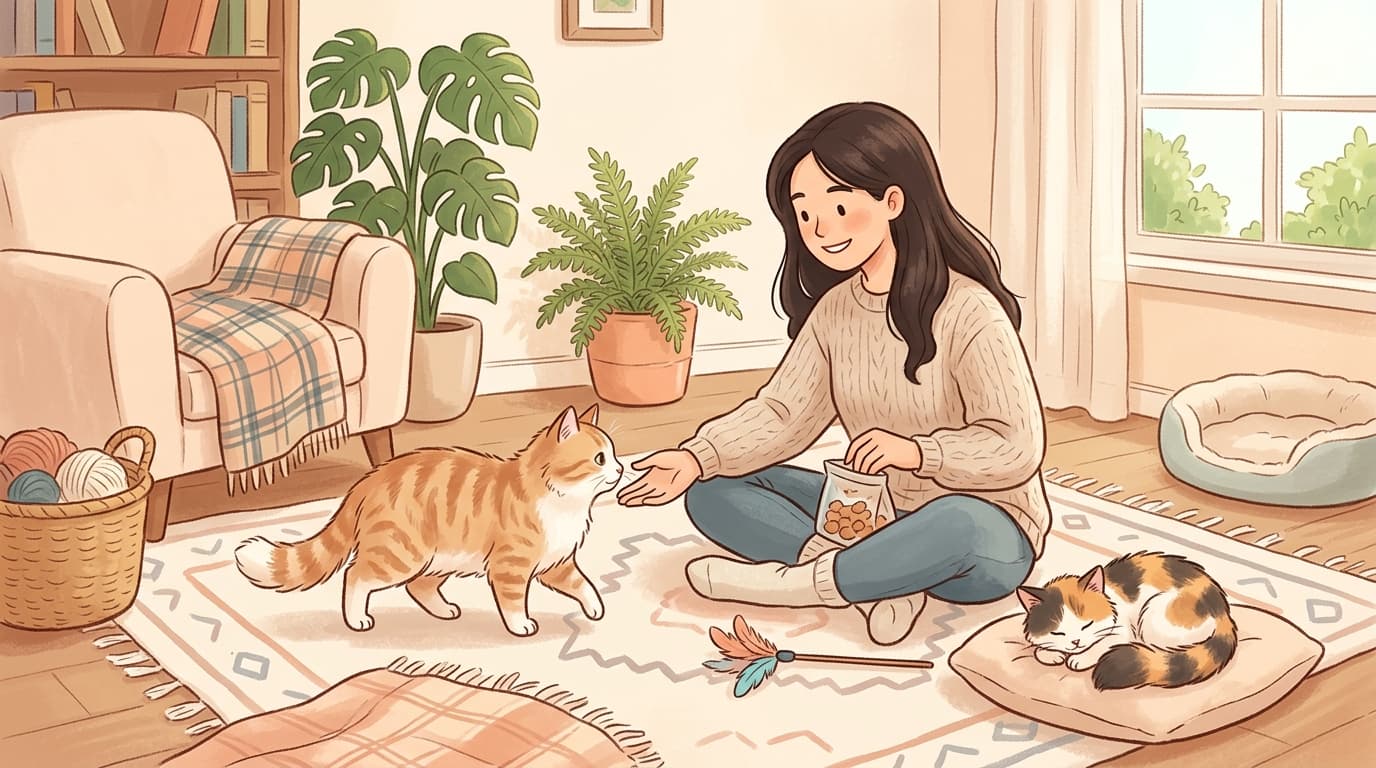
How Cats Decide Who to Trust (and How to Earn It Gently)
Cats don’t give trust by default. Learn the signals they watch—control, body language, routine, scent, and patience—to build a stronger bond.

5 Everyday Things Your Cat Hates (and How to Stop Accidental Tantrums)
From the “wrong” petting spots to noisy rooms and sudden changes, these everyday habits can stress your cat and trigger swats.

Do Cats See Ghosts? Why Your Cat Stares at “Nothing”
Cats may not see ghosts, but their night vision and super-hearing can make them react to things you can’t detect.