Why Cats Eat Plastic (and How to Stop the Chewing Habit)
Cats chew plastic due to boredom, stress, curiosity, or food smells—and it can be dangerous. Learn causes and practical ways to stop it.
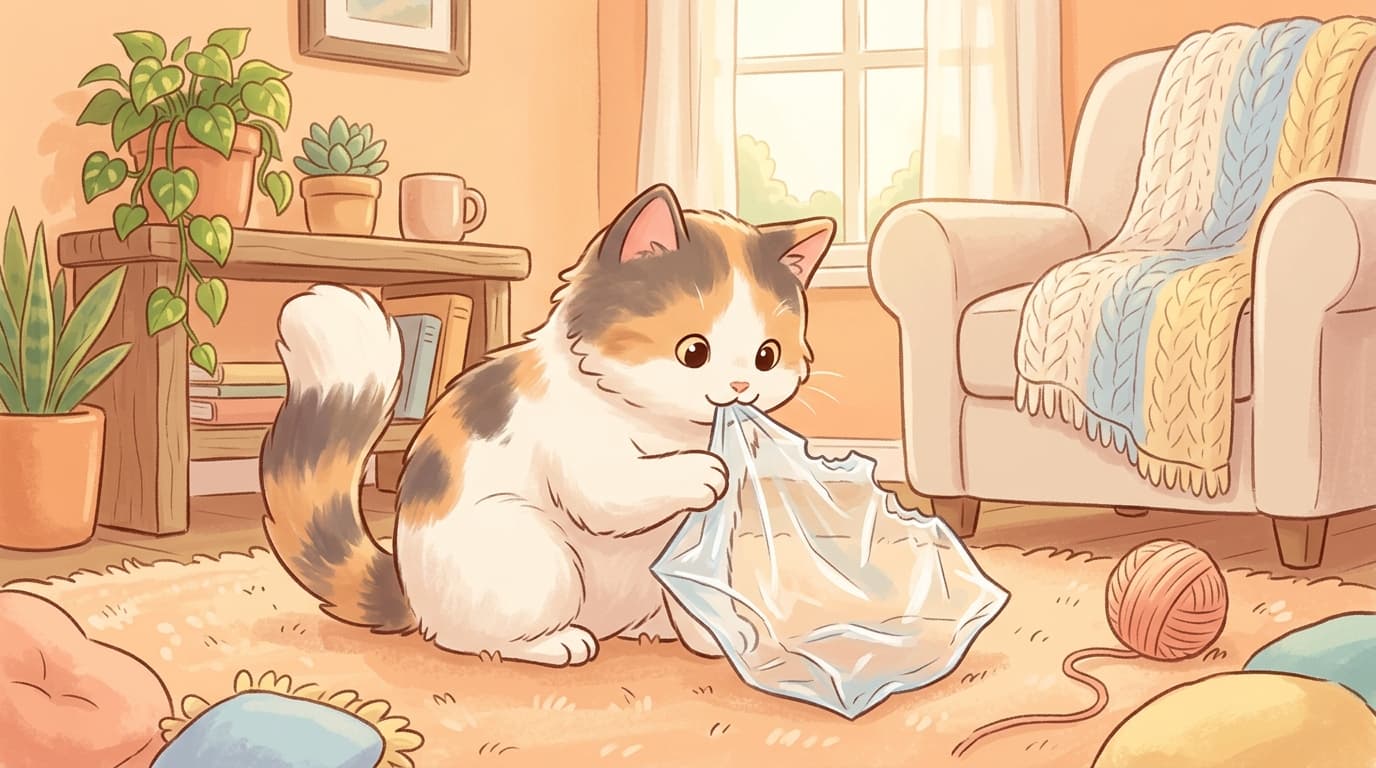
You turn your back for one minute and your cat is gnawing on a grocery bag handle or trying to bite through a charger cable. It looks weirdly casual—until you realize cats eating plastic can turn dangerous fast.
Why cats eat plastic in the first place
Cats don’t usually chew plastic because they’re being “bad.” Most of the time, it’s a mix of instinct, environment, and simple opportunity.
Curiosity (especially in young cats)
Kittens and younger cats explore the world with their mouths. Crinkly wrappers, dangling bag handles, and soft plastic edges are basically a DIY toy. If you’ve ever noticed your cat pouncing on a wrapper like it’s prey, that curiosity can easily turn into chewing.
Boredom and not enough stimulation
A cat who doesn’t have enough to do will invent a hobby—and plastic is everywhere. Chewing can become a self-entertaining habit, especially for indoor cats who aren’t getting enough playtime, climbing opportunities, or puzzle-style enrichment.
Stress or anxiety after changes at home
Cats are routine lovers. A move, new roommate, new baby, different work schedule, renovations, or even rearranged furniture can make some cats anxious. Chewing (and licking) can work like a self-soothing behavior, similar to how some people bite their nails.
Digestive issues (including parasites or illness)
Sometimes chewing odd things is your cat’s way of signaling that something feels off internally. Digestive discomfort or other health problems can trigger unusual oral behaviors, including chewing non-food items.
The smell of food on plastic
Most pet owners don’t realize how attractive plastic can be purely because of scent. Bags and wrappers that touched meat, cheese, oils, or other strong-smelling foods can be irresistible. Your cat may be “snacking” on the smell rather than the plastic itself.
Why cats eating plastic is risky
Plastic chewing isn’t just annoying—it can be genuinely hazardous.
- Mouth injuries: Thin or sharp plastic edges can cause cuts and irritation on gums, tongue, or inside the cheeks.
- Choking: Small pieces can break off and get stuck in the throat.
- Intestinal blockages: This is the big one. Swallowed plastic can create a blockage that may require surgery to fix.
How to stop your cat from chewing plastic
You’ll get the best results by combining “remove the temptation” with “give a better option.”
Make plastic harder to access
- Store grocery bags, bread bags, and wrappers in closed cabinets or bins.
- Don’t leave packaging on counters “just for a second.”
- Bundle and secure trash so your cat can’t pull plastic out of the can.
- Keep cables managed with cord covers or tucked away (many cats go for the same spots repeatedly).
Replace the habit with better chewing and play
If your cat seems drawn to the chewing sensation or the crinkle sound, offer safer outlets:
- Rotate interactive toys so they stay interesting.
- Add daily play sessions (short and frequent often works better than one long session).
- Use food puzzles or treat balls to burn mental energy.
Reduce stress triggers
If the chewing started after a change at home, look for ways to bring back a sense of routine:
- Keep feeding and playtime consistent.
- Create a quiet “safe zone” with a bed and hiding spot.
- Add vertical spaces (cat trees, shelves) so your cat feels more secure.
Watch for patterns
Pay attention to what your cat targets.
- Only food-smelling plastic? Tighten up kitchen and trash habits.
- Chewing mostly at night or when you’re busy? That can point to boredom.
- Sudden new obsession with plastic? That can be a clue something else is going on.
The takeaway
Cats eating plastic usually has a reason—curiosity, boredom, stress, stomach trouble, or the lingering smell of food. The safest approach is to remove easy access to plastic while giving your cat more stimulation and calmer routines, so chewing a bag handle stops being the most exciting thing in the room.
Continue reading

Does Your Cat Really Love You? 8 Quiet Signs of Trust Most People Miss
From slow tail-tip curls to choosing your seat, these 8 subtle behaviors can reveal how deeply your cat trusts you.

Why Your Cat Climbs on You: It’s Not “Just Love” (And What They’re Really Saying)
From lap-sitting to cheek rubs, your cat’s “cute” habits are secret messages about safety, scent, and trust.

Pumpkin for Cats: The Simple Food Add-In That Supports Digestion and Helps Push Out Worms
Plain pumpkin puree can support your cat’s digestion and make the gut less welcoming for worms—plus most cats accept it well.