Why You Love Your Dog or Cat Like a Child (and Why That’s Not “Too Much”)
Attachment theory and oxytocin explain why your pet feels like family—plus how to love them deeply without humanizing them.
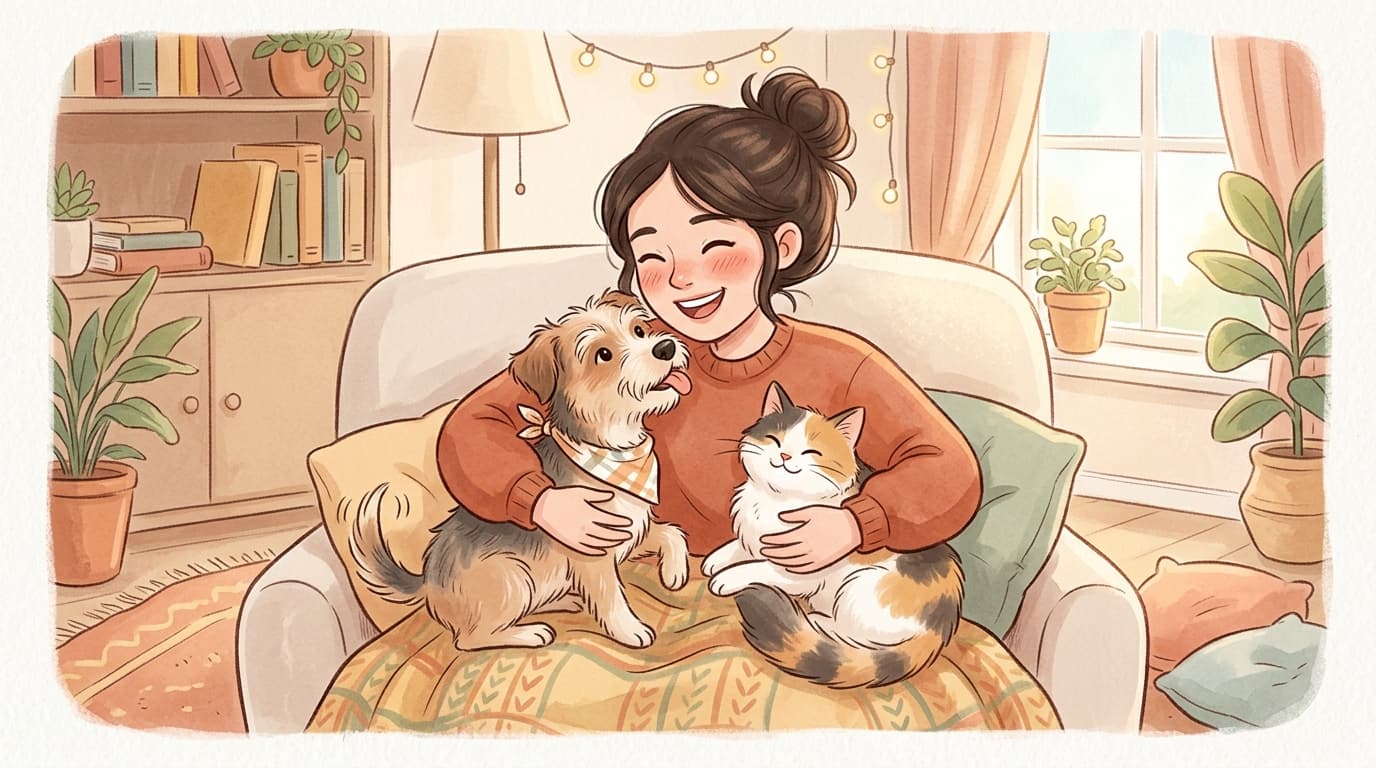
Some pets don’t just feel like companions—they feel like family. If your dog or cat has that “my baby” status in your heart, you’re not being dramatic. There’s a real psychological reason that bond can feel as deep as any human relationship.
The psychology behind loving your dog or cat like a child
Back in the 1960s, psychoanalyst John Bowlby introduced what’s known as attachment theory. In simple terms, it explains how children form powerful bonds with their caregivers because those caregivers provide safety, comfort, and a secure base.
What many pet owners don’t realize is that a similar kind of attachment can form between humans and animals. Your pet can see you as their main point of reference—the one who makes the world feel predictable and safe. That’s why your dog follows you from room to room, or your cat relaxes more when you’re home, even if they act “independent.”
Your pet isn’t “just a pet” to their brain
If you’ve ever noticed your dog checking in with you before approaching something new, or your cat seeking you out after a scare, you’ve seen attachment in action. To them, you’re not simply the person who fills the bowl. You’re the safe person.
That’s also why separation can feel hard on both sides. A bonded pet isn’t only attached to routines—they’re attached to you specifically.
Oxytocin: the love hormone that bonds you both
There’s also a chemical side to all this: oxytocin, often nicknamed the “love hormone.” Humans release oxytocin during warm social moments—think bonding with a partner, holding a baby, or sharing closeness with friends.
And yes, it can happen with pets too. Oxytocin can increase when you pet your dog or cat, spend relaxed time together, or even make soft eye contact.
The sweetest part is that it’s not one-sided. Pets can experience similar oxytocin boosts in those same moments. That mutual “feel good” loop helps explain why the bond feels so real and so strong—because it is.